



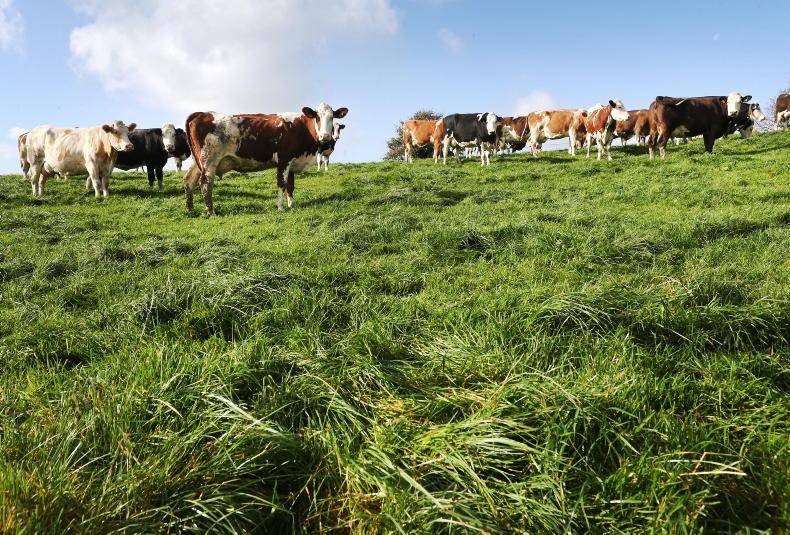
Thankfully the weather has turned, but it has been a disastrous spring, to say the least. We are now on our second attempt at grazing.
We originally turned cows out on 20 March, but unfortunately grazing only lasted a week before they had to be housed again. Relentless rain pushed ground conditions beyond what was manageable and even the cows were content to stay indoors.
I have been patiently waiting for an improvement in the weather since then.
Despite ground conditions and grazeouts being far from ideal, we turned cows out again on 8 April.
This Monday we put the cows out at night too – if we didn’t we would have struggled to build a proper grass wedge
Over the following week, the cows were still quite unsettled and looking inside again around lunch time, even though they were going into optimum grazing covers.
This Monday we put the cows out at night too – if we didn’t we would have struggled to build a proper grass wedge and this would result in grazing covers being too high, reducing subsequent grass quality and grazeouts.
The other option was to keep cows in and cut more grazing ground for silage, although this would delay full time grazing until June, which would leave an extremely short grazing season.
Roadways
Over the past number of years, we have invested significantly in roadways and drinkers to minimise cattle walking back over ground – without this investment, grazing would not have been possible in recent weeks.
Having a good reserve of grass and maize silage has also eased pressure this spring. It’s something I plan to prioritise more in the future, as having that buffer takes a lot of pressure off.
Slurry
The benefits of early slurry application have been clearly evident this spring. One of our silage fields, which received fertiliser at the same time as the others, was lagging behind the rest of the ground.
After some thought, I realised it had missed slurry due to yet another spell of wet weather.
In general, silage ground is growing slowly, but steadily and I’m hopeful we will be cutting in about three weeks’ time.
Conception
Scanning results for the autumn batch showed slightly lower conception rates than last year at 53%, compared to 56%, so it is not a major drop.
We plan to start breeding the spring batch on 27 April. A few later-calving cows will unfortunately have a more limited breeding window, but hopefully most will go back in calf.
The spring batch is currently averaging 34 litres, while the autumn batch is averaging 27.5 litres. When cows settle at grass, we are hopeful that performance will improve further.
Bluetongue
I was initially undecided about vaccinating for bluetongue. Given recent weather conditions, with frosty nights and the disease typically requiring average air temperature of around 13°C, it seemed an unlikely threat.
However, after attending an information evening hosted by our vets, I concluded that the potential risk on fertility far outweighed the cost of the vaccine, particularly if the calf trade stays at current prices.
We gave the first vaccine last week and the second will be administered three weeks later. My only regret is not starting earlier, as we will already be one week into breeding by the time the second dose is given.
I just hope it does not negatively affect conception rates. Nevertheless, given the circumstances, I believe it is the right decision for our farm at this time.


SHARING OPTIONS