



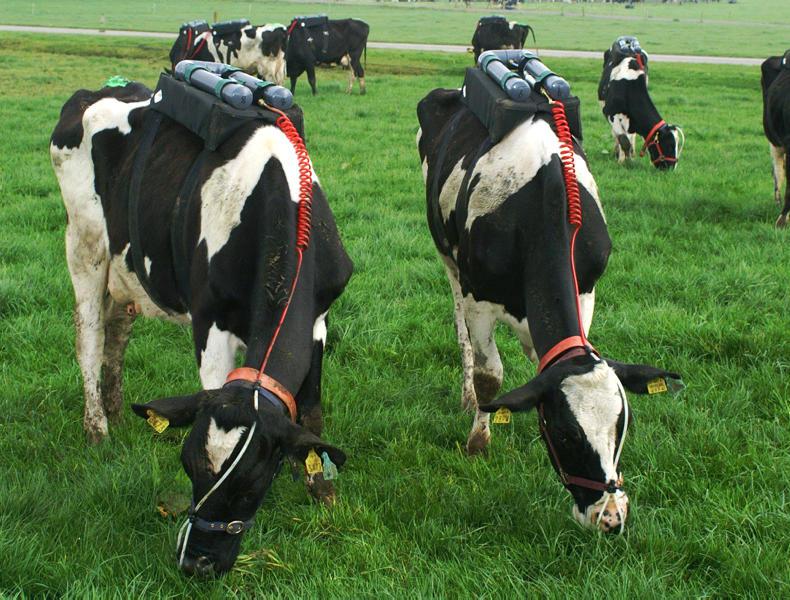
The number of breeding livestock in NI will not need to be cut before 2027, a new document from DAERA states.
A “carbon budget” must be set for 2023-2027 under the requirements of Stormont’s climate change legislation.
A public consultation on the issue, which was launched on Wednesday, states a drop in emissions from agriculture will be achieved “without reductions in the numbers of breeding animals”.
Instead, the focus will be on “reducing the number of older, non-breeding animals on farm through improvements in animal productivity”. This appears to align with criteria for claiming new headage payments for beef cattle and suckler cows.
However, it remains unclear what is required beyond 2027, although the DAERA document refers to the potential of “developments in cattle breeding” and “new innovations in nutrition” to help lower emissions from agriculture.
Emissions cuts
Stormont’s climate legislation includes legally binding targets to cut overall greenhouse gas emissions in NI by 48% by 2030 and to eventually reach net zero by 2050.
In March, the UK government’s Climate Change Committee (CCC) recommended that by 2030 this requires dairy cattle numbers in NI to fall by 22%, beef cattle by 17%, and sheep numbers to drop 18%.
Speaking at Greenmount last Thursday, UFU president David Brown said he did not support CCC advice on livestock cuts, pointing to rising global demand for meat and dairy, plus on-going research into solutions to reduce livestock emissions.
“We don’t want to decimate an industry because there is a target for 2027 or 2030. Undoubtedly, we will find some of those solutions,” Brown maintained.



SHARING OPTIONS