


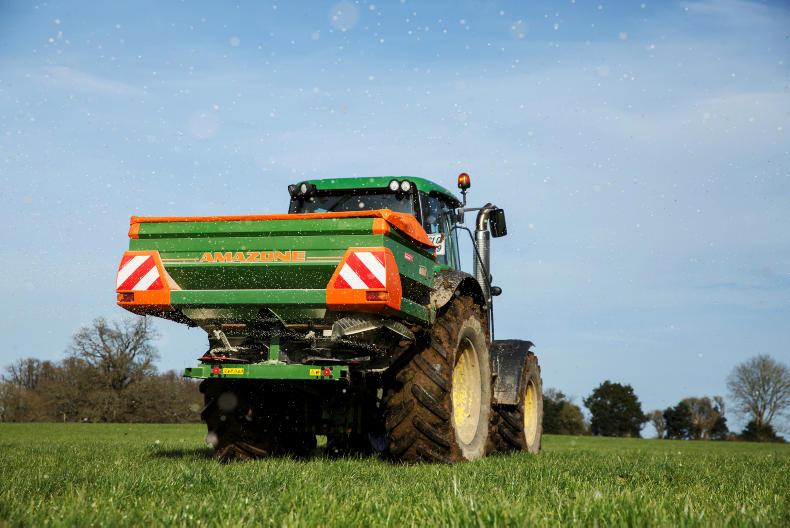
Fertiliser faces a price increase of £5-£7/t in September, bringing the cost of CAN to £230-£235/t.
Similar price increases have already been placed on fertiliser during July and August, which saw CAN prices rising from £210/t in June to their current levels of £225-£230/t.
Several agri merchants indicate that further price increases are likely before the end of the year. Early indications are that nitrogen prices could reach as high as £250/t if markets continue to follow current trends.
Compound fertilisers are also being affected, with products such as 20-10-10 and 25-5-5 expected to sell from a minimum price of £290/t, while 24-6-12 is likely to reach £305/t.
Compounds such as 16-16-16 are moving at £330/t, with straights such as muriate of potash trading for £295-£300/t with DAP priced closer to £400/t.
While fertiliser use slows in September, there is still a flurry of late season sales from farmers planting arable crops and livestock farmers looking to boost late season grass growth.
The price hikes are seemingly being fuelled by rising global demand for raw materials used in fertiliser manufacturing.
In addition, the weaker sterling against the euro is also having an impact on UK fertiliser prices for products imported from the EU.
Fertiliser deliveries
DAERA statistics show that on-farm fertiliser deliveries during the first half of 2018 amount to 218,600t, which is slightly lower than the 219,900t delivered in the first half of last year.
The poor spring impacted on fertiliser sales during the first quarter of the year, with 64,300t delivered compared with 91,500t last year.
Fertiliser sales recovered in the second quarter of this year, rising to 154,400t compared with 128,400t last year.





SHARING OPTIONS