



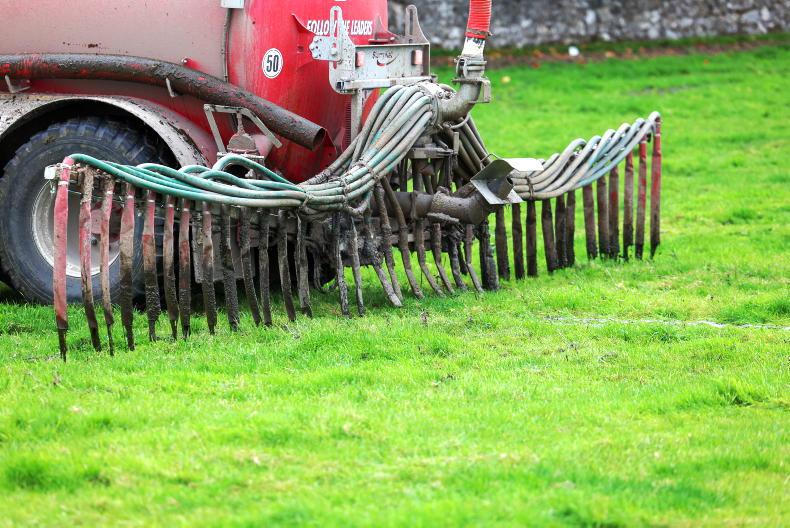
Demand from around 6,000 farmers who will have to switch to using Low Emission Slurry Spreading Equipment (LESSE), will dictate decisions around funding allocations in the new 40% farm grant scheme, DAERA has confirmed.
The new £40m Sustainable Farming Investment Scheme (SFIS) opens for applications from Tuesday 21 July and will be “rolled out in a number of rounds over the next three to four years”. Investments ranging from £3,000 to £62,500 are eligible for a 40% grant, meaning the maximum level of funding assistance is £25,000.
As well as LESSE, there is a wide range of eligible items including animal handling and cultivation equipment, as well as automated feeding systems and specialist items used in pig, poultry, crops and horticulture production.
However, each item is scored, so there is a competitive element to the scheme, while DAERA has also said there will be “separate ranking” of LESSE and non-LESSE.
On enquiry, a department spokesperson did not confirm what percentage of the budget might go towards LESSE, but indicated that decision will be determined by “the value and number of applications” for LESSE and non-LESSE as the scheme progresses.
“We will seek to align support for LESSE with any requirements coming out of the Nutrient Action Programme (NAP) review, which is currently out for consultation,” the spokesperson added.
The latest NAP plan proposes that farm businesses with more than 100 cattle livestock units (LU) use LESSE from February 2028, extending to those with more than 75 LU from February 2029 and those with more than 50 LU from February 2030.
In addition, pig farms with more than 10,000kg manure nitrogen per year will have to switch to LESSE from February 2029.
Farmers with more than 200 cattle livestock units, slurry contractors and large pig businesses are already required to use the equipment.
In order to differentiate between applications for LESSE and “help prioritise support for the greatest impact”, the number of cattle and/or pigs on the farm will also be taken into account.
It means that if two farms apply for the same LESSE item, but Farm A has 100 LUs while Farm B has 75 LUs, then Farm A will be placed higher in a ranking list.
“For cattle, these figures will be taken from NIFAIS, for the 2025 year. Pig producers will be asked to provide figures for breeding and/or finishers for the last 12 months,” confirmed the DAERA spokesperson.
First round
Just how many farmers actually get letters of offer to purchase items will be dependent on how much money is allocated to the first round. “The amount of funding provided within each round, including this first round, will be subject to budget availability and uptake within and across budget periods,” said the spokesperson.



SHARING OPTIONS