



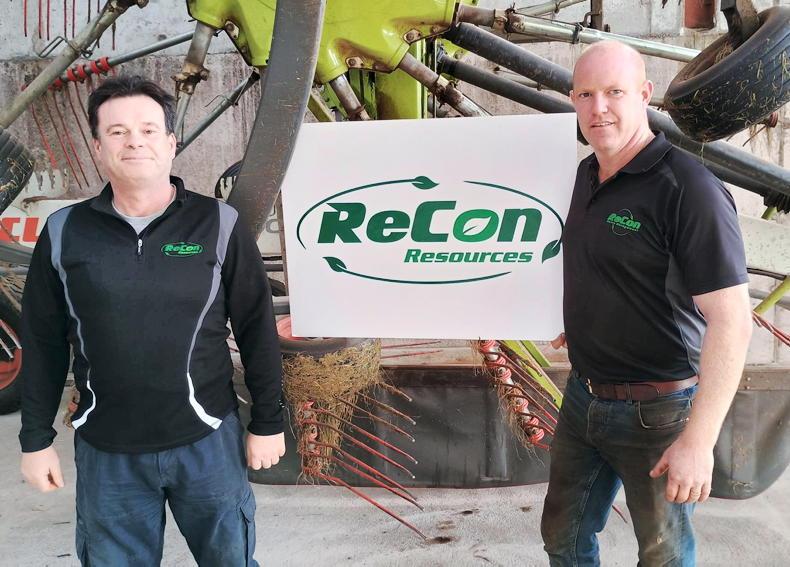
A company based outside Portadown, Co Armagh, believes it has a simple and relatively low-cost solution that will help reduce the issue of surplus phosphate (P) in agricultural soils.
ReCon Resources in partnership with Ekogea-Agri – a business that operates mainly in Wales and southwest England – maintains its biotechnology product, when applied to grassland three times per year, will effectively encourage plants to take P out of the soil.
Too much P getting into water bodies is a major cause of poor water quality in NI, where a slow build-up is an important contributor to over 60% of lakes and rivers not meeting “good” status.
The core issue is that NI agriculture is operating at a significant P surplus, over and above that needed for crop production.
Estimates from DAERA suggest that the annual surplus stands at around 11kg P/ha. Most of that comes from imported animal feed, with the subsequent P ending up in slurry spread onto land.
As a result, around 40% of agricultural land in NI is above the agronomic optimum for plant growth, which in most grassland situations is an Index of 2+.
The key point is that when additional P is applied to land that already has a surplus above the agronomic optimum, then research shows there is a much greater risk that the newly added P ends up in waterways.
The Ekogea-Agri BCx400 biotechnology additive offers the capability to disrupt this cycle of oversupply of P, and address issues with P saturation in soil.
This biotechnology is derived from natural marine algae and can be applied to grassland using standard spraying equipment.
According to Phil Hughes from Ekogea, his BCx400 product works by making P in the soil more plant available.
“It helps accelerate the release of P from the soil to the plant – the resulting amount of P in the plant tissue is 50% higher,” he said.
So, if the P is more plant available, does that mean there is a risk of more of it being lost to the environment?
“We are not seeing that from our work. The P is drawn through the plant and is not heading to the watercourse – that is what our analysis is telling us,” he responded.
Perhaps the other obvious question is if there is more P in the plant, is there a danger of too much P in the animal?
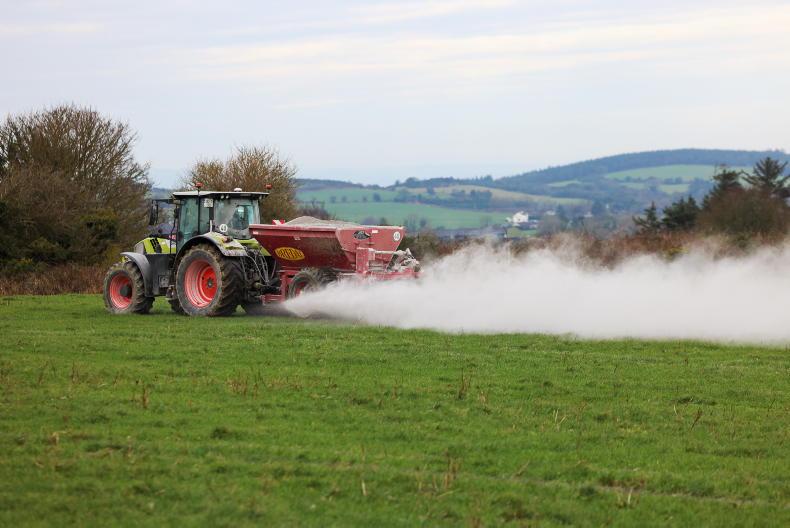
This biotechnology is derived from natural marine algae and can be applied to grassland using standard spraying equipment
While P is really important in animal nutrition and the second most abundant element after calcium, too much of either mineral can lead to issues such as urinary calculi (kidney stones).
“We have done tests in lambs. There were no crystals in the urine – the animals were fine. Our vets who have looked at the data tell us we are a long way off from causing any problems – we even went as far as taking multiple liver biopsies to be sure,” he said.
Advice for growing season
His advice is that BCx400 should be applied at the start of the growing season and again after first and second cut of silage.
Trial work suggests that the three applications will help to remove an average of 24.6mg/L of available P from the soil, which effectively would take P index down by one point.
By comparison, Hughes said a typical wheat crop would remove about 5mg/L of phosphate.
With the P in the soil more available for plant uptake, he maintained that is also reflected in improved root growth and a more elaborate root network. Work to establish quantified yield benefits is ongoing.
A typical cost of three applications over the season comes to about £150/ha. BCx400 is safe to use and has a long shelf life of two years.
Scope to sustainably manage your slurry
Assuming the BCx400 biotechnology is able to drive down P indices, any fields treated with the product should not become areas to target with excess slurry, maintained Daniel Connolly from ReCon Resources.
“This is about giving farmers the ability to continue with good practice, applying slurry and digestate to meet crop needs, while reducing the risk of excess P being lost to the environment,” he said.
With some headroom created, it will give the industry more time to look at whether it is possible to take more P out of feed or test out any other solutions that might exist.
“There is time now to think about implementing solutions ahead of next spring,” said Connolly.



SHARING OPTIONS