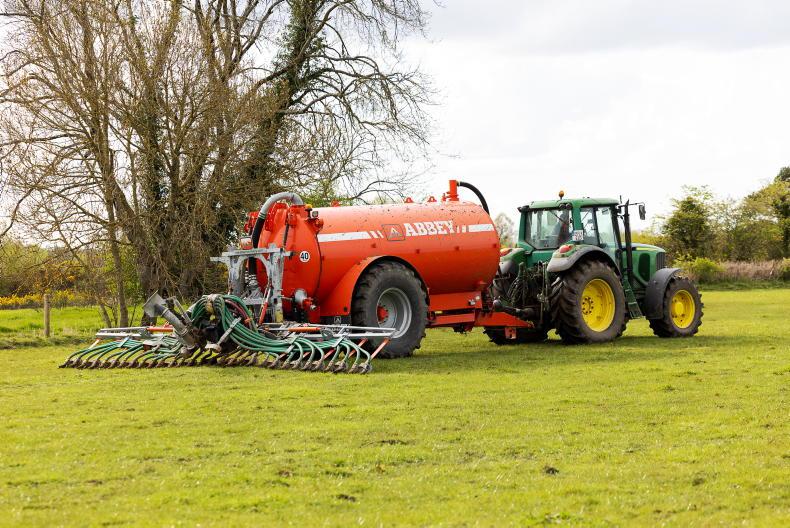
Farmers who fit small splash plates to the end of pipes on dribble bars are not complying with rules around low emission slurry spreading equipment (LESSE), a DAERA spokesperson has said.
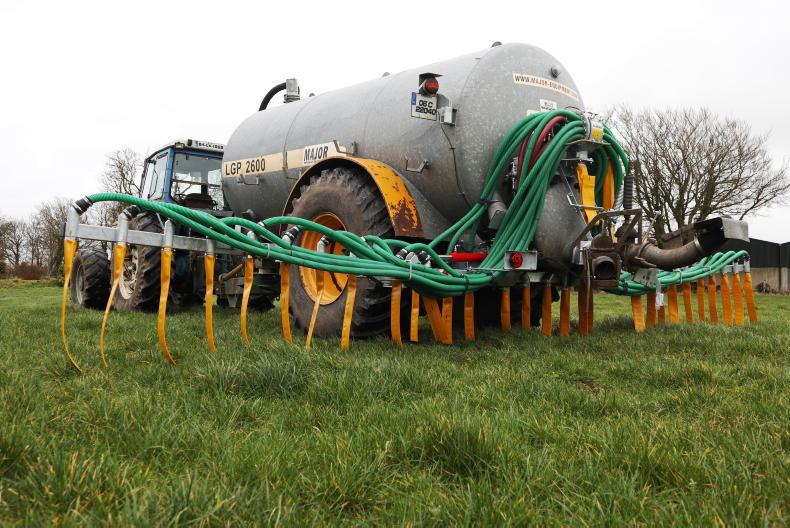
The fittings are designed to help prevent the solid fraction of slurry ending up back in the silage pit, due to lines of slurry contaminating grass. Ultimately, it is an innovation designed to avoid silage being contaminated and related animal health problems.
However, last month, the Scottish Government told farmers and contractors who are required to use LESSE, that the small splash plates were “not recognised as an acceptable method for the application of slurry”.
DAERA has now followed suit, with the spokesperson arguing that by spreading slurry over a greater surface area, it will increase nitrogen losses to the air in the form of ammonia emissions.
As a result, these small splash plates are not compliant with the Nutrients Action Programme (NAP) regulations in circumstances where LESSE must be used.
“The NAP requires LESSE to be used; by all slurry spreading contractors, farms with over 200 cattle livestock units, pig farms which produce 20,000kg or more manure nitrogen per year, derogated farms spreading slurry after 15 June and for spreading anaerobic digestate,” clarified the DAERA spokesperson.
They added that the terminology of LESSE in the NAP Regulations will be refined in future legislation to explicitly state that modifications which increase emissions are not recognised as low-emission methods.
Read more
UFU rejects splash plate ban proposal
Farmers urged to feed in views on ammonia
Farmers who fit small splash plates to the end of pipes on dribble bars are not complying with rules around low emission slurry spreading equipment (LESSE), a DAERA spokesperson has said.
The fittings are designed to help prevent the solid fraction of slurry ending up back in the silage pit, due to lines of slurry contaminating grass. Ultimately, it is an innovation designed to avoid silage being contaminated and related animal health problems.
However, last month, the Scottish Government told farmers and contractors who are required to use LESSE, that the small splash plates were “not recognised as an acceptable method for the application of slurry”.
DAERA has now followed suit, with the spokesperson arguing that by spreading slurry over a greater surface area, it will increase nitrogen losses to the air in the form of ammonia emissions.
As a result, these small splash plates are not compliant with the Nutrients Action Programme (NAP) regulations in circumstances where LESSE must be used.
“The NAP requires LESSE to be used; by all slurry spreading contractors, farms with over 200 cattle livestock units, pig farms which produce 20,000kg or more manure nitrogen per year, derogated farms spreading slurry after 15 June and for spreading anaerobic digestate,” clarified the DAERA spokesperson.
They added that the terminology of LESSE in the NAP Regulations will be refined in future legislation to explicitly state that modifications which increase emissions are not recognised as low-emission methods.
Read more
UFU rejects splash plate ban proposal
Farmers urged to feed in views on ammonia






SHARING OPTIONS