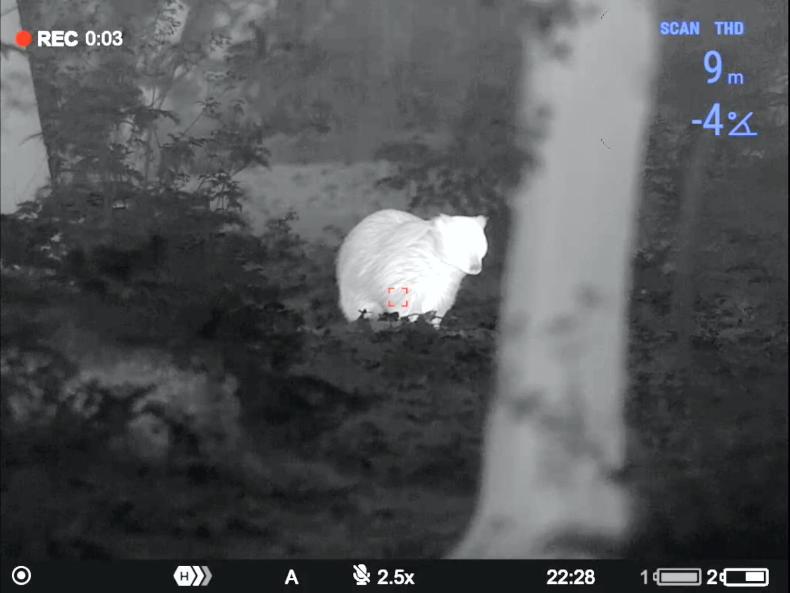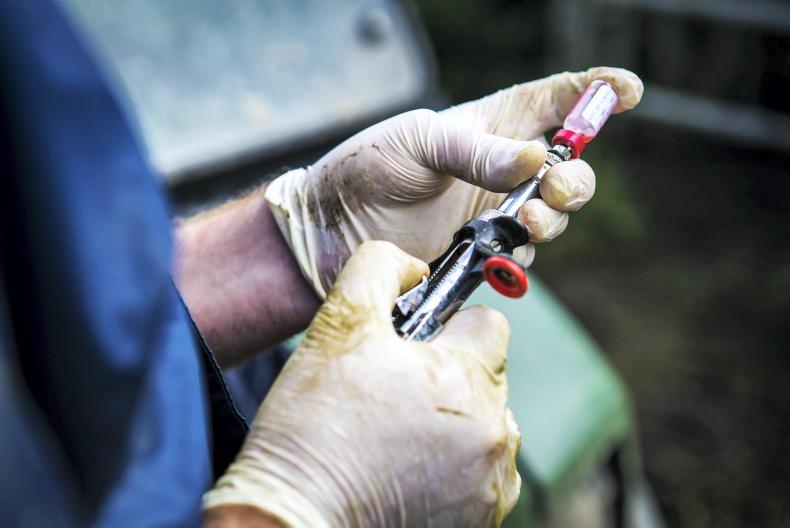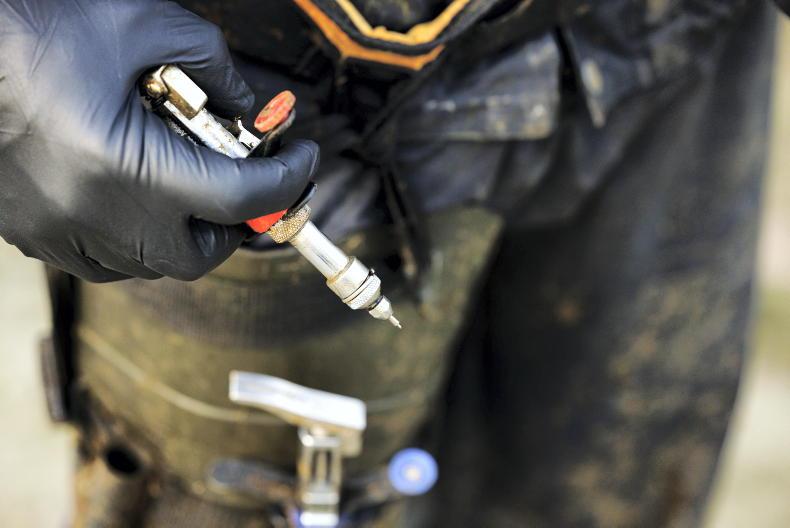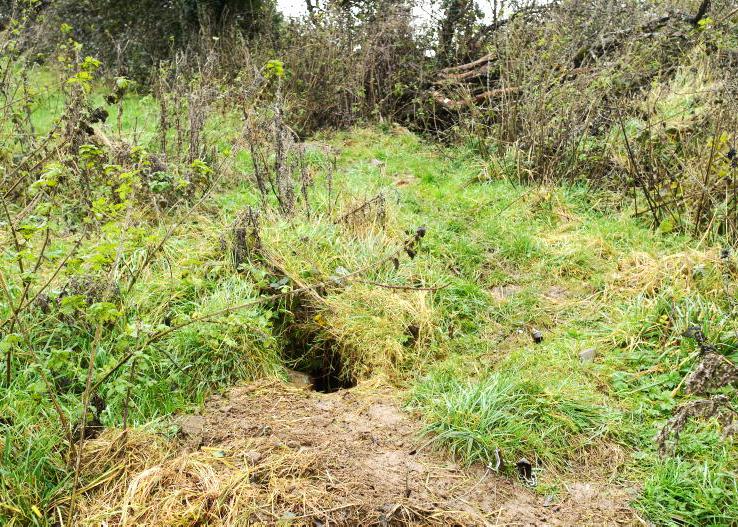
Even though there is no scientific evidence to suggest a test, vaccinate or remove (TVR) approach to badger control will have any impact on TB rates in cattle, the NI-devised policy is included in a TB action plan published by the Irish Department of Agriculture in 2025.
In NI, TVR was trialled in a 100km2 area around Banbridge between 2014 and 2018, while it is also now being deployed in a new cross-border regionalisation project, the NI element of which is taking place across a 235km2 area in the northwest.
In NI, badgers in the TVR work are caught in cages. However, the Republic of Ireland (ROI) has traditionally relied on stopped restraints (a type of snare) to trap a badger, before it is either vaccinated or culled. These restraints are much easier to set-up and manage than cages, so there is a significant cost saving.
Vaccine areas
There is another nuance in the ROI plan and that involves only using TVR in “vaccine areas” where rates of TB are lower than in the rest of the country.
Irish authorities have been culling badgers to help control bovine TB since the mid-1980s, however, given opposition from wildlife groups etc, government vets looked at the option of vaccination.
Work on that has been ongoing for over 15 years and in 2018, the then Agriculture Minister, Michael Creed announced that vaccination was now part of the TB eradication programme and would be rolled out across the country. The plan was that it “will eventually replace a majority of the current culling programme”.
In these vaccine areas, culling is still done around farms where there is an outbreak of TB, but in general, these areas are defined as being “where the risk posed to cattle by infected badgers has been brought under control”.
By 2021, over half of land where badger intervention is in place (over 20,000km2 ) was designated as a vaccine area, although recent information published by DAERA suggests this is now closer to 8,000km2 .
Cull numbers
Despite the ambition from 2018 to gradually move away from badger culling in ROI, an increase in TB cattle herd incidence in recent years, has scuppered those plans.
Recent data released by the Irish government confirmed that 8,159 badgers were culled in 2025, up from 7,317 in the previous year and well ahead of the long-term average of 6,041 in the years since 2015.
Of the 7,317 badgers culled in 2024, other data confirms that 1,690 were removed as a result of TB outbreaks in “vaccine areas”, while in the two previous years, that figure stood at around 800. The data also highlight a problem which was evident in the Banbridge TVR trial – the same badger can get caught multiple times in the same year.
In 2024, there were 8,123 badgers captured in the vaccine areas, but only 3,832 badgers were actually vaccinated. Subtracting the 1,690 which were culled, the data suggest that 2,601 badgers were repeat captures in that year.
The experiences from the Republic of Ireland highlight there are no easy options when it comes to TB control.
Given the pressure from wildlife groups etc, it is understandable why politicians and government are keen to move away from culling badgers to a vaccination-only approach.
However, vaccinating TB-infected badgers is a waste of time and once the Irish government started on a path towards vaccination-only across a lot of the country, rates of TB in cattle started to increase. In 2022, there were 23,393 reactors removed off farms and this increased to 41,682 by 2024.
The latest data suggests reactor numbers are now on a downward trend and while there are many reasons for that, it is hard not to link that to policies around wildlife intervention, and the number of badgers culled, in particular.
Going forward, it looks like the plan in the “vaccine areas” is now to test badgers for TB, before either vaccinating or culling – a Test, Vaccinate or Remove (TVR) approach.
It looks like a better option than simply vaccinating all badgers and perhaps it might have a positive impact in the “vaccine areas” given there should be lower rates of disease.
But the fundamental issues remain – TVR takes up a lot of resources and it relies on an in-field test for TB that is only around 70% sensitive, meaning that 30% of TB infected badgers test clear and are returned to the wild.