After a very wet winter, many of our soils remain saturated and prone to compaction from machinery or livestock, AFBI scientist Dr Suzanne Higgins has said.
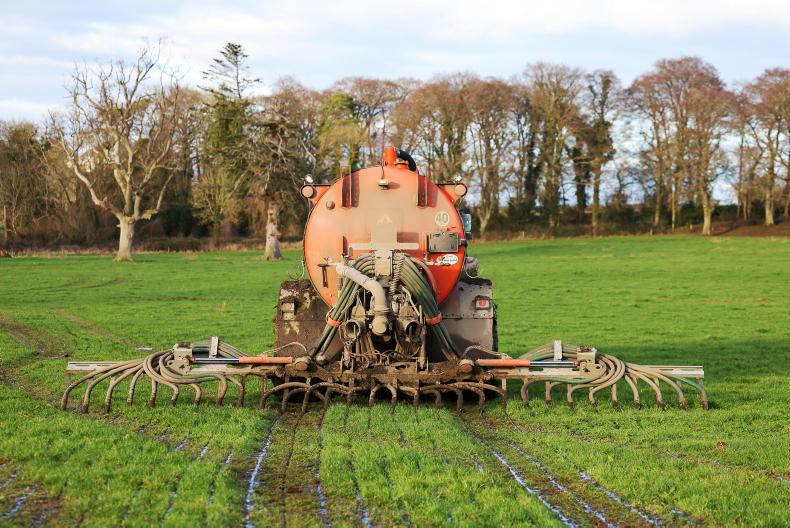
Taking part in the second of three AFBI-led Grassland Insights webinars, the researcher described the current status of soils as “weak and vulnerable”, adding that heavy slurry tankers or grazing livestock can do a lot of damage to soil structure at this time of year.
“The advice is to keep off fields if they are very wet. If you have to drive across the field, have sacrifice areas where you restrict traffic to designated tramlines rather than fan out from access points,” suggested Higgins.
Ponding
Where compaction occurs, water can’t drain through which leads to ponding and surface run-off. There will also be less oxygen in the soil, resulting in restricted growth.
Poor soil structure caused by compaction will also negatively impact life within the soil, while other factors limiting soil biology include pH and the amount of organic matter present.
Where soil biology is poor, it impacts the cycle of nutrients and the soil’s ability to respond to stresses such as drought or heavy rain, said Higgins.
To assess soil biology, she said one of the best indicators is to look at earthworm populations by digging a 20cm x 20cm x 20cm pit and counting the number present.
“If you see less than nine earthworms that would be a cause for concern. If between 10 and 19 that is that is good, but you may need to review your soil health. If there are above 20, that’s very good soil health,” she said.
Soil health
As well as physical and biological factors, the third determinant of overall soil health relates to chemical parameters, including pH and key nutrients.
An analysis of results coming from the first three zones in the Soil Nutrient Health Scheme (SNHS) shows that much of the land south of Lough Neagh and over to the Ards peninsula is at the optimum for pH of 6 to 6.5.
But for much of Co Down, south Armagh and Tyrone and Fermanagh, a lot of grassland is at 5.5 to 6 and in need of lime (unless it is a peat soil).
“The slightly lower pH in the west of NI is likely due to higher rainfall and also may be due to slightly lower intensity agriculture in this area,” said Higgins.
Phosphorus
While much of NI needs lime, it is a different story for phosphorus (P), with excess of this nutrient being one of the main causes of poor water quality in lakes and rivers in NI.
The analysis from the SNHS shows that a lot of the more productive land in NI is at least Index 3 for P, which is above the optimum for grassland (Index 2+ for silage; Index 2- for grazing).
It is only in hill areas and more marginal land further west where P levels are at or below optimum.
However, across much of Fermanagh and the Sperrins, P levels are at or below the optimum, reflecting the lower intensity of agriculture in these areas, said Higgins.
Potassium
When it comes to potassium (K), there is a very clear east to west split. In the east, many farms are at index 3, which is above the optimum for grazing (2-) and silage (2+).
However, K is easily washed out of soils, so it is no surprise farms further west have lower reserves.
“If you have silage fields in the west, we would recommend that you apply potassium and look at your soil results,” said Higgins.
Magnesium
One other issue picked up in the SNHS is that where there is a bedrock of basalt, magnesium (Mg) tends to be naturally high, along with other trace elements such as iron, copper and zinc. Those high levels are seen in much of Antrim and Down, as well as north Armagh and south Tyrone.
Higgins maintained that these high magnesium levels are “not harmful”, although when farmers in these areas are looking to correct pH, they should use calcium-based lime, rather than magnesium lime.