With spring sales just around the corner, breeders are currently preparing young bulls and heifers for sales around the country. The majority of breeding bulls are sold between now and the end of May.
As in all walks of life, preparation is key when it comes to getting cattle ready for sale day, and more importantly, a successful sale day.
Getting a pedigree bull or heifer fit for sale is not easy and takes a lot of time and labour. At this stage, breeders should have the cattle they intend bringing to sales earmarked. It is important this is done as early as possible. This brings me to the first step in the preparation process.
Selection
It is essential to assess your animal based on quality, functionality, age and temperament, primarily. An animal should be functionally correct and show no abnormalities or defects.
Preparing an animal with a visual defect or flaw is a waste of time and money. Most importantly, the animal should be quiet and easy to handle, remember, sales are busy places and not for animals which are hard to handle.
Feeding
Once you are happy the animal is functionally correct with no defects, it is important the selected animals are dosed properly and well cared for in the weeks and months leading up to sale day.
Excellent feeding management is essential for growth, weight gain and hair, however, it is also important animals are not over pushed with feed. Animals which are over fed can develop various problems, such as infertility, feet problems and in heifers poor milk production.
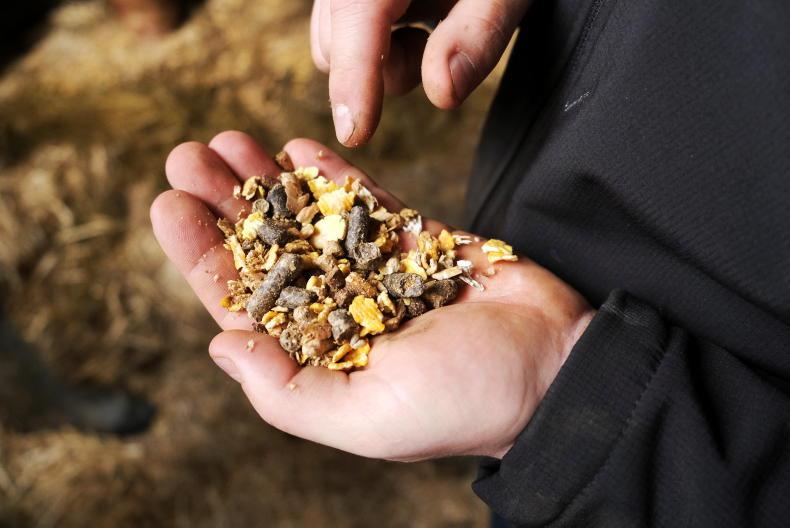
It is important not to over feed breeding cattle. Observing the animals manure will help you understand how much the animal can eat.
The rate of feed will depend on the breed, weight and age of the animal. Breeding Cattle should not be fed ad-lib. Ideally, the animal should be fed twice daily, with access to clean drinking water at all times. The rate of feeding should be built up slowly. Observing the animal's manure will give you a good indication of what it can eat. If it starts to become runny, the animal is eating too much. The manure should be soft, not hard or runny.
Training
Training of animals for sales should commence well in advance of sale day. Ideally animals should be tied up with a secure halter as young as possible. They should be tied up for at least 2-3 hours at a time. First of all, in a secure crush.
When they have settled with the halter, they should tied outside the crush for 2-3 hours a day. Repeat this until the animal is settled and comfortable to lie down with the halter. Once the animal is settled on the halter it should be walked within a secure yard. Music playing in the background helps to settle animals and prepare them for sale day.
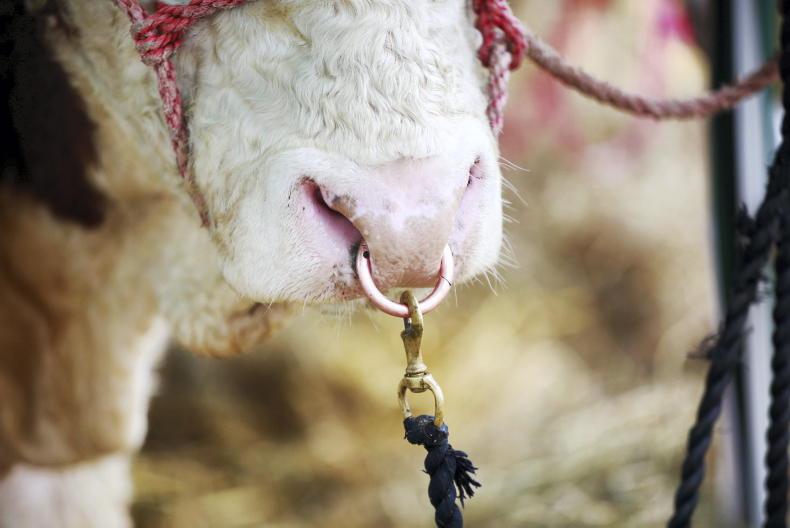
All bulls must have a ring in their nose. This also helps to control the animal on sale day.
All bulls attending sales must have a ring in their nose for safety reasons. It is important this is done well in advance of the sale to allow time for it to heal. Most breeders ring bulls around 12-months-old, this can vary depending on the size and breed of the bull. Allow at least 4-5 weeks between ringing and using a nose rope.
For heifers, a snaffle and lead rope is a great way of controlling the animal.
Grooming
As spring begins and temperatures start to rise, it is only natural for cattle to lose their winter coat. Maintaining this hair is not simple, but can be crucial on sale day. In order to maintain a nice coat of hair for sale day, animals should be washed and combed regularly to maintain and generate hair growth.
As the saying goes – a hand full of hair is worth a tonne of flesh. If animals are scratching and loosing hair, its likely they have mange or lice, which is common in winter and spring. This should be treated as soon as possible.
Entries
Make sure to enter the animal in the sale and not miss the deadline for entries. This has happened to the best of breeders. Most sales close 4-5 weeks in advance of sale day, but this can vary.
Clipping
Once the animal has a nice coat of hair, the animal should be clipped 1-2 weeks in advance of the sale. Before starting to clip your animal, it is important you visualise what you want your animal to look like. The main objectives are to level the top line, level the bottom line, make the animal look longer by clipping into its neck, tidy its tail and tail head, and for some breeds, clip the head. Remember, not every animal is the same, so you have to adjust to suit the animal and its breed.
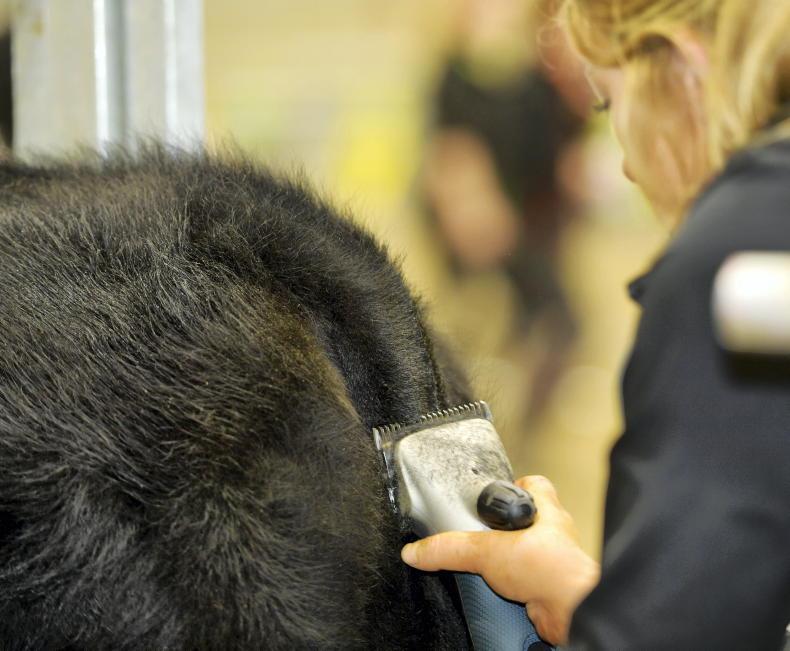
The animal should be clipped 1-2 weeks in advance of the sale.
Testing requirements
It is important breeders check the testing requirements for the sale they are entering. Some sales differ on what tests are required. A recent TB test is always beneficial. Some sales require a recent fertility test also.
Sale day essentials
The following items are essential for sale day: white coat, clean halter, Snaffle and lead rope, combs\brushes, soap/sprays/shine, show stick, blow dryer and possibly clippers. Most of all, don’t forget the animal’s paperwork, such as its blue card and Pedigree certificate. It is also important to have some of the animal's feed with you. This can help settle the animal on the morning of the sale.
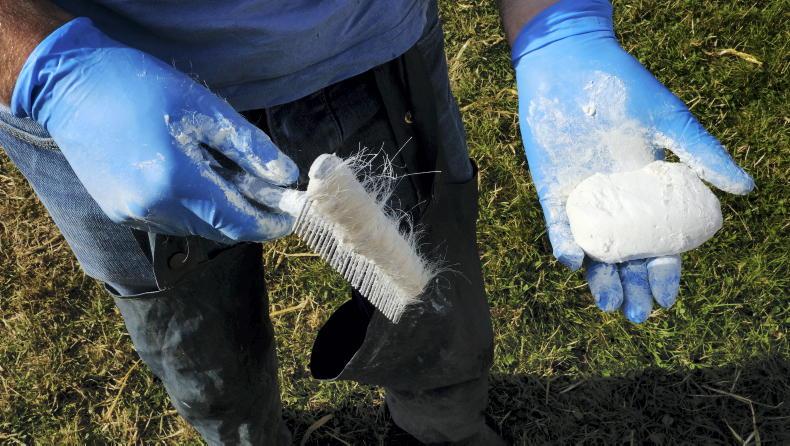
Having the necessary grooming essentials with you on sale day is vital.
Organisation
Sale day can be busy, so it’s important to allow enough time to prepare your animal before judging starts and be ready when your class is called. It is imperative to have both yourself and your animal turned out to a high standard, this is why time management and organisation is key.
Presentation
Ensure your animal is washed, clean and dry. Soaps work best on short haired animals; sprays work best on long haired animals. Shaving foam is another favourite for longer haired animals. A final touch up of shine always helps the animal to stand out. It is also important that your own white coat is clean and tidy.
Showring etiquette
When you’re in the ring, always be polite and respectful to the judge, stewards and the other competitors. Be patient with your own animal, especially if it’s their first time out. Always keep an eye on the judge and don’t relax after he/she has looked at your animal, as they could still be looking at your animal when they are further down the line.
Be alert to what the judge may want you to do, for example, turn your animal around, walk them etc. Take the opportunity to learn as much as possible from your competitors. Remember, you learn more from losing than winning.
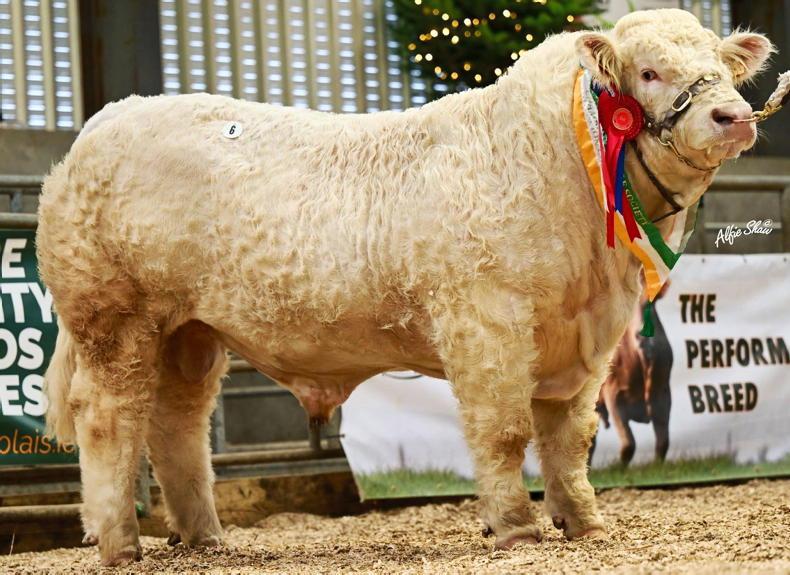
The finished product, Rosanna Van Gogh which sold for €15,500 at the Christmas Cracker sale in December 2025. \ Alfie Shaw
Sale
Finally, the most important part of all, the sale ring. It is important to have your animal ready for the sale ring.
Pedigree cattle are normally sold in catalogue order. If you have any information you wish to announce regarding the animal, it helps to have it on a piece of paper for the auctioneer. It is also imperative you have a reserve price in your head for the auctioneer.
With spring sales just around the corner, breeders are currently preparing young bulls and heifers for sales around the country. The majority of breeding bulls are sold between now and the end of May.
As in all walks of life, preparation is key when it comes to getting cattle ready for sale day, and more importantly, a successful sale day.
Getting a pedigree bull or heifer fit for sale is not easy and takes a lot of time and labour. At this stage, breeders should have the cattle they intend bringing to sales earmarked. It is important this is done as early as possible. This brings me to the first step in the preparation process.
Selection
It is essential to assess your animal based on quality, functionality, age and temperament, primarily. An animal should be functionally correct and show no abnormalities or defects.
Preparing an animal with a visual defect or flaw is a waste of time and money. Most importantly, the animal should be quiet and easy to handle, remember, sales are busy places and not for animals which are hard to handle.
Feeding
Once you are happy the animal is functionally correct with no defects, it is important the selected animals are dosed properly and well cared for in the weeks and months leading up to sale day.
Excellent feeding management is essential for growth, weight gain and hair, however, it is also important animals are not over pushed with feed. Animals which are over fed can develop various problems, such as infertility, feet problems and in heifers poor milk production.

It is important not to over feed breeding cattle. Observing the animals manure will help you understand how much the animal can eat.
The rate of feed will depend on the breed, weight and age of the animal. Breeding Cattle should not be fed ad-lib. Ideally, the animal should be fed twice daily, with access to clean drinking water at all times. The rate of feeding should be built up slowly. Observing the animal's manure will give you a good indication of what it can eat. If it starts to become runny, the animal is eating too much. The manure should be soft, not hard or runny.
Training
Training of animals for sales should commence well in advance of sale day. Ideally animals should be tied up with a secure halter as young as possible. They should be tied up for at least 2-3 hours at a time. First of all, in a secure crush.
When they have settled with the halter, they should tied outside the crush for 2-3 hours a day. Repeat this until the animal is settled and comfortable to lie down with the halter. Once the animal is settled on the halter it should be walked within a secure yard. Music playing in the background helps to settle animals and prepare them for sale day.

All bulls must have a ring in their nose. This also helps to control the animal on sale day.
All bulls attending sales must have a ring in their nose for safety reasons. It is important this is done well in advance of the sale to allow time for it to heal. Most breeders ring bulls around 12-months-old, this can vary depending on the size and breed of the bull. Allow at least 4-5 weeks between ringing and using a nose rope.
For heifers, a snaffle and lead rope is a great way of controlling the animal.
Grooming
As spring begins and temperatures start to rise, it is only natural for cattle to lose their winter coat. Maintaining this hair is not simple, but can be crucial on sale day. In order to maintain a nice coat of hair for sale day, animals should be washed and combed regularly to maintain and generate hair growth.
As the saying goes – a hand full of hair is worth a tonne of flesh. If animals are scratching and loosing hair, its likely they have mange or lice, which is common in winter and spring. This should be treated as soon as possible.
Entries
Make sure to enter the animal in the sale and not miss the deadline for entries. This has happened to the best of breeders. Most sales close 4-5 weeks in advance of sale day, but this can vary.
Clipping
Once the animal has a nice coat of hair, the animal should be clipped 1-2 weeks in advance of the sale. Before starting to clip your animal, it is important you visualise what you want your animal to look like. The main objectives are to level the top line, level the bottom line, make the animal look longer by clipping into its neck, tidy its tail and tail head, and for some breeds, clip the head. Remember, not every animal is the same, so you have to adjust to suit the animal and its breed.

The animal should be clipped 1-2 weeks in advance of the sale.
Testing requirements
It is important breeders check the testing requirements for the sale they are entering. Some sales differ on what tests are required. A recent TB test is always beneficial. Some sales require a recent fertility test also.
Sale day essentials
The following items are essential for sale day: white coat, clean halter, Snaffle and lead rope, combs\brushes, soap/sprays/shine, show stick, blow dryer and possibly clippers. Most of all, don’t forget the animal’s paperwork, such as its blue card and Pedigree certificate. It is also important to have some of the animal's feed with you. This can help settle the animal on the morning of the sale.

Having the necessary grooming essentials with you on sale day is vital.
Organisation
Sale day can be busy, so it’s important to allow enough time to prepare your animal before judging starts and be ready when your class is called. It is imperative to have both yourself and your animal turned out to a high standard, this is why time management and organisation is key.
Presentation
Ensure your animal is washed, clean and dry. Soaps work best on short haired animals; sprays work best on long haired animals. Shaving foam is another favourite for longer haired animals. A final touch up of shine always helps the animal to stand out. It is also important that your own white coat is clean and tidy.
Showring etiquette
When you’re in the ring, always be polite and respectful to the judge, stewards and the other competitors. Be patient with your own animal, especially if it’s their first time out. Always keep an eye on the judge and don’t relax after he/she has looked at your animal, as they could still be looking at your animal when they are further down the line.
Be alert to what the judge may want you to do, for example, turn your animal around, walk them etc. Take the opportunity to learn as much as possible from your competitors. Remember, you learn more from losing than winning.

The finished product, Rosanna Van Gogh which sold for €15,500 at the Christmas Cracker sale in December 2025. \ Alfie Shaw
Sale
Finally, the most important part of all, the sale ring. It is important to have your animal ready for the sale ring.
Pedigree cattle are normally sold in catalogue order. If you have any information you wish to announce regarding the animal, it helps to have it on a piece of paper for the auctioneer. It is also imperative you have a reserve price in your head for the auctioneer.
SHARING OPTIONS