The beef Euro-star indexes will be updated in the next run of evaluations from the Irish Cattle Breeding Federation (ICBF) on Tuesday 21 July.
The main change is an update to the economic values used in the terminal and replacement indices.
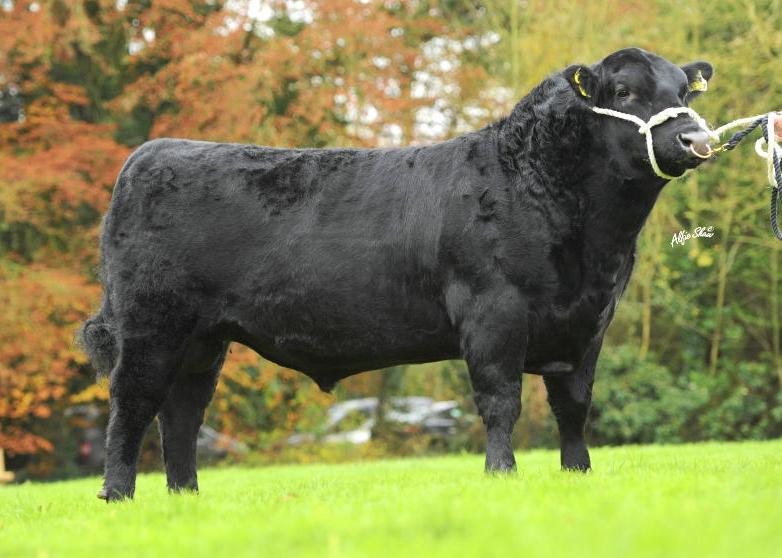
As it stands, 35 of the top 50 artificial insemination (AI) sires on the replacement active bull list are Angus.
Many of the AI sires at the top of the dairy-beef list are also at the top of the replacement list, leaving many suckler and pedigree breeders frustrated, as the two indexes have a completely different purpose.
There is also a concern among breeders that the gene pool within breeds is narrowing. This is highlighted in the fact that eight of the top 10 AI sires on the replacement active bull list go back to one Angus bull, Te Mania Berkley B1, with many other sons and grandsons also ranking in the top 50.
On the other hand, the benefits of the commercial beef value (CBV) are there for all to see, establishing itself as a must use tool for all beef finishers.
So, why is Angus dominating and what will the upcoming changes mean for pedigree and commercial cattle breeders on the ground.
We put the questions to the ICBF.
Q: Why are there currently 35 Angus bulls in the top 50 AI sires on the replacement active bull list?
A: The bulls get their values based on the economic values coming from the Teagasc Economic Model for Suckler Beef Production, applied to the genetic evaluation figures that the ICBF produces.
It is a rigorous, transparent process. The fact that there are also a lot more Angus bulls being bought for AI now over any other breed will also mean that the likelihood of having more Angus bulls on the list increases.
While many of the Angus bulls will have lower genetic merit for the carcase traits than their continental contemporaries, they will have much better figures for milk, fertility and other cost of production traits – also very important traits in suckler production.
Q: What is the average daughter cow liveweight of the top 50 bulls on the replacement list?
A: The expected mature cow size of the daughters of the top 50 bulls on the replacement active bull list at 200 days post calving is 710-720 kg.
Q: What is the average calf price and weaning weight of the calves born from the daughters of the top 50 bulls on the replacement list?
A: The average price per/kg of the progeny from the daughters of the bulls in the top 50 is €5.01/kg, with an average weaning weight of 322kg. If we compare this to the year 2025, the average price was €5.22/kg, with an average weaning weight of 320kg.
However, if we look at the calving interval and the number of calves produced per cow, the calving interval of the daughters of the bulls in the top 50 is 376 days, compared to 392 days in 2025, while the number of calves produced per cow from the daughters of the bulls in the top 50 is 0.97, compared to 0.93 in 2025.
The net result is that in a 20-cow suckler herd, based on the figures from 2025, the daughters from the top 50 bulls will return €31,320 in revenue compared to €31,286 for the average 20-cow herd.
Q: Does the ICBF believe the AI sires at the top of the replacement list are suitable for producing cows for a suckler calf to weanling system in Ireland?
A: In making decisions on what bulls to use, the vast majority of farmers will decide firstly what breed they want to use.
Most farmers have strong breed preferences.
We are not in the business of trying to convince committed continental cattle breeders to switch to using traditional breeds, or vice versa.
Once a farmer has decided on their preferred breed, using the active bull list to help rank bulls is a very effective way to select the most profitable bulls. That is a very effective way to use the active bull list.
Q: What changes can we expect in the next evaluation? Will there be much change to the terminal, replacement and dairy-beef lists?
A: Beef price in the indices has been updated from €5.89/kg to €6.68/kg. The cost of gestation length and the cost of fertility have also increased as a result, due to the opportunity cost of not having a live calf on the ground or a sub-fertile cow.
Overall, there will be a slight shift toward the continental breeds from the traditional breeds. However, there will be very little re-ranking of bulls within breed.
Q: Is there a concern around inbreeding, as many of the Angus bulls in the top 50 on the replacement list go back to one sire?
A: Inbreeding is always something that we need to keep an eye on. The issue with active bull lists being dominated by a similar gene pool is something we’ve had to watch for years on the dairy side.
At one stage, half the bulls on the active bull list were sons of a single sire. Ultimately, a well-functioning breeding programme by the breed societies and AI companies will help deal with it, as we did on the dairy side.
Q: Can we expect further changes to the economic weightings within the indices following the July run?
A: Yes. Our plan is to update the economic values again in 2027 as part of a biannual update.