



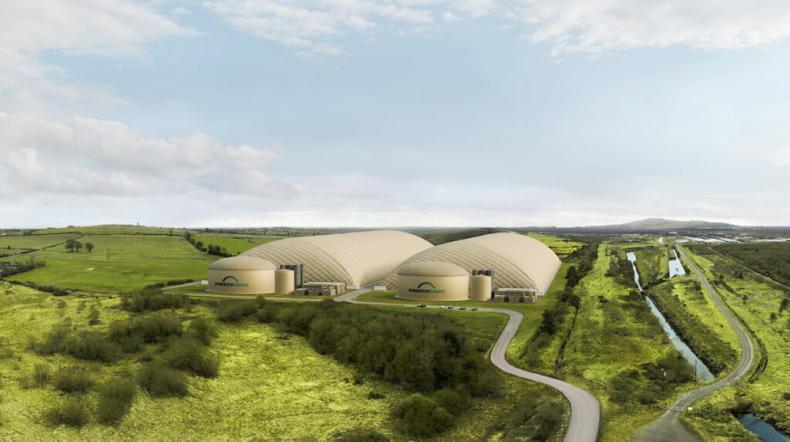
With the transition to renewable electricity well under way, a key challenge remains: what to do with power generated from wind and solar when demand is low? This is where long-duration energy storage comes in, with multiple innovative projects now under development across the country.
Just weeks after the major Rathrush hydrogen storage project in Co Carlow was announced, another significant energy storage development has been unveiled in Co Offaly.
Energy Dome, an Italian long-duration energy storage technology developer, and Google have announced a bilateral commercial agreement for a 23MW/200MWh CO2 Battery project in Offaly.
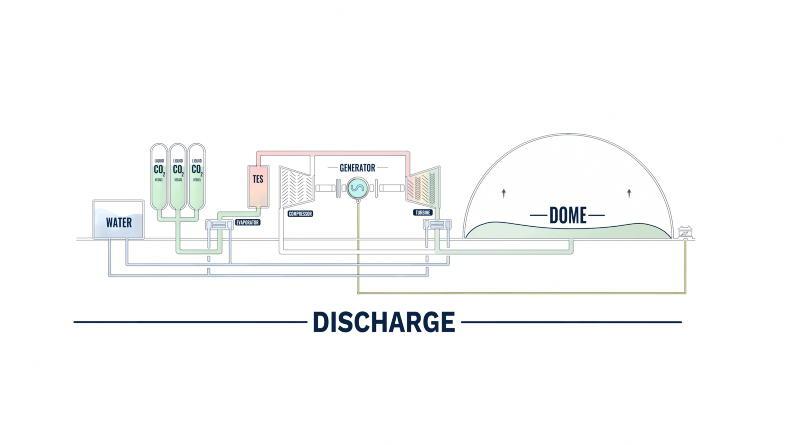
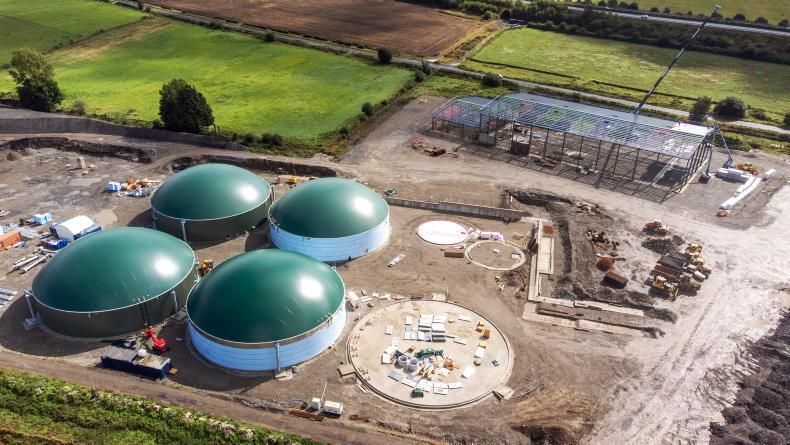
The project will be developed, owned and operated by Energy Dome using its proprietary CO2 Battery technology. The system uses surplus electricity from the grid to compress and store CO2. When electricity is required, the stored CO2 is expanded through a turbine to generate power, which is then supplied back to the grid.
Long-duration storage
The Irish Government has identified long-duration energy storage as a key solution for ensuring security of electricity supply and helping Ireland achieve its target of 80% renewable electricity by 2030.
Google and Energy Dome say the project will demonstrate how long-duration energy storage can support the efficient use of renewable energy resources, while helping to reduce local grid congestion. The system will absorb surplus electricity during periods of oversupply and dispatch power when demand is high or renewable generation is low.
Offaly location
Developed in partnership with Lumcloon Energy, a Midlands-based renewable energy developer, the project will be located near Rhode in Co Offaly.
The site occupies the location of a former peat-fired power station and will repurpose brownfield industrial land for clean energy infrastructure.
The area already has significant wind and solar generation, much of which can face curtailment due to local grid constraints.
By storing surplus electricity for later use, the project aims to relieve congestion on the grid and reduce the need for costly transmission upgrades.
How the technology works
Unlike many battery technologies that rely on lithium-ion cells and critical minerals, the CO2 battery uses readily available industrial equipment and materials.
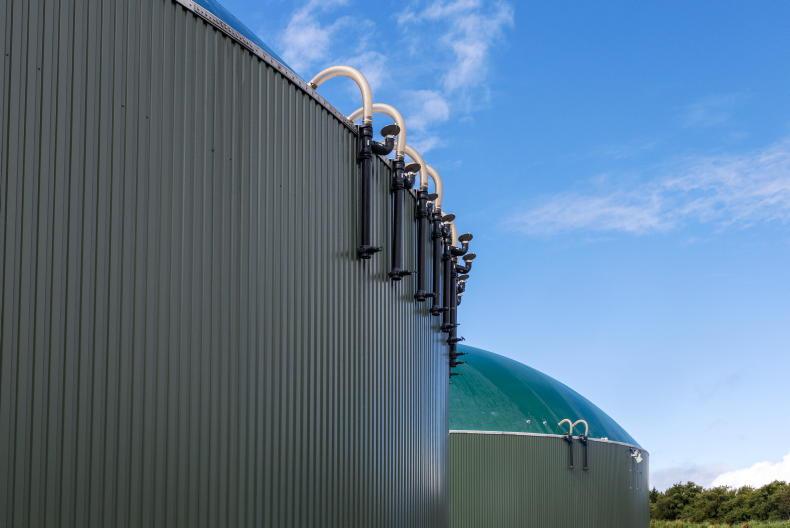
The technology stores electricity by compressing carbon dioxide gas into a dense, high-pressure state using surplus power from the grid. The compressed CO2 is stored in pressurised tanks. When electricity is needed, the gas is released and expanded through a turbine connected to a generator, producing electricity.
The CO2 then returns to a low-pressure storage dome and is reused in the next cycle. Because the system operates in a closed loop, the gas is not consumed during operation.
CO2 supply
At this stage, it remains unclear where the CO2 for the Offaly project will be sourced from or how much will be required.
Typically, the CO2 used in Energy Dome systems is obtained from existing industrial sources and purchased during construction. Once the system is commissioned, the gas remains sealed within the battery and continuously circulates between the storage dome, compressors, storage tanks and turbine.
As a result, the system does not require an ongoing supply of CO2 and is not expected to generate operational CO2 emissions as part of the energy storage process.
Progress
The project has already secured land, planning permission and a grid connection. It has also been awarded a 10-year capacity contract by EirGrid and is expected to enter operation in 2028. Energy Dome also plans to develop a second 200MWh unit at the site, creating a long-duration energy storage hub in the Irish Midlands.
Speaking following the announcement, Vanessa Hartley, head of Google Ireland, said: “At Google, we are committed to catalysing next-generation energy technologies to bolster grid resilience and introduce critical storage capacity to the system.”



SHARING OPTIONS