



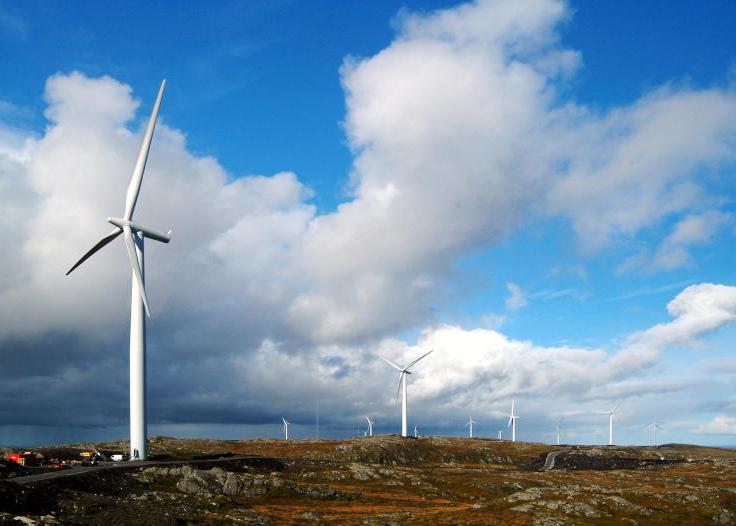
Ireland’s sixth Renewable Electricity Support Scheme (RESS 6) auction has been launched, creating another opportunity for developers to secure long-term State support for renewable energy projects.
For farmers and landowners, the scheme is significant because it will underpin the next wave of wind and solar farm development, and may make the difference as to whether a project is actually built of not.
Since the first RESS auction in 2020, the scheme has become Ireland’s most successful renewable energy support scheme. To date, 235 renewable energy projects with a combined capacity of 6,282MW have secured support through the first five auctions.
That includes 45 onshore wind projects (1,634MW) and 190 solar farms (4,648MW).
The competitive auction system has effectively balanced investor appeal with the need to deliver value for electricity consumers. Rather than offering fixed subsidies, developers compete on price, with the lowest successful bids securing support.
RESS 6 continues to operate as a 15 year two-way floating Feed-in Premium (FIP) scheme. Each project submits a bid price, known as the strike price, into the auction.
If the project is succesful, when wholesale electricity prices fall below this strike price, the project receives a top-up payment from the State.
This is funded through the PSO levy. If electricity prices rise above the strike price, the project pays the difference back to consumers.
The system provides developers with predictable long-term revenues while ensuring consumers benefit when electricity prices are high.
This revenue certainty has been central to financing renewable energy projects over the past five RESS auctions.
RESS 6 retains the Unrealised Available Energy Compensation (UAEC) mechanism, which compensates wind and solar projects when they are available to generate electricity but are curtailed due to oversupply.
However, it does not apply where generation is limited by transmission network constraints or during periods of negative electricity prices.
While UAEC helps reduce revenue uncertainty for developers and investors, it also highlights the importance of investing in grid infrastructure to accommodate increasing levels of renewable generation.
RESS 6 is open to a range of renewable technologies Eligible projects include:
The inclusion of storage reflects the growing importance of batteries in helping manage Ireland’s increasingly renewable electricity system.
The Government has maintained strict qualification requirements to ensure that only deliverable projects enter the auction.
To be eligible, projects must already have full planning permission, a valid grid connection agreement, evidence that the project is financeable, and a bid bond along with other financial guarantees demonstrating the ability to proceed.
Applicants must also demonstrate sufficient investment backing through investor commitments or available equity funding, with minimum capital or development expenditure of €300,000 per MW expected.
The minimum project size remains 1MW, while the maximum eligible size is effectively capped at the equivalent of 600GWh of annual generation.
Perhaps the biggest policy change in RESS 6 is the introduction of a new Resilience Score, reflecting EU efforts to reduce dependence on Chinese renewable energy supply chains.
Projects that meet the minimum resilience requirements receive a 0.05-point auction bonus, while those that do not score zero.
To qualify, wind projects must demonstrate that at least 75% of turbines and major components are sourced and assembled outside China, with 50% of permanent magnets also coming from non-Chinese suppliers.
Solar projects face even stricter requirements, with modules, cells and inverters all required to be sourced or assembled outside China, alongside at least four major components from alternative suppliers.
While the 0.05-point bonus appears modest, it could prove decisive in a tightly contested auction where projects are separated by very small margins.
As with previous RESS auctions, successful projects must establish a Community Benefit Fund. Developers are required to contribute at least €2 per MWh generated (or compensated under UAEC) into the fund each year throughout the support period.
The funds are intended to support environmental, social and economic projects within local communities, aligned with the UN Sustainable Development Goals.
Direct payments for households living close to wind farms must also be provided. Households within 1km of a wind project will receive €1,000 annually, while homes located between 1km and 2km will receive graduated payments based on proximity.
At least 40% of each community benefit fund must support local clubs, community organisations and not-for-profit initiatives, while administration costs are capped.
The RESS 6 auction timetable has already been established, with auction submissions opening on 29 October and the final auction results scheduled to be announced on 2 December. Successful projects will then move towards construction and operation over the following years.
For farmers, RESS 6 is likely to make the difference in whether a proposed solar, wind or battery hybrid project, for which they have entered into a lease agreement, ultimately goes ahead.
It will also continue to give confidence to developers as they seek new sites for future RESS auctions.
The broadening of eligible technologies means proposals may now involve not only standalone wind or solar farms, but also battery storage or hybrid developments combining several technologies on the one site.
Developers will continue to prioritise sites with strong grid access, planning potential and willing landowners.
Those considering entering lease negotiations should seek independent legal, planning and tax advice before signing any agreement.




SHARING OPTIONS