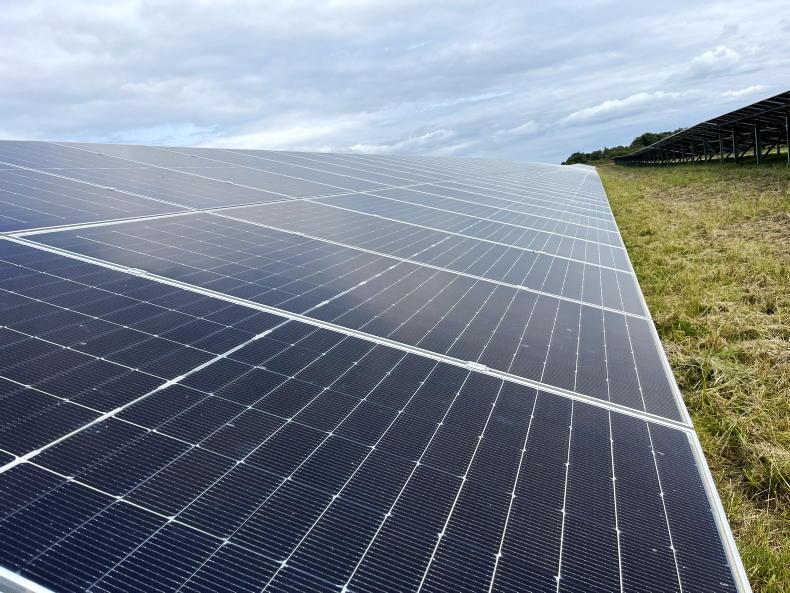
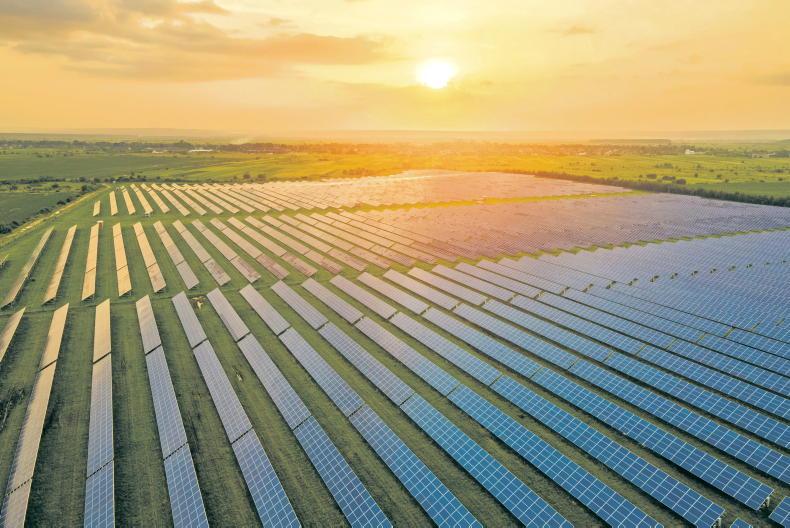
Solar farms are becoming an ever more familiar sight on our landscape in certain parts of the country, and so too are calls to manage where they are built.
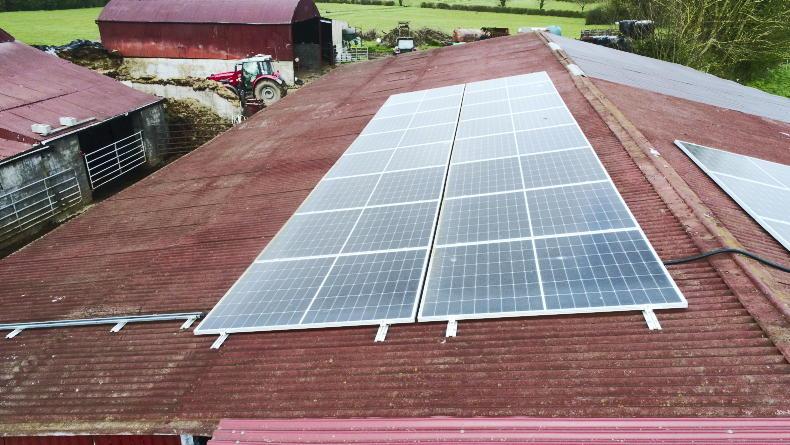
The IFA’s statement to the Joint Oireachtas Committee on Housing, Local Government and Heritage on Planning Regulations for Solar Farms highlights the remarkable growth of solar energy in Ireland, from nearly zero capacity to 1.7GW by 2024, with a Government target of 8GW by 2030. While the organisation strongly supports rooftop solar for homes, farms and commercial buildings, it has significant reservations about the growing number and scale of ground-mounted solar farms across the countryside.
Central to their argument is some farmer’s concern about the loss of productive agricultural land, particularly “some of Ireland’s most productive land,” which many farmers see as an “emotive asset” tied to identity, livelihood and long-term community viability.
The problem
In its statement, the IFA said that large-scale solar farms offer limited ongoing employment or economic activity beyond lease payments. Once installed, they argue, solar farms do little to support the existing rural economy: local co-ops, feed merchants, livestock marts, machinery dealers and professional agri-services see little or no benefit.
The organisation warns that replacing food-producing land with energy-producing land has ripple effects that extend far beyond individual farms, and it calls for robust planning guidelines to ensure developments minimise disruption to rural communities.
Beyond income, Solar Ireland highlighted the that Community benefit funds from solar farms support local schools, sports clubs, youth groups, etc.
International
International comparisons also feature prominently in the IFA’s case. They point to restrictions in the UK, France and Italy designed to protect high-value agricultural land or ensure continued agricultural activity through agri-voltaic systems.
The IFA insists that farmers must remain central to any decision-making process and that planning guidelines should reflect the cumulative impact of solar development on landscapes, livelihoods and future generations.
Solar Ireland
Solar Ireland, by contrast, argues that much public debate has been shaped by misinformation rather than evidence, obscuring the real-world benefits solar farms bring to farmers and rural economies.
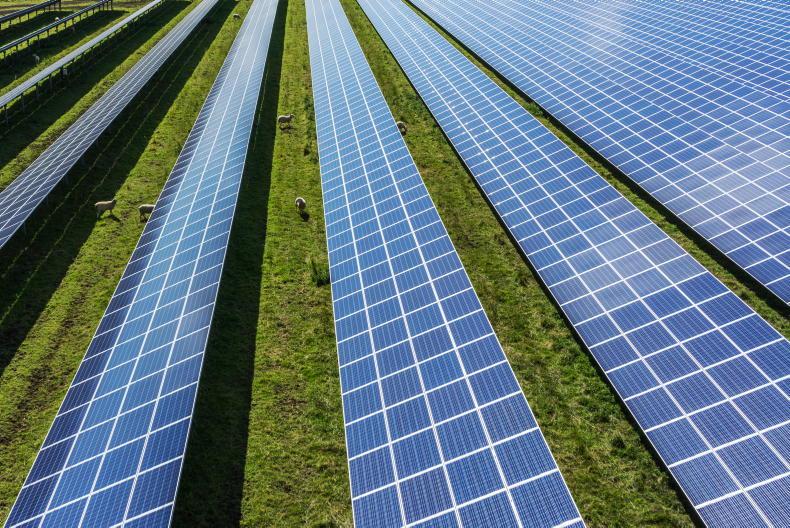
They emphasise that only approximately 0.1% of Ireland’s agricultural land is needed to meet 2030 solar targets, and that solar panels typically cover just 40% of a site, leaving substantial space for grazing. Solar Ireland stresses that, in practice, agricultural activity continues on most solar farms, with land remaining in grass and retaining long-term flexibility.
Income
From their perspective, solar represents a practical, mutually beneficial diversification opportunity. Lease payments of €1,000-€1,400 per acre, per year provide farmers with a stable income stream, often far more reliable than volatile commodity markets, and can support investment in infrastructure, succession, environmental improvements and energy-efficiency measures, it outlines in a statement.
Moreover, Solar Ireland contests the narrative that solar farms cluster only in certain counties, pointing to a nationwide spread of projects, from Meath and Wexford to Cork, Kildare, Waterford and beyond. They argue that criticism is inconsistent, solar farms are opposed both when located near grid infrastructure and when sited in more remote areas.
Clear national planning guidelines, they argue, are needed to ensure alignment between grid development, environmental goals and farm decision-making.

The IFA point to restrictions in the UK, France and Italy designed to protect high-value agricultural land.
Community
Beyond income, Solar Ireland highlighted that the community benefit funds from solar farms support local schools, sports clubs, youth groups and environmental initiatives.
Construction phases generate local employment, and operational phases create ongoing roles in biodiversity management and maintenance. In 2025 alone, solar generation avoided nearly 396,000 tonnes of CO2 and produced electricity equivalent to the needs of 370,000 homes.
Unintended consequences
Both farming organisations and community groups are calling for clear national planning guidelines on solar development. Many community groups opposing solar farms in their areas demand stronger rules that set out exactly where such projects can be located. Yet these same guidelines could ultimately weaken local opposition if a site they object to is later deemed “suitable” under the very standards they sought. The same dynamic applies to farmers. While clearer rules may offer certainty, they may also work against individual landowners if their land is classified as appropriate for solar, or, conversely, downgraded in a way that affects its value, rental potential, or long-term agricultural prospects. Any move toward formal land grading or zoning must therefore be approached with caution.
The debate is necessary and overdue, but policymakers must recognise that once rigid standards are in place, they may resolve some disputes while unintentionally creating new ones.
Solar farms are becoming an ever more familiar sight on our landscape in certain parts of the country, and so too are calls to manage where they are built.
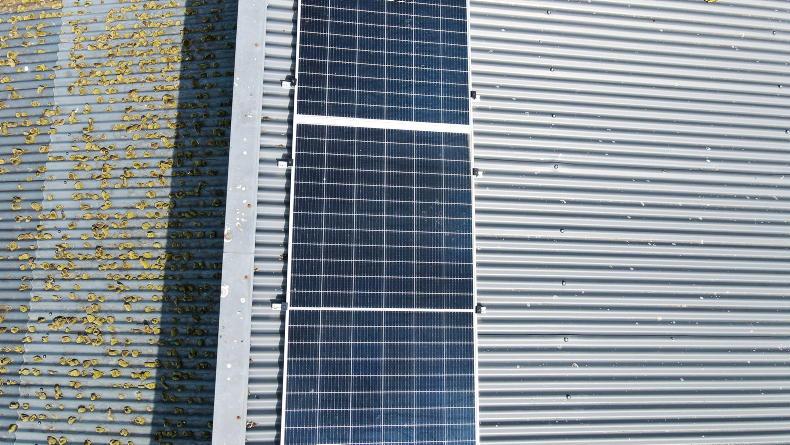
The IFA’s statement to the Joint Oireachtas Committee on Housing, Local Government and Heritage on Planning Regulations for Solar Farms highlights the remarkable growth of solar energy in Ireland, from nearly zero capacity to 1.7GW by 2024, with a Government target of 8GW by 2030. While the organisation strongly supports rooftop solar for homes, farms and commercial buildings, it has significant reservations about the growing number and scale of ground-mounted solar farms across the countryside.
Central to their argument is some farmer’s concern about the loss of productive agricultural land, particularly “some of Ireland’s most productive land,” which many farmers see as an “emotive asset” tied to identity, livelihood and long-term community viability.
The problem
In its statement, the IFA said that large-scale solar farms offer limited ongoing employment or economic activity beyond lease payments. Once installed, they argue, solar farms do little to support the existing rural economy: local co-ops, feed merchants, livestock marts, machinery dealers and professional agri-services see little or no benefit.
The organisation warns that replacing food-producing land with energy-producing land has ripple effects that extend far beyond individual farms, and it calls for robust planning guidelines to ensure developments minimise disruption to rural communities.

Beyond income, Solar Ireland highlighted the that Community benefit funds from solar farms support local schools, sports clubs, youth groups, etc.
International
International comparisons also feature prominently in the IFA’s case. They point to restrictions in the UK, France and Italy designed to protect high-value agricultural land or ensure continued agricultural activity through agri-voltaic systems.
The IFA insists that farmers must remain central to any decision-making process and that planning guidelines should reflect the cumulative impact of solar development on landscapes, livelihoods and future generations.
Solar Ireland
Solar Ireland, by contrast, argues that much public debate has been shaped by misinformation rather than evidence, obscuring the real-world benefits solar farms bring to farmers and rural economies.
They emphasise that only approximately 0.1% of Ireland’s agricultural land is needed to meet 2030 solar targets, and that solar panels typically cover just 40% of a site, leaving substantial space for grazing. Solar Ireland stresses that, in practice, agricultural activity continues on most solar farms, with land remaining in grass and retaining long-term flexibility.
Income
From their perspective, solar represents a practical, mutually beneficial diversification opportunity. Lease payments of €1,000-€1,400 per acre, per year provide farmers with a stable income stream, often far more reliable than volatile commodity markets, and can support investment in infrastructure, succession, environmental improvements and energy-efficiency measures, it outlines in a statement.
Moreover, Solar Ireland contests the narrative that solar farms cluster only in certain counties, pointing to a nationwide spread of projects, from Meath and Wexford to Cork, Kildare, Waterford and beyond. They argue that criticism is inconsistent, solar farms are opposed both when located near grid infrastructure and when sited in more remote areas.
Clear national planning guidelines, they argue, are needed to ensure alignment between grid development, environmental goals and farm decision-making.

The IFA point to restrictions in the UK, France and Italy designed to protect high-value agricultural land.
Community
Beyond income, Solar Ireland highlighted that the community benefit funds from solar farms support local schools, sports clubs, youth groups and environmental initiatives.
Construction phases generate local employment, and operational phases create ongoing roles in biodiversity management and maintenance. In 2025 alone, solar generation avoided nearly 396,000 tonnes of CO2 and produced electricity equivalent to the needs of 370,000 homes.
Unintended consequences
Both farming organisations and community groups are calling for clear national planning guidelines on solar development. Many community groups opposing solar farms in their areas demand stronger rules that set out exactly where such projects can be located. Yet these same guidelines could ultimately weaken local opposition if a site they object to is later deemed “suitable” under the very standards they sought. The same dynamic applies to farmers. While clearer rules may offer certainty, they may also work against individual landowners if their land is classified as appropriate for solar, or, conversely, downgraded in a way that affects its value, rental potential, or long-term agricultural prospects. Any move toward formal land grading or zoning must therefore be approached with caution.
The debate is necessary and overdue, but policymakers must recognise that once rigid standards are in place, they may resolve some disputes while unintentionally creating new ones.
SHARING OPTIONS