When Lynn Cassells and Sandra Baer began farming at Lynbreck Croft in the Highlands, they brought their backgrounds in conservation to the agriculture sector with a view of living closer to the land and farming in ways that benefitted the environment around them.
Nestled amongst the hills of the Cairngorms National Park, near to Grantown-on-Spey, Lynbreck Croft has been home to Lynn and Sandra since March 2016 when they began farming as both young farmers and new entrants.
Lynn said: “Until a few years ago we lived in England and felt like we weren’t connected to the land and environment.
“We’re not from an agricultural background, we’re conservation rangers coming at it from a different angle.”
She added: “We wanted to build a business that would stand on its own two feet and build an agriculture unit that was based on land values.”
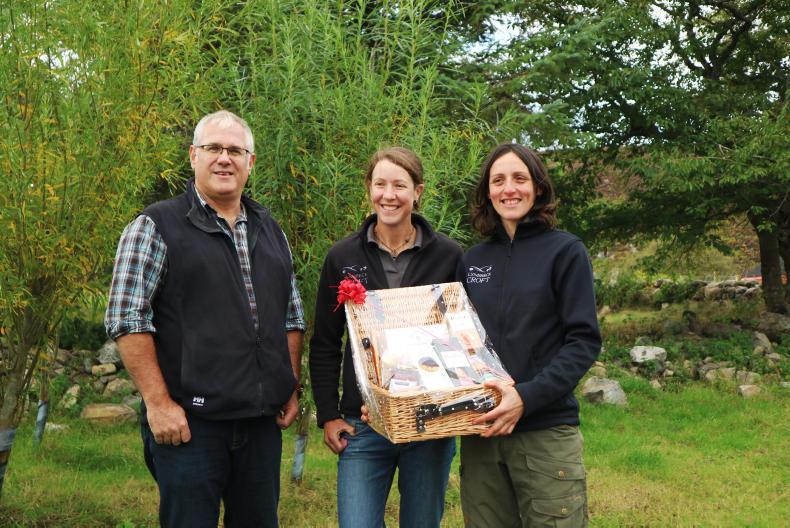
Sandra and Lynn welcomed NFU Scotland's Crofting, Highlands and Islands Committee (CHIC) chair Barney MacAskill to their croft last week.
Transforming Lynbreck Croft
The croft consists of around 150ac which is mainly made up of unimproved grassland as well as rough grazing spread across flat pastures and hills.
Since Lynn and Sandra moved into the croft around two and a half years ago, they have planted 17,500 new trees and installed 5km of stock fencing and a further eight kilometres of deer fencing.
Around 1km of hedgerows have also been planted, the old byre has been renovated and a new shed built on the croft.
Discussing how they are making the most of their land, Lynn said: “From a farm value point of view, the hill wasn’t very economical. So we planted trees and can sell the carbon on those trees.
We try see everything we have on the land as having a purpose if it doesn’t work for the land it doesn’t work for Lynbreck
“But we don’t want to exclude the land from the animals, so we started to see it as 40ac of sheltered land with better forage ground for the future.”
Since they began bringing new life back into Lynbreck Croft, Lynn and Sandra have continued to seek out new ways of diversifying their business in a holistic manner.
One way of diversifying their business was to consider and plan for additional winter feed for their livestock. By planting edible hedgerows on their land, Lynn discussed that this will provide additional food for livestock as well as shelter. These extra stocks already on the croft, could be particularly useful if there is a shortage of winter forage.
“We try see everything we have on the land as having a purpose,” said Lynn.
“If it doesn’t work for the land, it doesn’t work for Lynbreck.”
When it came to deciding which animals were best suited to their croft, Lynn and Sandra wanted a focus on regenerative and conservation grazing.
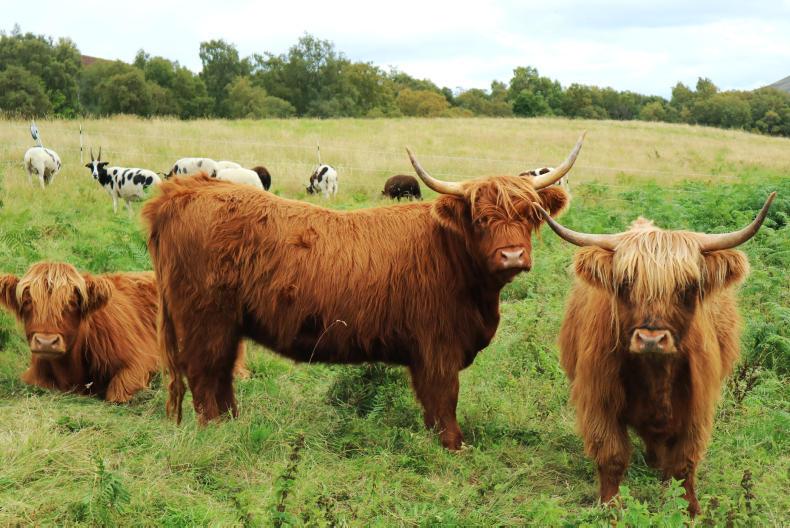
The livestock came onto the farm this year and currently consists of three Highland heifers and two Highland steers and a small flock of Jacob sheep.
The plan is to put the Jacobs to the tup this year and the heifers will go to a bull next year.
There are also some pigs and around 45 hens on the farm.
When seeking out advice on which breeds of cattle and sheep would be best suited to their environment, Lynn noted that it kept coming back to these two breeds.
The cattle and sheep are used on the farm as a land management tool and will also offer Lynn and Sandra the opportunity to sell a native product that has helped to shape their land.
Lynn said: “We’ll be able to sell ourselves, native Highland beef and Jacob lamb is quite different to other lamb. We mimic what they would do naturally and move their paddocks every few days.”
Lynn added: “We’re trying to maximise the growth rate of our grassland and trying to put good back into the soil.
“This type of grazing is designed for areas where there is drought.”
The pigs on the croft are also grazing on a rotational basis. There are currently around 40 paddocks around the land and Lynn and Sandra will spend around seven hours a week in total moving around their fencing and livestock.
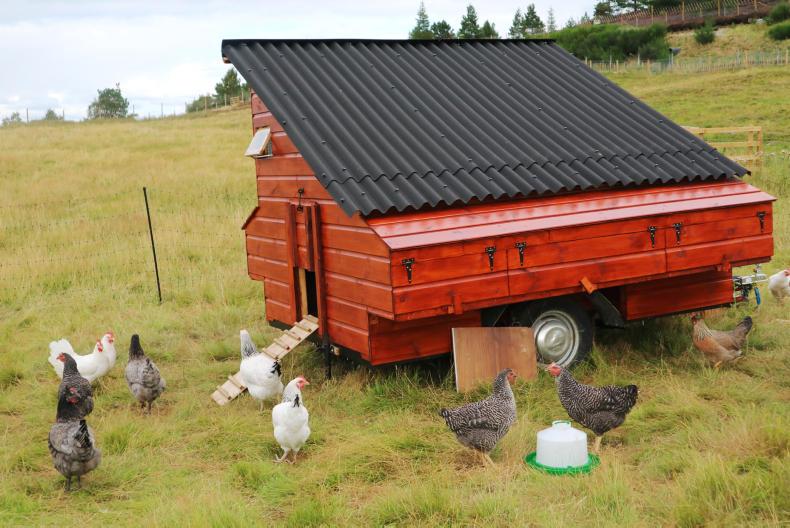
As part of their egg club, Lynn and Sandra built a mobile egg hut to allow them to move the hens around the land more efficiently.
Connecting consumers with the land
When implementing the direction they wanted their business to take, Lynn and Sandra discussed their aim of connecting consumers with the meat or products they buy and the land that helped produce it.
“We wanted to produce food and reach out to the local community. And we want to educate people on what goes into that food,” said Lynn.
One of their smaller but highly effective projects is their “egg club” which started out as an honesty box at the end of their road but following positive feedback from customers, Lynn and Sandra began the club in which they will deliver eggs regularly to people.
“We have a waiting list for egg club and it’s fully subscribed,” said Lynn.
She added: “It’s a small venture I realise, but it’s working.”
For those who have signed up for the egg club, Lynn and Sandra will also offer the opportunity to allow consumers to come to the croft and see the hen houses and the hens themselves.
Lynn and Sandra hope to double their number of hens next year and the hens themselves also help the livestock to work the land, as they are moved around the fields after the cattle have been on it to help breakdown materials and improve ground quality.
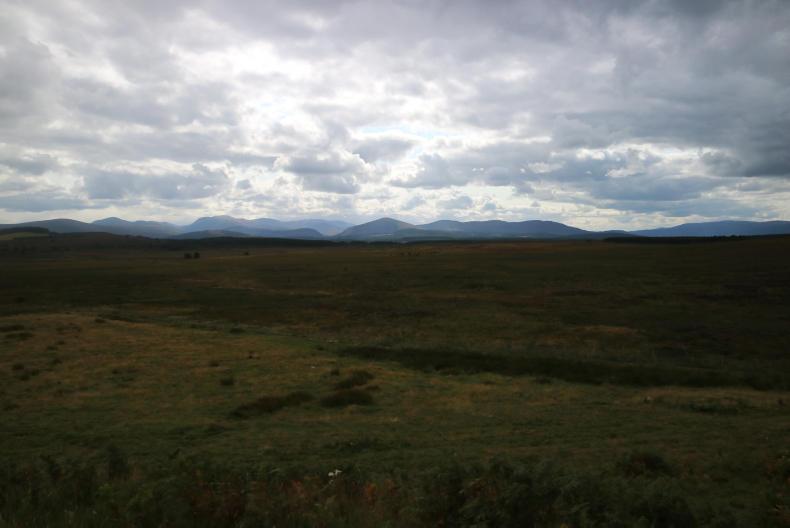
Lynbreck Croft is situated in the Cairngorms National Park and consists mainly of unimproved grassland and rough grazing.
Looking to the future at Lynbreck
As well as their work on the croft, Lynn works part-time in conservation for the Cairngorms National Park and both Lynn and Sandra offer freelance work for organisations utilising their skills in conservation.
Their plans to expand the business include bringing in more livestock, building a smokehouse and exploring the possibility of converting the old croft house to allow for holiday accommodation.
Lynn added that without the aid of grants, their desire of living and working on Lynbreck Croft may not have been possible.
She said: “The young farmers grant was make or break really. We got a new entrants capital grant which covered the new byre. And we got a forestry grant scheme for fencing and hill plantings.
“But we did all the work ourselves apart from the fencing and were able to pay ourselves and put it back in to the farm.”
Lynn added that Lynbreck does not meet the stocking density requirements in order to receive the Basic Payment Scheme (BPS) and while it is in a Less Favoured Area Support Scheme (LFASS) zone, they do not receive LFASS payments.
Lynn added: “We’re really trying to look forward and drive it forward. We’re incredibly proud of what we’re doing and we’re doing it with Mother Nature calling the shots.”
When Lynn Cassells and Sandra Baer began farming at Lynbreck Croft in the Highlands, they brought their backgrounds in conservation to the agriculture sector with a view of living closer to the land and farming in ways that benefitted the environment around them.
Nestled amongst the hills of the Cairngorms National Park, near to Grantown-on-Spey, Lynbreck Croft has been home to Lynn and Sandra since March 2016 when they began farming as both young farmers and new entrants.
Lynn said: “Until a few years ago we lived in England and felt like we weren’t connected to the land and environment.
“We’re not from an agricultural background, we’re conservation rangers coming at it from a different angle.”
She added: “We wanted to build a business that would stand on its own two feet and build an agriculture unit that was based on land values.”

Sandra and Lynn welcomed NFU Scotland's Crofting, Highlands and Islands Committee (CHIC) chair Barney MacAskill to their croft last week.
Transforming Lynbreck Croft
The croft consists of around 150ac which is mainly made up of unimproved grassland as well as rough grazing spread across flat pastures and hills.
Since Lynn and Sandra moved into the croft around two and a half years ago, they have planted 17,500 new trees and installed 5km of stock fencing and a further eight kilometres of deer fencing.
Around 1km of hedgerows have also been planted, the old byre has been renovated and a new shed built on the croft.
Discussing how they are making the most of their land, Lynn said: “From a farm value point of view, the hill wasn’t very economical. So we planted trees and can sell the carbon on those trees.
We try see everything we have on the land as having a purpose if it doesn’t work for the land it doesn’t work for Lynbreck
“But we don’t want to exclude the land from the animals, so we started to see it as 40ac of sheltered land with better forage ground for the future.”
Since they began bringing new life back into Lynbreck Croft, Lynn and Sandra have continued to seek out new ways of diversifying their business in a holistic manner.
One way of diversifying their business was to consider and plan for additional winter feed for their livestock. By planting edible hedgerows on their land, Lynn discussed that this will provide additional food for livestock as well as shelter. These extra stocks already on the croft, could be particularly useful if there is a shortage of winter forage.
“We try see everything we have on the land as having a purpose,” said Lynn.
“If it doesn’t work for the land, it doesn’t work for Lynbreck.”
When it came to deciding which animals were best suited to their croft, Lynn and Sandra wanted a focus on regenerative and conservation grazing.
The livestock came onto the farm this year and currently consists of three Highland heifers and two Highland steers and a small flock of Jacob sheep.
The plan is to put the Jacobs to the tup this year and the heifers will go to a bull next year.
There are also some pigs and around 45 hens on the farm.
When seeking out advice on which breeds of cattle and sheep would be best suited to their environment, Lynn noted that it kept coming back to these two breeds.
The cattle and sheep are used on the farm as a land management tool and will also offer Lynn and Sandra the opportunity to sell a native product that has helped to shape their land.
Lynn said: “We’ll be able to sell ourselves, native Highland beef and Jacob lamb is quite different to other lamb. We mimic what they would do naturally and move their paddocks every few days.”
Lynn added: “We’re trying to maximise the growth rate of our grassland and trying to put good back into the soil.
“This type of grazing is designed for areas where there is drought.”
The pigs on the croft are also grazing on a rotational basis. There are currently around 40 paddocks around the land and Lynn and Sandra will spend around seven hours a week in total moving around their fencing and livestock.

As part of their egg club, Lynn and Sandra built a mobile egg hut to allow them to move the hens around the land more efficiently.
Connecting consumers with the land
When implementing the direction they wanted their business to take, Lynn and Sandra discussed their aim of connecting consumers with the meat or products they buy and the land that helped produce it.
“We wanted to produce food and reach out to the local community. And we want to educate people on what goes into that food,” said Lynn.
One of their smaller but highly effective projects is their “egg club” which started out as an honesty box at the end of their road but following positive feedback from customers, Lynn and Sandra began the club in which they will deliver eggs regularly to people.
“We have a waiting list for egg club and it’s fully subscribed,” said Lynn.
She added: “It’s a small venture I realise, but it’s working.”
For those who have signed up for the egg club, Lynn and Sandra will also offer the opportunity to allow consumers to come to the croft and see the hen houses and the hens themselves.
Lynn and Sandra hope to double their number of hens next year and the hens themselves also help the livestock to work the land, as they are moved around the fields after the cattle have been on it to help breakdown materials and improve ground quality.

Lynbreck Croft is situated in the Cairngorms National Park and consists mainly of unimproved grassland and rough grazing.
Looking to the future at Lynbreck
As well as their work on the croft, Lynn works part-time in conservation for the Cairngorms National Park and both Lynn and Sandra offer freelance work for organisations utilising their skills in conservation.
Their plans to expand the business include bringing in more livestock, building a smokehouse and exploring the possibility of converting the old croft house to allow for holiday accommodation.
Lynn added that without the aid of grants, their desire of living and working on Lynbreck Croft may not have been possible.
She said: “The young farmers grant was make or break really. We got a new entrants capital grant which covered the new byre. And we got a forestry grant scheme for fencing and hill plantings.
“But we did all the work ourselves apart from the fencing and were able to pay ourselves and put it back in to the farm.”
Lynn added that Lynbreck does not meet the stocking density requirements in order to receive the Basic Payment Scheme (BPS) and while it is in a Less Favoured Area Support Scheme (LFASS) zone, they do not receive LFASS payments.
Lynn added: “We’re really trying to look forward and drive it forward. We’re incredibly proud of what we’re doing and we’re doing it with Mother Nature calling the shots.”
SHARING OPTIONS