The Nature Restoration Law represents an existential threat to farmers working Ireland’s hills and farmed peatlands, according to Vincent Roddy.
The Irish Natura and Hill Farmers Association (INHFA) president is adamant that the law will spell the end of the road for many farmers, if fully implemented.
“This is the most frightening piece of legislation as regards land use that has ever come out of Brussels,” Roddy claimed.
The law relates to what are termed Annex 1 habitat types. These include wet and dry heaths that cover most of Ireland’s upland areas, as well as lowland bogs and some estuarine grasslands.
It requires landowners to restore these lands “to good condition” and that such land will show a “continuous improvement” until such “good condition” is achieved.
As with previous environmental designations, it also restricts specific farming practices on the lands.
“It is no exaggeration to say that the [Nature Restoration] law could potentially push thousands of families out of farming,” Roddy claimed.
“If you are on mineral soils, this law is not going to be an issue. But if you are on peat soils, whether that be blanket bog on the hills or drained peatlands in lowlands, this law could be quite devastating and could leave many at a point where they will not be able to continue farming.”
The INHFA estimates that there are 670,000ha of Annex 1 habitats in Ireland, with a further 620,000ha – such as drained peatlands – that formerly met Annex 1 criteria.
The farm body fears that the actions required under the Nature Restoration Law – such as rewetting of peatlands – will restrict landowners’ ability to farm, and could ultimately make their lands ineligible for CAP supports.
“We estimate that these restrictions could impact as many as 45,000 farmers,” Roddy said.
Ironically, there is also a suggestion that CAP payments may be withdrawn, if they are adjudged to be working against the goals of the Nature Restoration Law.
“Article 11 (2) M of the law actually states that if there are any subsidies which are deemed to be impacting on the implementation of the Nature Restoration Law then those subsidies could be reviewed and pulled,” Roddy explained.
“So, we are creating a Catch 22 for farmers. If you are not delivering on the law, then your CAP payments could be pulled. And if you are delivering on the law, it could potentially leave your land in danger of not being considered an agricultural area and therefore not eligible for future CAP payments.”
The INHFA flatly rejects any suggestion that the Nature Restoration Law was effectively hollowed out in its passage through the European Parliament.
Changes
“There have been changes made to it, and some people have spun those changes. For example, the [European] Parliament said it had taken out Article 9 which covered the rewetting of peatlands. But that measure is actually covered elsewhere in the legislation,” Roddy maintained.
While up to 20% of the farmed ground in the country could potentially be impacted by the Nature Restoration Law, Roddy pointed out that farmers who are already working designated lands will be disproportionately impacted.
“The farmers who are first in the firing line with regard to this law are those who are operating extensive farming systems and are already delivering far more for the environment than their counterparts in more intensive farming enterprises,” he said.

Roddy said the commercial viability of upland farms would be seriously compromised if stocking rates are to be further reduced. \ Philip Doyle
“These farmers have experience of designations and we cannot look at this law without looking back at what has happened in the past.
“We have seen how supports for lands designated as Specials Areas of Conservation and Special Protected Areas have been reduced from €242/ha to zero in the current ACRES.”
Roddy said designations had implications for operating costs on farms, profit levels, land use decisions and the resale value of holdings.
“But the Nature Restoration Law is far, far worse than the designations because it has the potential to stop farming in its tracks,” Roddy claimed.
Absence of funding has stirred farmer fears
The absence of any dedicated funding under the Nature Restoration Law to compensate farmers for income losses is a major concern for the INHFA.
While suggestions by An Taoiseach Leo Varadkar that non-CAP monies will be sought by Ireland at EU level for this purpose, Roddy pointed out that no firm funding proposals are included in the legislation.
Indeed, the INHFA president claimed that the latest text of the law appeared to back-track on possible funding options.
An Taoiseach’s intervention in the debate – as with most politicians – displayed a lack of understanding of both the legislation and its implications for landowners, Roddy maintained.
“I think the Taoiseach’s statements on funding were ill-informed. But, unfortunately, a lot of commentary from politicians on the Nature Restoration Law is like that,” he said.
“From the outset, the Commission was adamant that CAP funding won’t be used for nature restoration, and the parliament has taken that position quite strongly. And there is currently no other funding mechanism available,” the INHFA leader insisted.
Ireland could need a minimum of €6bn to do the restoration works alone
In addition, Roddy warned that there is no guarantee that any funding that might be made available would be paid to farmers for loss of income.
Physical work
“A lot of physical work will need to be done to restore habitats and that is going to cost a lot of money. If the funding is directed at the physical work, then that’s of no benefit to the landowner,” he said.
Roddy pointed out that a recent project to restore heathlands in Flanders cost around €8,000/ha.
“Based on the Belgian costings, Ireland could need a minimum of €6bn to do the restoration works alone. That’s before we pay farmers for the income they have lost,” he argued.
Red tape is ‘pushing youngsters off the hills’
Regulations and red tape are threatening the future of hill farming, warned INHFA president Vincent Roddy.
And while Roddy is hopeful that young people will continue to be attracted into farming because of the independent lifestyle it offers, he is worried that some are being turned off by excessive bureaucracy.
“I’d be confident that there will always be people who’ll want to farm the hills. The problem with hill farming is that, more than any other sector, we need young people. Walking up and down hills is not easy,” he said.
Quads and drones
Better quads and new technology such as drones have helped lighten the workload. And there is also the age-old attraction of working for yourself. However, the INHFA leader claimed these benefits are being continually eroded by tighter regulatory controls.
“You never make the same money in farming that you can in other jobs, but the big compensation is that you’re your own boss,” Roddy explained.
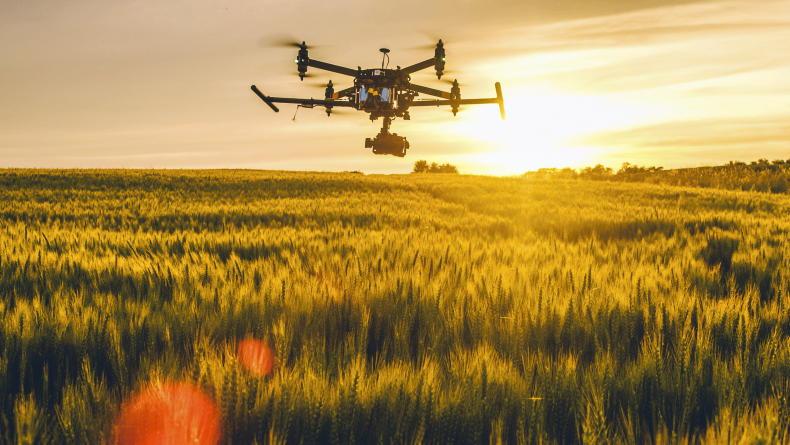
New technology, such as drones, has helped to lighten the workload of farmers. However, the INHFA leader claimed these benefits are continually eroded by tighter regulatory controls.
“But if you’re being dictated to by regulations and the State bodies that implement those regulations – such as the Department of Agriculture, county councils and the National Parks and Wildlife Service – then you’re not really your own boss.
“And that’s the biggest threat I see. Now, that’s not only an issue with hill farming; but it certainly is a particular problem for our members. You see what happened with the designations and what’s expected of farmers.
“Unfortunately, that’s nothing compared to what’s coming with the Nature Restoration Law,” Roddy maintained.

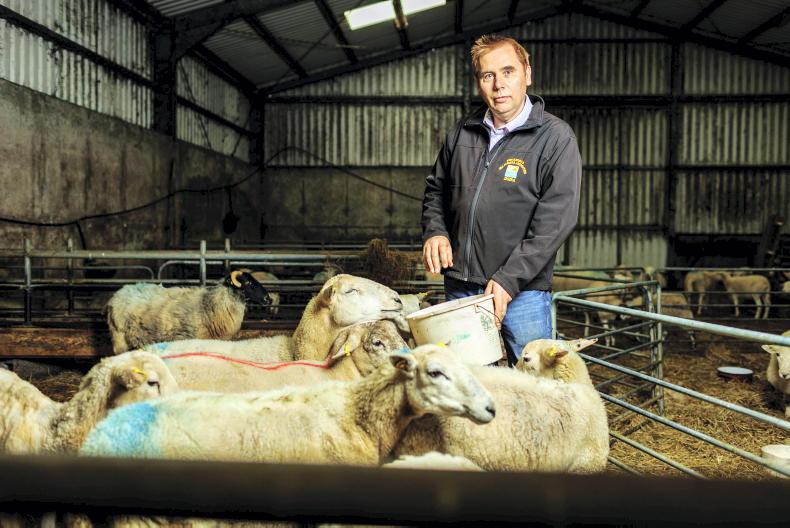
Vincent Roddy, INHFA president, on his farm in Aclare, Co Sligo. \ James Connolly
INHFA president rails against ‘wild ideas’
Large-scale land abandonment is inevitable if the Nature Restoration Law is fully implemented, Vincent Roddy maintained.
He said the commercial viability of upland farms would be seriously compromised if stocking rates are to be further reduced and there is an obligation on landowners to allow lands to effectively rewild.
The fact that the hills are a “managed and farmed landscape” appears to have been forgotten by policymakers in Brussels and even in Dublin, the INHFA president claimed.
“It does annoy me when I hear people throwing out wild ideas that we could have temperate rain forests in the hills across Ireland.
“That’s rubbish. There will be no temperate rain forests because the rewilded and unmanaged hills will burn,” Roddy maintained.
Another idea that infuriates the hill farmer leader is the suggested reintroduction of the wolf to control deer numbers.
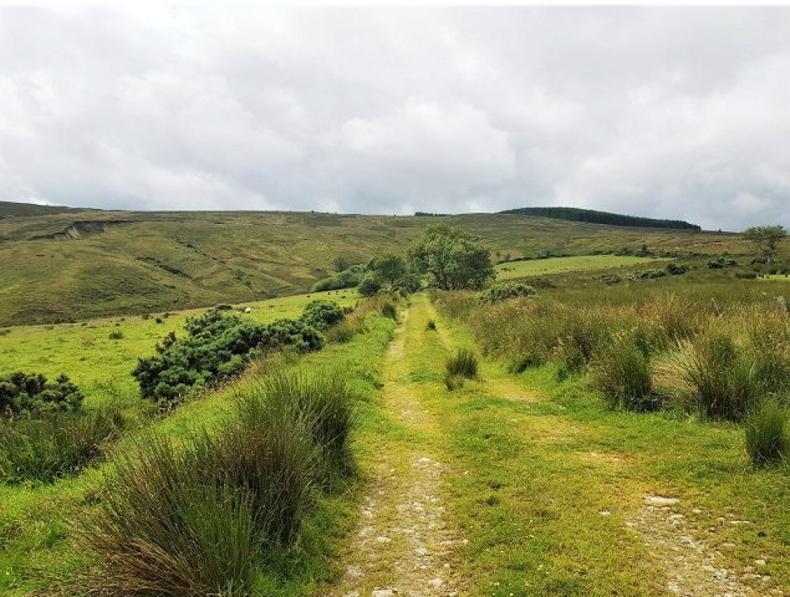
Better quads and new technology such as drones have helped lighten the workload for hill farmers.
“The sad fact is that wolves won’t take out deer when there is slow-moving sheep and lambs about. They definitely won’t go chasing down deer that go at high speeds when they have far easier prey in the form of sheep or even calves,” he said.
Favourite film: Shawshank Redemption.
Favourite book: Evolution by Steven Baxter.
Barry’s or Lyons: Barry’s.
Hobbies: Farming, family and reading science and science fiction.
The Nature Restoration Law represents an existential threat to farmers working Ireland’s hills and farmed peatlands, according to Vincent Roddy.
The Irish Natura and Hill Farmers Association (INHFA) president is adamant that the law will spell the end of the road for many farmers, if fully implemented.
“This is the most frightening piece of legislation as regards land use that has ever come out of Brussels,” Roddy claimed.
The law relates to what are termed Annex 1 habitat types. These include wet and dry heaths that cover most of Ireland’s upland areas, as well as lowland bogs and some estuarine grasslands.
It requires landowners to restore these lands “to good condition” and that such land will show a “continuous improvement” until such “good condition” is achieved.
As with previous environmental designations, it also restricts specific farming practices on the lands.
“It is no exaggeration to say that the [Nature Restoration] law could potentially push thousands of families out of farming,” Roddy claimed.
“If you are on mineral soils, this law is not going to be an issue. But if you are on peat soils, whether that be blanket bog on the hills or drained peatlands in lowlands, this law could be quite devastating and could leave many at a point where they will not be able to continue farming.”
The INHFA estimates that there are 670,000ha of Annex 1 habitats in Ireland, with a further 620,000ha – such as drained peatlands – that formerly met Annex 1 criteria.
The farm body fears that the actions required under the Nature Restoration Law – such as rewetting of peatlands – will restrict landowners’ ability to farm, and could ultimately make their lands ineligible for CAP supports.
“We estimate that these restrictions could impact as many as 45,000 farmers,” Roddy said.
Ironically, there is also a suggestion that CAP payments may be withdrawn, if they are adjudged to be working against the goals of the Nature Restoration Law.
“Article 11 (2) M of the law actually states that if there are any subsidies which are deemed to be impacting on the implementation of the Nature Restoration Law then those subsidies could be reviewed and pulled,” Roddy explained.
“So, we are creating a Catch 22 for farmers. If you are not delivering on the law, then your CAP payments could be pulled. And if you are delivering on the law, it could potentially leave your land in danger of not being considered an agricultural area and therefore not eligible for future CAP payments.”
The INHFA flatly rejects any suggestion that the Nature Restoration Law was effectively hollowed out in its passage through the European Parliament.
Changes
“There have been changes made to it, and some people have spun those changes. For example, the [European] Parliament said it had taken out Article 9 which covered the rewetting of peatlands. But that measure is actually covered elsewhere in the legislation,” Roddy maintained.
While up to 20% of the farmed ground in the country could potentially be impacted by the Nature Restoration Law, Roddy pointed out that farmers who are already working designated lands will be disproportionately impacted.
“The farmers who are first in the firing line with regard to this law are those who are operating extensive farming systems and are already delivering far more for the environment than their counterparts in more intensive farming enterprises,” he said.
Roddy said the commercial viability of upland farms would be seriously compromised if stocking rates are to be further reduced. \ Philip Doyle
“These farmers have experience of designations and we cannot look at this law without looking back at what has happened in the past.
“We have seen how supports for lands designated as Specials Areas of Conservation and Special Protected Areas have been reduced from €242/ha to zero in the current ACRES.”
Roddy said designations had implications for operating costs on farms, profit levels, land use decisions and the resale value of holdings.
“But the Nature Restoration Law is far, far worse than the designations because it has the potential to stop farming in its tracks,” Roddy claimed.
Absence of funding has stirred farmer fears
The absence of any dedicated funding under the Nature Restoration Law to compensate farmers for income losses is a major concern for the INHFA.
While suggestions by An Taoiseach Leo Varadkar that non-CAP monies will be sought by Ireland at EU level for this purpose, Roddy pointed out that no firm funding proposals are included in the legislation.
Indeed, the INHFA president claimed that the latest text of the law appeared to back-track on possible funding options.
An Taoiseach’s intervention in the debate – as with most politicians – displayed a lack of understanding of both the legislation and its implications for landowners, Roddy maintained.
“I think the Taoiseach’s statements on funding were ill-informed. But, unfortunately, a lot of commentary from politicians on the Nature Restoration Law is like that,” he said.
“From the outset, the Commission was adamant that CAP funding won’t be used for nature restoration, and the parliament has taken that position quite strongly. And there is currently no other funding mechanism available,” the INHFA leader insisted.
Ireland could need a minimum of €6bn to do the restoration works alone
In addition, Roddy warned that there is no guarantee that any funding that might be made available would be paid to farmers for loss of income.
Physical work
“A lot of physical work will need to be done to restore habitats and that is going to cost a lot of money. If the funding is directed at the physical work, then that’s of no benefit to the landowner,” he said.
Roddy pointed out that a recent project to restore heathlands in Flanders cost around €8,000/ha.
“Based on the Belgian costings, Ireland could need a minimum of €6bn to do the restoration works alone. That’s before we pay farmers for the income they have lost,” he argued.
Red tape is ‘pushing youngsters off the hills’
Regulations and red tape are threatening the future of hill farming, warned INHFA president Vincent Roddy.
And while Roddy is hopeful that young people will continue to be attracted into farming because of the independent lifestyle it offers, he is worried that some are being turned off by excessive bureaucracy.
“I’d be confident that there will always be people who’ll want to farm the hills. The problem with hill farming is that, more than any other sector, we need young people. Walking up and down hills is not easy,” he said.
Quads and drones
Better quads and new technology such as drones have helped lighten the workload. And there is also the age-old attraction of working for yourself. However, the INHFA leader claimed these benefits are being continually eroded by tighter regulatory controls.
“You never make the same money in farming that you can in other jobs, but the big compensation is that you’re your own boss,” Roddy explained.
New technology, such as drones, has helped to lighten the workload of farmers. However, the INHFA leader claimed these benefits are continually eroded by tighter regulatory controls.
“But if you’re being dictated to by regulations and the State bodies that implement those regulations – such as the Department of Agriculture, county councils and the National Parks and Wildlife Service – then you’re not really your own boss.
“And that’s the biggest threat I see. Now, that’s not only an issue with hill farming; but it certainly is a particular problem for our members. You see what happened with the designations and what’s expected of farmers.
“Unfortunately, that’s nothing compared to what’s coming with the Nature Restoration Law,” Roddy maintained.
Vincent Roddy, INHFA president, on his farm in Aclare, Co Sligo. \ James Connolly
INHFA president rails against ‘wild ideas’
Large-scale land abandonment is inevitable if the Nature Restoration Law is fully implemented, Vincent Roddy maintained.
He said the commercial viability of upland farms would be seriously compromised if stocking rates are to be further reduced and there is an obligation on landowners to allow lands to effectively rewild.
The fact that the hills are a “managed and farmed landscape” appears to have been forgotten by policymakers in Brussels and even in Dublin, the INHFA president claimed.
“It does annoy me when I hear people throwing out wild ideas that we could have temperate rain forests in the hills across Ireland.
“That’s rubbish. There will be no temperate rain forests because the rewilded and unmanaged hills will burn,” Roddy maintained.
Another idea that infuriates the hill farmer leader is the suggested reintroduction of the wolf to control deer numbers.
Better quads and new technology such as drones have helped lighten the workload for hill farmers.
“The sad fact is that wolves won’t take out deer when there is slow-moving sheep and lambs about. They definitely won’t go chasing down deer that go at high speeds when they have far easier prey in the form of sheep or even calves,” he said.
Favourite film: Shawshank Redemption.
Favourite book: Evolution by Steven Baxter.
Barry’s or Lyons: Barry’s.
Hobbies: Farming, family and reading science and science fiction.







SHARING OPTIONS