


It can’t be very easy to have to make all the rules governing farming, but it isn’t half as difficult as trying to farm within the increasing layers of bureaucracy now in place.
And every now and again along comes a rule so ill-considered that you have to wonder if the people who devised it ever stood in a field. The cover crop lie-back rule is a classic case in point.
Cover crops make sense from a soil health and environmental viewpoint after cereal and protein crops, which is presumably why they have been encouraged under GLAS and ACRES. Indeed, at one point last year, the Department of Agriculture was insistent that all stubble fields needed to be planted with a cover crop or, if not, cultivated to encourage the growth of volunteer plants. And then it was pointed out to them, initially I understand by Macra, then by Birdwatch Ireland, that some birds depend on stubble ground as part of their life-cycle. The result was a hasty volte-face by the Department.
Tillage farmers went from being told that they COULDN’T leave any stubble ground undisturbed to being told that they HAD TO leave a minimum of one-quarter of it untouched.
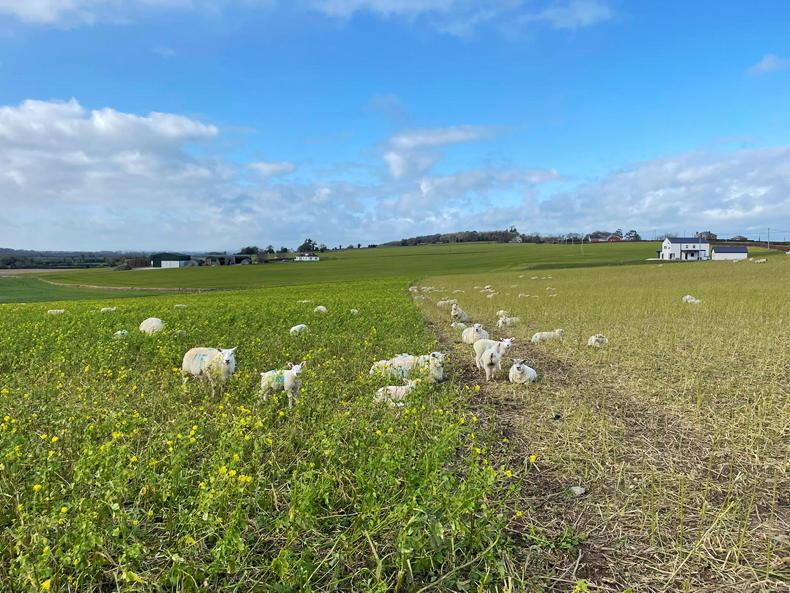
At the time of writing, farmers are being told that for cover crops to be grazed, an acre of grass lie-back is required for every acre of cover crop being grazed.
You don’t have to be a genius to work out that the cover crops are being planted on tillage farms, which tend not to have grass fields adjacent to them – because they are tillage farms. This particular brainwave will surely result in thousands of acres of cover crops not being grazed at all. This will result in extra demand for winter forage and meal. It’s an utter waste.
Of course it’s important that cover crops are managed in such a way as to minimise poaching and leaching of nutrients. And tillage farmers have long used lie-backs for such a reason. Sometimes that lie-back would be grazed cover crop area, as most farmers tend to strip graze such a precious resource in winter months.
But more often, the lie-back will be overwintered stubble. The very stubble the Department wanted rid of in last year’s least bright idea, before sanity prevailed. Stubble lie-backs have worked just fine for sheep on beet-tops for decades. And when sheep and cattle grazed turnips or mangles the same principle applied.
This practice allowed grassland to be rested, preventing poaching that might necessitate ploughing a grass field for reseeding. The tillage field would be ploughed anyway, the thinking went.
Let’s hope the Department quickly reverses this ridiculous decision.






SHARING OPTIONS