



Europe’s farm ministers are spending a couple of days in Ireland this week, as they try to build a workable CAP for the next decade.
As we all know, the starting point is pretty grim – a 22% cut in the budget, which means the ambition around schemes and programmes will be severely curtailed.
Agriculture Commissioner Christophe Hansen declared himself pro-family farm and pro-CAP when he took office. He has also been in the country, and will be back next week, taking in the National Ploughing Championships.
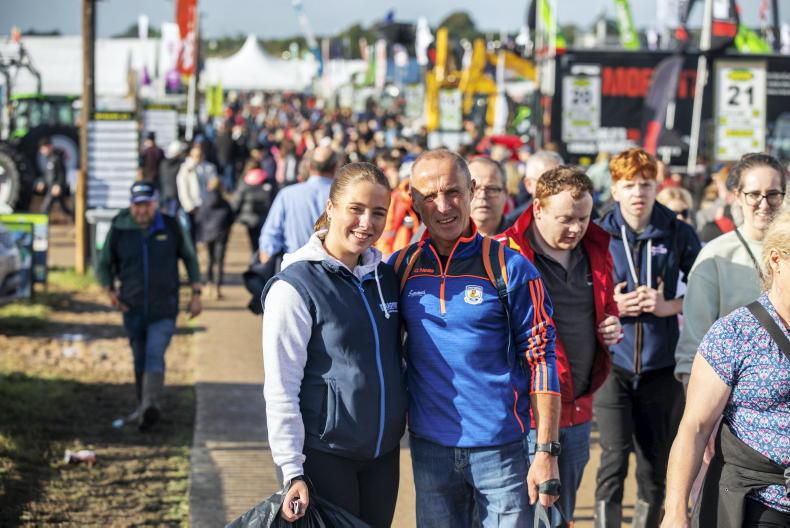
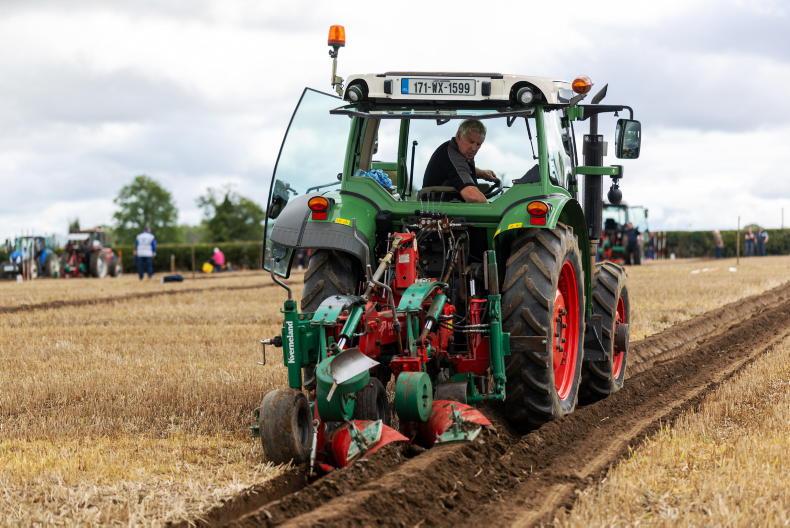
It might be the best chance Agriculture Minister Martin Heydon gets to highlight just how fundamental the CAP is to the wellbeing of farming in Ireland. Almost a quarter of a million people – 5% of Ireland’s population – will be in attendance over the three days at Irish farming’s biggest showcase. Many of these people will have no direct involvement in farming, but that only emphasises that the rural economy, and indeed the socio-economy, revolves around family farms and the agrifood business built upon the €20bn of output from those farms.
A lot of people say we don’t need the CAP, or shouldn’t need it, that having to subsidise farmers to make food production viable is a sign of a structurally weak (and some would go so far as to say a morally bankrupt) system of food production.
The truth is that farmers need some support to produce food at world prices
Evidence from around the world suggests otherwise. First-world countries that abandoned farming to the free marketplace have seen family farming disappear, replaced by enormous farms scattered around otherwise dead communities; no post office, no school, no church, no pub, no sports club in the parish. Those things would be found in an area closer in size to an Irish county, maybe not Cork or Mayo, but certainly Kilkenny, Offaly or Roscommon.
The truth is that farmers need some support to produce food at world prices while operating in a high-cost, high-standard, low-emission environment at medium scale.
The payoff is that the EU consumer has a guaranteed supply of affordable, nutritious food, produced in a sustainable way.
As Hansen wanders around Screggan, let’s hope he’s struck by the vibrancy of the event, by the tens of thousands of young people enthralled by livestock and machinery.
Fail to do either and family farms fail
This is an industry with a future, but history tells us that there are only two ways to protect family food producers: either put up high walls against cheap imports, or put in place supports to bridge the gap between production costs and commodity prices. Fail to do either and family farms fail.
Hansen, Heydon and Micheál Martin need to convince Ursula von der Leyen and Piotr Serafin to put the funds in place now, or we’ll all find out the hard way that this is an unchanging truth.


SHARING OPTIONS