



Grass is absolutely flying it again here in Abbeyleix. Growth hit 80kg DM/ha last week, while demand is back at 55kg DM/ha.
Our average farm cover (AFC) came in slightly on the high side at 236kg DM/ha, but with no paddocks exceeding 1,400kg DM/ha, and excellent quality across the board – clean swards, no stem, and a good few paddocks of aftergrass – I made the decision to keep grazing rather than take out bales.
It’s always a balancing act this time of year, but I felt the benefits of keeping cows moving and utilising quality grass outweighed the short-term silage gain.
Demand is a bit lower than earlier in the summer, mainly because a block of rented ground has come back into the rotation.
This piece had been removed from the plan earlier in the year as it was up for sale. We did try to buy it, but the final price was well beyond what I could justify from a farming perspective.
Teagasc guidance would suggest a maximum viable price of about €15,000/ac if you’re buying land to farm it. This made significantly more.
As is increasingly the case with land sales around the country, the purchaser in this instance was not a farmer.
This appears to be a growing trend, with non-farming buyers either acquiring land directly or contributing to higher sale prices as under-bidders.
While we were unsuccessful in our attempt to buy the land, the new owner offered us the opportunity to lease it back.
Although leasing isn’t ideal and as secure as owning, it allows us to keep the land in our rotation, which is a positive outcome in the circumstances. It is better than losing it entirely.
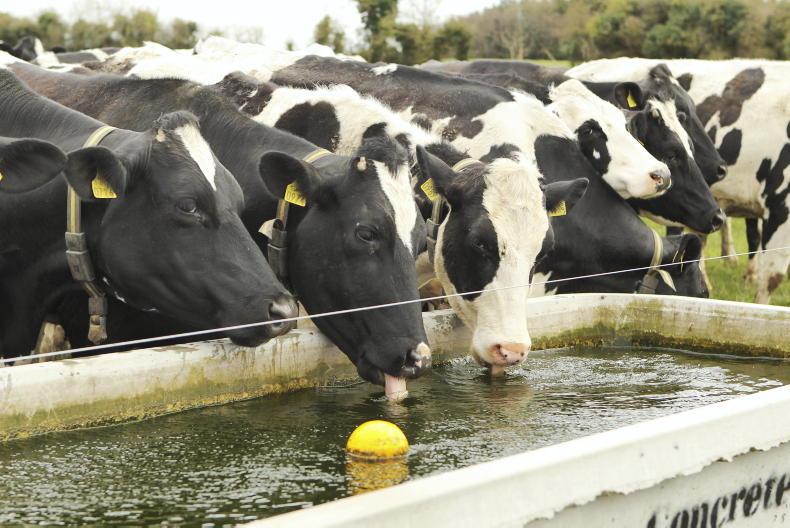
Cows are still performing solidly, averaging 23 to 24l. Butterfat is sitting consistently around 4.40%, while protein is bouncing between 3.70% and 3.90%. Somatic cell count (SCC) is holding below 150,000.
Gavin, our new full-time man, changed the liners last week, so we’re hoping for a further dip in SCC in the next few collections.
We also carried out the IBR vaccinations last week and gave the cows a pour-on for flies – they’ve been a nuisance with the warm weather.
The salmonella booster is scheduled for a few weeks’ time.
Breeding
Breeding wrapped up a few weeks ago, with the last cow served on 21 July. I bred eight cows in July and already five of those haven’t held.
On top of that, we’ve seen a few cows coming bulling again 60-80 days post-insemination, despite being scanned in-calf earlier. That’s tough to take.
I’m putting it down to the intense heat in mid-July, which may have caused stress and led to embryonic loss. Unfortunately, there’s very little we can do about that – it’s just one of those things that reminds you farming isn’t always in your control. At the moment, we’re at 10 empty cows. Anymore and we’ll be heading over the 10% empty mark, which I’d like to avoid.
That said, I had already flagged 12 cows for culling before breeding even started – mostly for age and persistent SCC issues. Three of them are good milkers doing over 550kg of solids, but they’re kicking in the parlour. It’s a pity to be culling on temperament, but safety and efficiency have to come first.
On the tillage side, Dad was delighted with how the winter barley turned out. It did over 3.5t/ac, with all the straw sold and delivered quickly.
He’s sowed a catch crop behind it, and he’s just into the spring barley now.


SHARING OPTIONS