



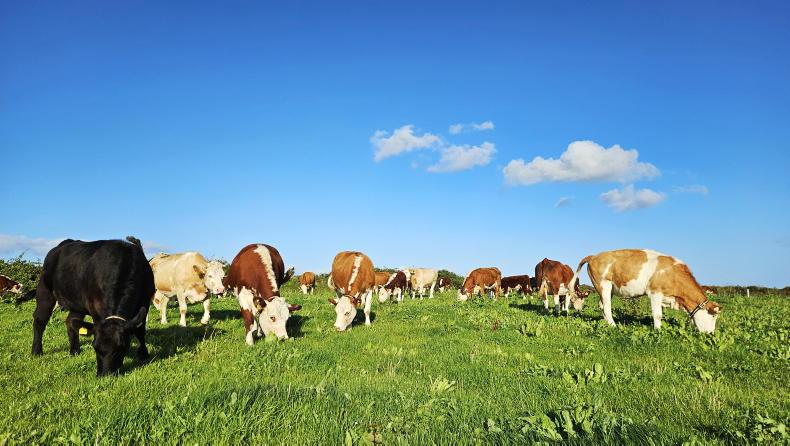
A figure stood out while looking through the beef calving statistics on the Irish Cattle Breeding Federation (ICBF) website the other day. Some 3,952 suckler herds have ceased calving cows.
Now I had to go looking for it, but the average number of herds per county dipped faster from 2022 to 2024 than it did from 2020, so curiosity got the better of me and I reached for the calculator. That’s a nice bit of money that is now unavailable to local economies.
Heavily criticised as it was, the Beef Data and Genomics Programme (BDGP) looks like it was the glue that kept the suckler herd intact for longer than many expected.
The condition to maintain a certain number of cows ceased when a new CAP came into being in 2023, and that seems to have heralded the exit. A share of those farms may have left farming completely, while others may have opted to run drystock instead.
That plan was all well and good up until 12 months ago when a fall in cattle numbers across Europe began to be felt and prices began to creep up in the second half of 2024 before accelerating in the first quarter of this year.
The price surge led to farmers who had become accustomed to a certain system having to re-evaluate what they’re doing, and I think that will increase over the next year.
Where the number of suckler cows goes to after this year will be interesting. I’ve heard of an odd incidence of farmers who sold cows decide to put heifers in calf to secure access to their own cattle.
That’s an option for some but it won’t do much to stem the tide away from calving cows.
It’s been happening for a long time but the last decade saw it speed up. There were more options for people compared to before, and those who didn’t want to farm could walk away much easier than in the past.
Where farms are set up for it, there’s an option to switch to sheep, but the sheep breeding side is falling in numbers too.
Some farms can take in store lambs as there is a lower financial outlay when buying them. There’s a situation now where store lamb price is edging upwards while factory lamb price is going in the opposite direction.
Cost of living
Perhaps the cost-of-living crisis is hitting home as most meat protein prices are higher than they ever were for consumers, but there’s a limit to what they can spend too. Food will always be a staple part of everyone’s budget but the amount of income spent on it has changed.
A friend reminded me the other day that the percentage of income people spend on food is smaller now compared to the 1970s and 1980s, but they now have to spend much more on putting a roof over their heads.
This weekend at Tullamore Show will be an exhibition of livestock. It takes place in a year when prices are at an all-time high for beef, but I think a more serious look needs to be taken at the future of the sector. As it stands, it’s in a major state of flux as it adapts to new economics.
There is an opportunity for a reset if any policymaker wants to attempt a longer-term plan. Maybe the current focus on generational renewal is the vehicle to take a look at where the Irish drystock sector will be in 10 or 20 years’ time.


SHARING OPTIONS