



It was indeed a progressive and far-reaching decision back in 1926 to open a branch of Lisavaird Co-op at Greenfield. In March of 1992 it was hailed as progress to have Ardfield Creamery knocked to the ground.”
That was the opening line a relative of mine, Jim Nyhan, wrote about the local creamery in a parish and GAA club history book written to celebrate the centenary of St James’ GAA club in 1992.
I remembered to look up those lines on Saturday last when coming home from another centenary, that of Lisavaird Co-op itself. That has had a similar evolution since a group of local farmers decided to form a dairy co-op back in 1925, a few miles west of Clonakilty.
In recent years, the headquarters got a full makeover with a new mill, grocery store, garage and offices all revamped as the old made way for the new.
On Saturday, the carparks around the new offices were covered in marquees as insurance against unpredictable weather.
They did the trick, ensuring everyone had somewhere to sit down, have a bite to eat and a chat. Sometimes an event as simple as that is all that is required.
Whether they were long-standing milk suppliers, newer customers, family of those involved in the creation of the co-op or people who had served on the board or represented it on different entities in Irish agriculture, everyone had their own connection.
One former staff member, the late Joe Walsh, went on to serve as Minister for Agriculture, one of the most high-profile roles in Irish farming.
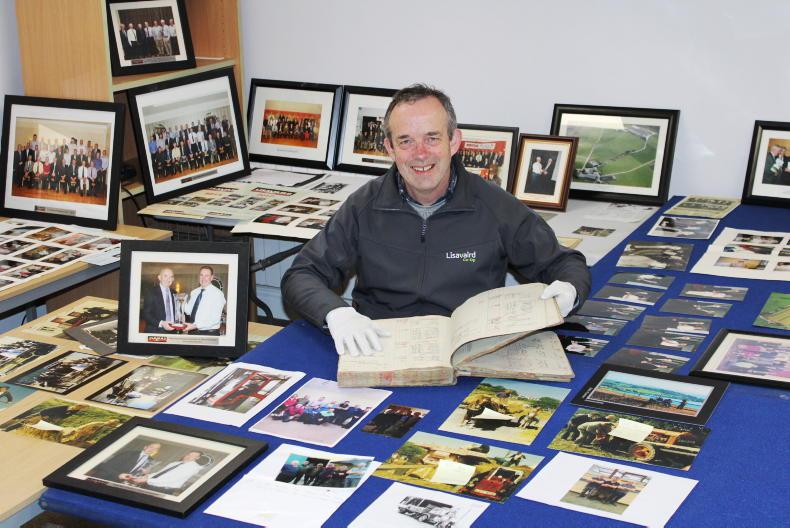
There was a marquee with photos and memorabilia from its history and a snippet from each of the branches that form and formed part of its network from Ballinascarthy in the east to Union Hall in the west.
Some of them remain as stores to serve the local farmers while others have closed over the years.
The people who founded it, similar to many others in the early co-op movement across the country, had tremendous foresight. Three of the four west Cork co-ops came into being in the years immediately after the civil war and the birth of the State.
They were a uniting cause where both political outlook and religion were set aside, as those involved focused on the economic development of their localities. In time that gave way to what we have now.
I think its longevity can be put down to the fact that it kept evolving. Right through its history various ventures were tried. Some stayed the test of time, others fell by the wayside and I think there’s a lesson for everyone in that. For any business to survive it has to keep evolving because life does too.
Looking back at the old photos and memorabilia, it was clear that the pace of change ramped up from the 1960s onwards. Prior to that many of the farming practices hadn’t changed much since the early 1900s with the emergence of electricity and engines the big changes in that time.
Labour was plentiful and opportunities outside of emigration hard to come by. The advent of free secondary education in 1969 followed a few years later by membership of the European Economic Community (EEC) saw the adaption of new technologies in agriculture gain traction.
Since the turn of the century and even more so in the last decade, technology and society have changed rapidly.
The challenge now for policy makers and co-op board members is to try and have the foresight to position the sector best to deal with new opportunities and challenges.



SHARING OPTIONS