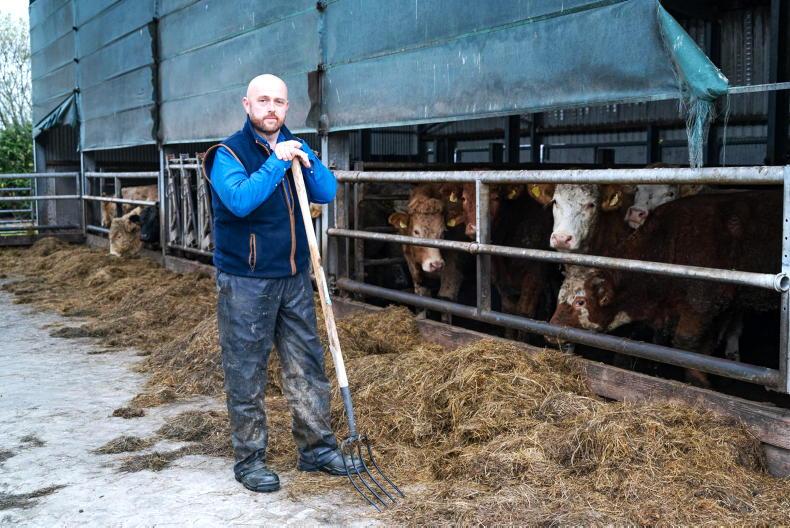
I am flat out counting bales of silage at the minute, trying to figure out how long they are going to last me.
I should have plenty of silage, but the problem is that my first and third cuts are around 75% DMD and 25% to 27% dry matter, while my second cut is 64% DMD and 64% dry matter.
To put it simply, I have a bit of a mismatch.
My second cut is more or less haylage, much to the delight of my wife and daughters, who now have something to feed their horses.
My cattle, on the other hand, are not quite so enamoured with it.
The funny thing is that I made the haylage completely by accident. There was never a tedder near it. It was allowed to grow a little too long due to weather and other circumstances, before eventually being cut in a spell of very good weather.
It just goes to show that while we are all trying to make dry silage, there is such a thing as too dry. I can tell you now, cattle are not particularly fond of silage when it gets too dry – and mine is very, very dry.
Diet change
Anyway, I am now trying to figure out the best way to feed it. I don't have enough first- and third-cut to get me through the winter and, even if I did, I would still have far too much haylage left over to leave for a few horses.
Feeding all the first- and third-cut first, followed by the second-cut, or doing it the other way around, would mean too big a change in the diet for the cattle.
All my cattle are being finished, so I don't really want to pick one or two batches and feed them differently. I want every animal performing as equally as possible.
However, I do have a small batch of bulls, which might be an option once they are built up to maximum meal. They could potentially take the haylage without it having such an impact on overall performance.
For now, I am feeding roughly three parts first- or third-cut to one part second-cut. I am not mixing the two – a diet feeder would certainly come in handy this year, but, unfortunately, I got rid of mine about 10 years ago.
Winter
The system I have settled on is to feed the first- and third-cut for around two-and-a-half to three days. Just as it is about to run out, I switch to the second-cut, which generally lasts about a day. So far, it is actually working quite well.
The only question is whether this ratio will see me through the winter. I don't really want to increase the amount of high dry matter second-cut going into the diet, but I also need to make sure I have enough of the better-quality silage to keep cattle performing.
If I get a batch of cattle killed in the meantime, I will probably be fine. Any store cattle bought for grazing next year should also be able to make good use of the second-cut.
That's farming, I suppose. You never know what your next set of problems is going to be.