



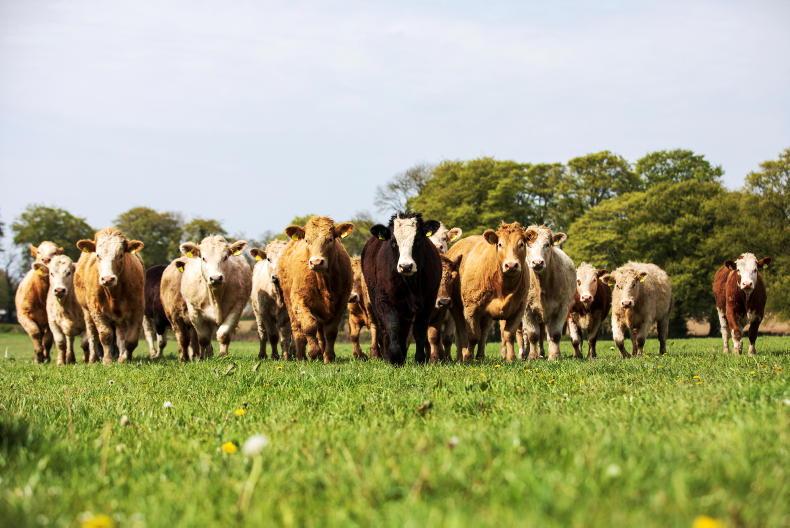
The UK’s Agriculture and Horticulture Development Board (AHDB) has been ordered to no longer run two advertisements it had issued in newspapers for British beef and dairy, after the Advertising Standards Agency (ASA) partially upheld a complaint against the board.
TV presenter and environmental campaigner Chris Packham raised three complaints with the ASA over the AHDB’s promotion of British dairy and meat. However, only one complaint was upheld by the advertising watchdog and it concerned two adverts.
The first ad in question ran in the national press with an image of green pastures over an image of a person eating beef.
It stated that: “British beef not only tastes great, but has a carbon footprint that's half the global average”, where it was claimed that this assertion was based on the full life-cycle emissions associated with British beef.
The other advert also featured in the national press with an image of green pastures above someone drinking milk.
'Carbon footprint'
This ad said “British milk not only tastes good, but is also produced to world-class standards, and has a carbon footprint a third lower than the global average”, with a similar footnote to that accompanying the beef ad.
Packham had complained that these ads were misleading to consumers and that the claims made by the AHDB around British dairy and beef emissions could not be substantiated.
The AHDB had maintained that the two ads would be read as referring only to the cradle-to-retail stages of producing beef and milk, but not the emissions associated with retail, consumption and disposal.
The ASA ruled that “the claims in the ads suggested those emissions were included and we therefore expected the evidence provided to also include them”.
Further complaints rejected
However, the body threw out two more of Packham’s complaints with AHDB television adverts and social media posts that included pictures of cattle grazing.
Packham was unsuccessful in arguing that these promotional materials “did not reflect the full environmental impact of British meat and dairy” and his contention that the ads suggested “cows used to produce beef and milk in the UK were typically outdoor grazed”, was rejected.
“The average consumer was likely to understand from the ad as a whole that British food was subject to high quality standards that encapsulated all areas of production,” the ASA said in its decision.
“We considered consumers would understand the imagery was a generic reflection of how some cows were farmed in the UK, indicating they were farmed in a natural environment that was associated with rural areas.
“The ads did not suggest all cows were kept outdoors at all times, but that outdoor space was associated with a higher quality of farming and, as a result, food and milk.”




SHARING OPTIONS