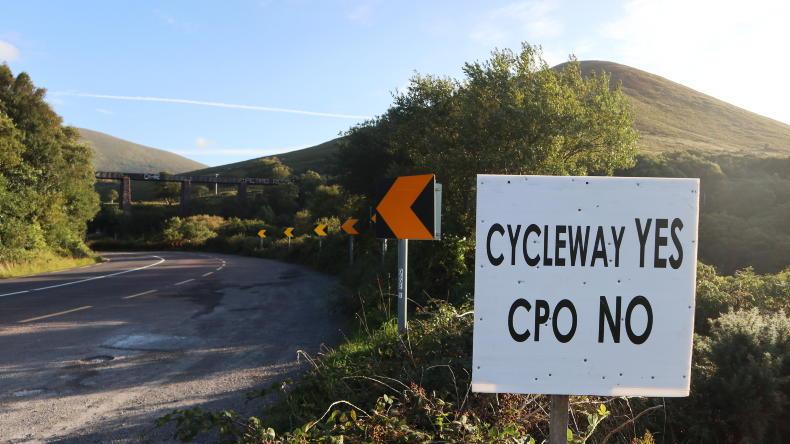
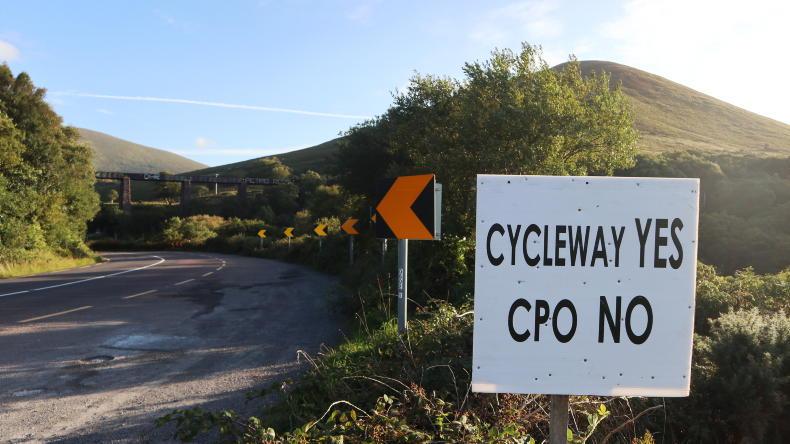
The compulsory purchase order (CPO) process for greenways is “Cromwellian in nature” and “rooted in a colonial system that was never on the side of the Irish people”, according to Cleona O'Shea of the National Greenway Action Group.
“It is a mechanism of dispossession, a relic of a past when land was taken from those who worked it and handed to those who ruled over it. Generations fought and died for the right to own and protect their property.
“That right must never again be undermined by the State. No forced project will succeed. The resentment will outlast the tarmac,” she told a meeting of the Joint Oireachtas Committee on Transport on greenways this week.
O'Shea called for CPOs to be removed from greenway developments and for the suspension of all current greenway projects involving private property until a new framework is in place.
The group also wants future greenways to be restricted to public land only, except where a property owner freely consents without pressure or threat.
O'Shea herself is affected by the route of a greenway - her farm is located outside Fermoy along the route of the proposed greenway from Dungarvan to Mallow.
The resentment will outlast the tarmac
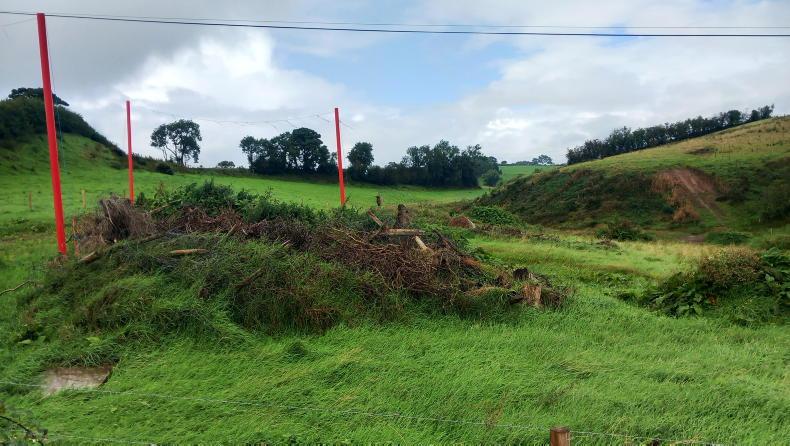
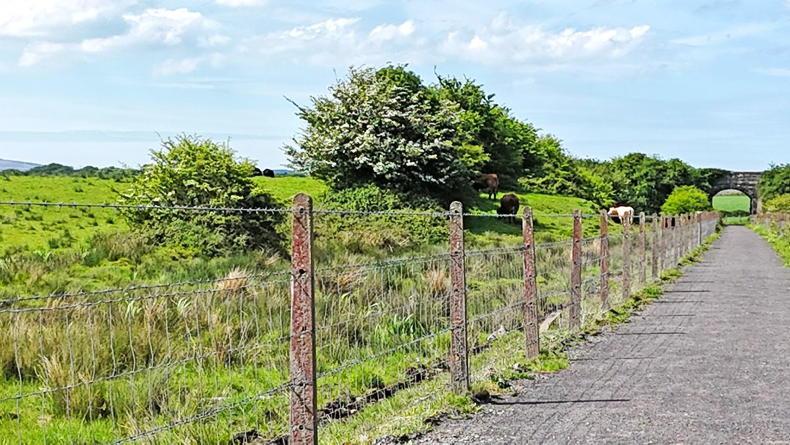
“If the greenway comes through my land, my land will be cut completely in half. I will have 750m of greenway right through the middle of my farm. I will have 50 acres locked between the River Blackwater and the greenway and 70 acres on the other side.
“In our system, we do all our own work. We have our own gear. We raise beef and do tillage and there are two of us. The 50 acres by the river is silage ground because it is too wet for grazing early in the year. With two of us doing silage, that will be a week's work going over the greenway and back every day. We just cannot do it. We cannot work,” she said.
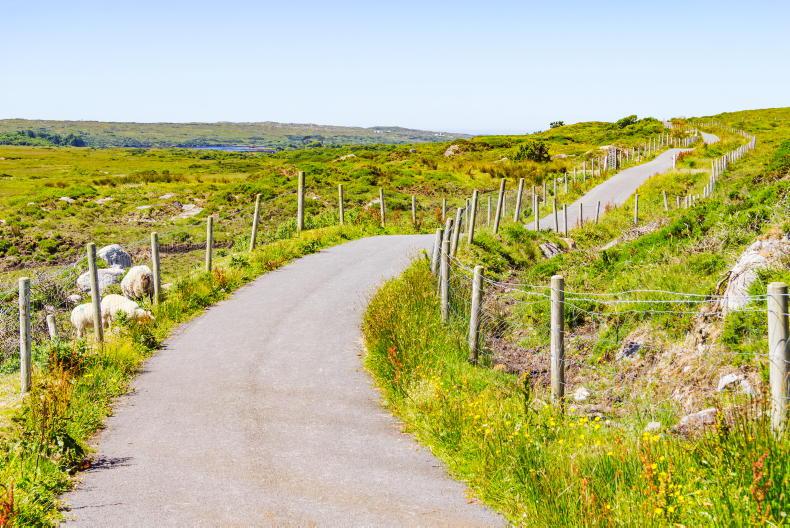
CEO of Transport Infrastructure Ireland (TII) Lorcan O'Connor told the committee that the feedback from people who were before the committee indicated the application of the existing greenways code of practice is not where it should be at.
“It also appears, in light of the various experiences that people are seeing, that updates to the code are required. That is going to happen with all of the stakeholders who were the original makers of that code,” he said.
CPOs should not be the calling card but they are required, ultimately
When asked by Independent Ireland leader and Cork southwest TD Michael Collins if TII has completed a national assessment of the number of farms that will be severed or rendered non-viable by current and proposed greenway routes, O'Connor replied: “No.”
He said he would “not for one moment dismiss the significance of any impact” that a greenway route could have on someone's farm.
The TII CEO also said that “if we had CPOs taken off the table completely, we would not be able to deliver greenways”.
“CPOs should not be the calling card but they are required, ultimately,” he said in response to a question from Laois TD Willie Aird, who asked him to take CPOs “off the radar”.
O’Connor said that he was not dismissing any of the points that were raised at the committee.
“I would equally like to make the point that CPO as a last resort is necessary in certain circumstances to protect the taxpayer, but only as a very last resort and in exceptional circumstances,” he said.
For more, see next week’s Irish Farmers Journal.
Read more
INHFA warns that greenway land CPOs put farmers on slippery slope
Angst over south Kerry greenway CPOs
Landowner opposition to greenway should not be ignored, says UFU and IFA
Westport farmer calls time on next phase of Mayo greenway proposal
The compulsory purchase order (CPO) process for greenways is “Cromwellian in nature” and “rooted in a colonial system that was never on the side of the Irish people”, according to Cleona O'Shea of the National Greenway Action Group.
“It is a mechanism of dispossession, a relic of a past when land was taken from those who worked it and handed to those who ruled over it. Generations fought and died for the right to own and protect their property.
“That right must never again be undermined by the State. No forced project will succeed. The resentment will outlast the tarmac,” she told a meeting of the Joint Oireachtas Committee on Transport on greenways this week.
O'Shea called for CPOs to be removed from greenway developments and for the suspension of all current greenway projects involving private property until a new framework is in place.
The group also wants future greenways to be restricted to public land only, except where a property owner freely consents without pressure or threat.
O'Shea herself is affected by the route of a greenway - her farm is located outside Fermoy along the route of the proposed greenway from Dungarvan to Mallow.
The resentment will outlast the tarmac
“If the greenway comes through my land, my land will be cut completely in half. I will have 750m of greenway right through the middle of my farm. I will have 50 acres locked between the River Blackwater and the greenway and 70 acres on the other side.
“In our system, we do all our own work. We have our own gear. We raise beef and do tillage and there are two of us. The 50 acres by the river is silage ground because it is too wet for grazing early in the year. With two of us doing silage, that will be a week's work going over the greenway and back every day. We just cannot do it. We cannot work,” she said.

CEO of Transport Infrastructure Ireland (TII) Lorcan O'Connor told the committee that the feedback from people who were before the committee indicated the application of the existing greenways code of practice is not where it should be at.
“It also appears, in light of the various experiences that people are seeing, that updates to the code are required. That is going to happen with all of the stakeholders who were the original makers of that code,” he said.
CPOs should not be the calling card but they are required, ultimately
When asked by Independent Ireland leader and Cork southwest TD Michael Collins if TII has completed a national assessment of the number of farms that will be severed or rendered non-viable by current and proposed greenway routes, O'Connor replied: “No.”
He said he would “not for one moment dismiss the significance of any impact” that a greenway route could have on someone's farm.
The TII CEO also said that “if we had CPOs taken off the table completely, we would not be able to deliver greenways”.
“CPOs should not be the calling card but they are required, ultimately,” he said in response to a question from Laois TD Willie Aird, who asked him to take CPOs “off the radar”.
O’Connor said that he was not dismissing any of the points that were raised at the committee.
“I would equally like to make the point that CPO as a last resort is necessary in certain circumstances to protect the taxpayer, but only as a very last resort and in exceptional circumstances,” he said.
For more, see next week’s Irish Farmers Journal.
Read more
INHFA warns that greenway land CPOs put farmers on slippery slope
Angst over south Kerry greenway CPOs
Landowner opposition to greenway should not be ignored, says UFU and IFA
Westport farmer calls time on next phase of Mayo greenway proposal
SHARING OPTIONS