The United Kingdom imports food and drink to the value of about €45bn per annum, over 70% of which comes from the European Union. There are exports to the EU also, but the balance is strongly inward, with imports more than double exports.
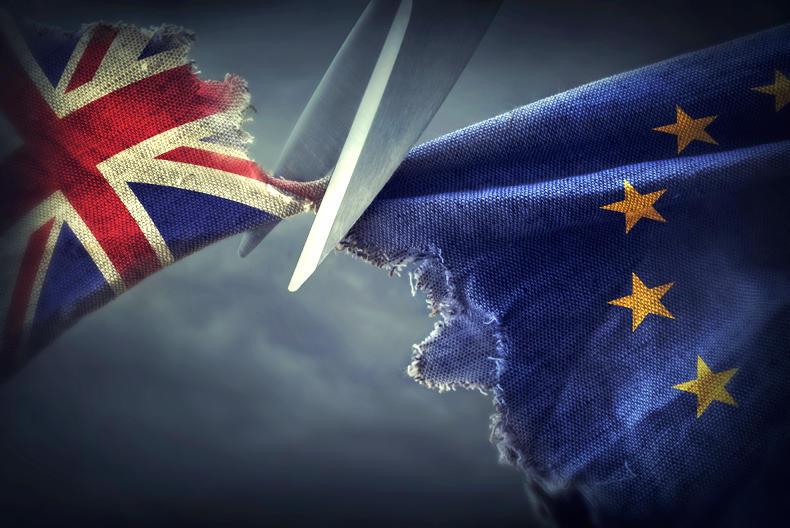
While the exit from the EU will restrict British trade access to Europe, to an extent as yet unclear, there is a modest silver lining. Britain will be departing the Common Agricultural Policy in almost all scenarios and there will be opportunities to find savings on the import bill.
Whatever the precise trading arrangement emerging from the Brexit negotiations, it is very difficult to see how Britain could remain in the CAP, or would want to.
Food in Europe is priced above world levels, even though farmer income support is now mainly via direct payments. It used to come through price supports and the intervention system, with European prices at times hugely out of line.
But in addition to direct payments, there are still external tariffs and quotas on many agricultural imports from non-European sources and the UK will be free to avoid these through shopping around.
The UK government will welcome the silver lining on food imports. There are already some inflationary pressures arising from sterling weakness and any offsetting opportunities will be exploited.
Last week, the economist Stephen Nickell, addressing the Treasury select committee, predicted that exit from the CAP would help cut food prices and could also reduce the government’s farm subsidy bill.
As UK ministers get down to negotiating successor trade deals with non-EU countries, access for their food exports will be a useful bargaining chip in many cases.
Prior to EU entry back in 1973, the UK pursued a policy of seeking the cheapest worldwide sources for agricultural products, to the detriment of Irish exporters. Professor Nickell was in effect telling the MPs that the logic of the trade balance has not changed and the cheap food policy makes sense again, from the British perspective, once outside the EU.
For Ireland, the boost to farm incomes subsequent to EU entry was due in large part to the resultant increase in food prices for UK consumers
Of course for Ireland, the boost to farm incomes subsequent to EU entry was due in large part to the resultant increase in food prices for UK consumers. This process is now likely to go into reverse.
Listen to Jon Copestake of the Economist Intelligence Unit on the effect of Brexit on retail food prices in the UK in our podcast below:
Listen to "Brexit and food prices" on Spreaker.
Is there some way that the UK could remain a participant in the CAP, avoiding the negative impact in this country? The answer seems to be no. Only full EU members are bound by CAP rules and the UK is headed for some kind of bespoke arrangement, possibly outside both the single market and the customs union.
But even softer versions of Brexit need not include remaining in the CAP, or in the Common Fisheries Policy. At this stage, given the UK’s unwillingness to continue with free movement, some version of hard Brexit seems on the cards.
Even the Norway-style arrangement, theoretically on the table as a soft Brexit option, would mean CAP exit. Norway is in the single market but not a participant in the CAP. There are specific arrangements with Norway for trade in some food products but there is no simple template here.
British exit from the EU may not be in Britain’s overall economic interest – some of the expectations of Brexiteers about trade opportunities in distant markets seem to be wildly optimistic, a view shared by almost all economists in the UK.
But exit from the CAP is different. If Britain could have joined the EU (or the Common Market as it then was) without having to join the CAP in 1973, it is pretty clear that they would have done so. When continued membership in the Common Market was put to a referendum vote in 1975, high food prices was one of the issues with the Eurosceptic side of the argument. The Eurosceptics have finally had their victory, 40 years later.
A report last week from the ESRI has documented in some detail the product-by-product rules which would apply if Britain ends up with no trade deal at all on exit from the EU.
The default WTO (World Trade Organisation) rules and tariffs would apply and some of the implications for Irish exporters look scary.
Worst case
However, it is unlikely that no deal will be done, so the ESRI report is a worst-case scenario. It is worst-case in a second sense: if trade barriers are erected (say beef quotas or tariffs) in an important market, it does not follow that existing export volumes into that market will be lost.
The remaining EU markets are very large and well capable of absorbing product redirected from the UK. The trouble is that this could be very expensive. Product respecification and merchandising, as well as straight transport costs, will gobble up margins if product must find outlets further afield.
Read more
Take a deep Brexit – an industry holds its breath
Full coverage: Brexit
The United Kingdom imports food and drink to the value of about €45bn per annum, over 70% of which comes from the European Union. There are exports to the EU also, but the balance is strongly inward, with imports more than double exports.
While the exit from the EU will restrict British trade access to Europe, to an extent as yet unclear, there is a modest silver lining. Britain will be departing the Common Agricultural Policy in almost all scenarios and there will be opportunities to find savings on the import bill.
Whatever the precise trading arrangement emerging from the Brexit negotiations, it is very difficult to see how Britain could remain in the CAP, or would want to.
Food in Europe is priced above world levels, even though farmer income support is now mainly via direct payments. It used to come through price supports and the intervention system, with European prices at times hugely out of line.
But in addition to direct payments, there are still external tariffs and quotas on many agricultural imports from non-European sources and the UK will be free to avoid these through shopping around.
The UK government will welcome the silver lining on food imports. There are already some inflationary pressures arising from sterling weakness and any offsetting opportunities will be exploited.
Last week, the economist Stephen Nickell, addressing the Treasury select committee, predicted that exit from the CAP would help cut food prices and could also reduce the government’s farm subsidy bill.
As UK ministers get down to negotiating successor trade deals with non-EU countries, access for their food exports will be a useful bargaining chip in many cases.
Prior to EU entry back in 1973, the UK pursued a policy of seeking the cheapest worldwide sources for agricultural products, to the detriment of Irish exporters. Professor Nickell was in effect telling the MPs that the logic of the trade balance has not changed and the cheap food policy makes sense again, from the British perspective, once outside the EU.
For Ireland, the boost to farm incomes subsequent to EU entry was due in large part to the resultant increase in food prices for UK consumers
Of course for Ireland, the boost to farm incomes subsequent to EU entry was due in large part to the resultant increase in food prices for UK consumers. This process is now likely to go into reverse.
Listen to Jon Copestake of the Economist Intelligence Unit on the effect of Brexit on retail food prices in the UK in our podcast below:
Listen to "Brexit and food prices" on Spreaker.
Is there some way that the UK could remain a participant in the CAP, avoiding the negative impact in this country? The answer seems to be no. Only full EU members are bound by CAP rules and the UK is headed for some kind of bespoke arrangement, possibly outside both the single market and the customs union.
But even softer versions of Brexit need not include remaining in the CAP, or in the Common Fisheries Policy. At this stage, given the UK’s unwillingness to continue with free movement, some version of hard Brexit seems on the cards.
Even the Norway-style arrangement, theoretically on the table as a soft Brexit option, would mean CAP exit. Norway is in the single market but not a participant in the CAP. There are specific arrangements with Norway for trade in some food products but there is no simple template here.
British exit from the EU may not be in Britain’s overall economic interest – some of the expectations of Brexiteers about trade opportunities in distant markets seem to be wildly optimistic, a view shared by almost all economists in the UK.
But exit from the CAP is different. If Britain could have joined the EU (or the Common Market as it then was) without having to join the CAP in 1973, it is pretty clear that they would have done so. When continued membership in the Common Market was put to a referendum vote in 1975, high food prices was one of the issues with the Eurosceptic side of the argument. The Eurosceptics have finally had their victory, 40 years later.
A report last week from the ESRI has documented in some detail the product-by-product rules which would apply if Britain ends up with no trade deal at all on exit from the EU.
The default WTO (World Trade Organisation) rules and tariffs would apply and some of the implications for Irish exporters look scary.
Worst case
However, it is unlikely that no deal will be done, so the ESRI report is a worst-case scenario. It is worst-case in a second sense: if trade barriers are erected (say beef quotas or tariffs) in an important market, it does not follow that existing export volumes into that market will be lost.
The remaining EU markets are very large and well capable of absorbing product redirected from the UK. The trouble is that this could be very expensive. Product respecification and merchandising, as well as straight transport costs, will gobble up margins if product must find outlets further afield.
Read more
Take a deep Brexit – an industry holds its breath
Full coverage: Brexit






SHARING OPTIONS