The UK will hold an in-or-out referendum on EU membership no later than 2017. The odds on Britain leaving have shortened to about 7/4, having been 5/1 and longer a year ago. So the bookies’ odds are still predicting a decision to stay, but it could be close.
The ESRI released a somewhat alarming paper last week on the possible consequences for Ireland of a British decision to quit, so-called Brexit. The headline conclusion is that trade with Britain, Ireland’s largest single trading partner under most headings, would decline by 20%.
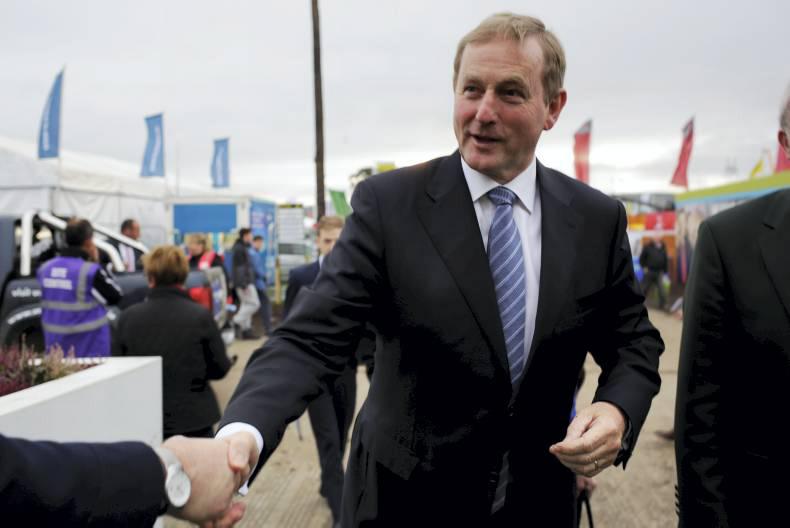
Taoiseach Enda Kenny referred explicitly to these worrying figures in his address to the Confederation of British Industry in London on Monday.
The ESRI report, commissioned by the Government, is predicting other serious problems if Britain leaves. There could be restrictions on free movement across the border with Northern Ireland as well as possible limitations on labour migration between Ireland and Britain.
The sharp dip in trade flows would include in particular declining trade in agricultural and food exports. They see no guarantee either that extra foreign direct investment would compensate. They are assuming of course that if Britain left the EU, Ireland would stay, thus creating, for the first time, a situation where Ireland would be in and Britain out.
The actual process will work like this. The UK government is seeking modifications in the way the EU operates. Some of its requirements will doubtless be met, since everyone wants to keep Britain in.
David Cameron’s government is widely expected to argue that the concessions are enough and will recommend accordingly. If the majority votes to stay, that is the end of the matter. But anti-EU sentiment in Britain has been rising, according to opinion polls, reflecting the eurozone mess and British relief that they kept their own currency, as well as concern about the influx of refugees into Europe.
If the voters opt to leave, the Lisbon treaty provides that a complex negotiation would then commence. The departing state would negotiate a kind of divorce settlement dealing with trade, labour and capital flows and various other matters.
This would take about two years and the UK would formally cease to be an EU member sometime in 2019. Nobody knows what the divorce settlement might look like at this stage. It is entirely possible that free trade, labour mobility and free capital flows would continue largely unimpaired: several European countries not in the EU, including Norway and Switzerland, enjoy an economic deal with the EU not far short of the advantages of membership.
Of course, an acrimonious break-up could result in new trade barriers but it is difficult to see why anyone would want this outcome. Britain and continental Europe are major trade partners and both will want to keep it that way. An amicable break-up is at least as likely, which means one that would have a small impact in Ireland, assuming Ireland chose to remain in the EU after the British exit.
It is in this sense that the ESRI conclusion about a 20% decline in trade with Britain is rather surprising.
The ESRI finding, that Irish trade with the UK would contract seriously must, one imagines, be based on an assumption that the divorce negotiations will go badly and that significant trade restrictions will result.
But this is not the basis for the ESRI’s conclusion. There is no set of assumptions laid out on the trade regime expected to replace Britain’s EU membership. The report’s authors rely instead on a study presented at a conference back in September 2007 organised by the World Trade Organisation in Geneva. At that meeting, two economists, Gary Hufbauer and Jeffrey Schott, reviewed the impact of preferential trade agreements across the world on trade flows. They concluded, using data from 1976 to 2005, that these agreements, which include full customs unions such as the EU as well as a wide array of bilateral and multilateral deals on preferential tariffs, can have substantial impacts on measured trade flows. The ESRI has, if I understand their report correctly, simply re-calibrated the average impact as measured from this study to the case of bilateral trade between Ireland and the UK.
This is a very different procedure from positing a specific new set of circumstances negotiated after the referendum and computing the impact on trade.
Should the UK vote to leave the EU and Ireland choose to remain, there could be a large and disruptive change to the trade relationship. But there could also be a deal which left the terms of trade access largely unchanged. It is a matter of judgement which outcome is the more likely. It would be helpful if the ESRI could undertake some more explicit modelling on this important issue.
The UK will hold an in-or-out referendum on EU membership no later than 2017. The odds on Britain leaving have shortened to about 7/4, having been 5/1 and longer a year ago. So the bookies’ odds are still predicting a decision to stay, but it could be close.
The ESRI released a somewhat alarming paper last week on the possible consequences for Ireland of a British decision to quit, so-called Brexit. The headline conclusion is that trade with Britain, Ireland’s largest single trading partner under most headings, would decline by 20%.
Taoiseach Enda Kenny referred explicitly to these worrying figures in his address to the Confederation of British Industry in London on Monday.
The ESRI report, commissioned by the Government, is predicting other serious problems if Britain leaves. There could be restrictions on free movement across the border with Northern Ireland as well as possible limitations on labour migration between Ireland and Britain.
The sharp dip in trade flows would include in particular declining trade in agricultural and food exports. They see no guarantee either that extra foreign direct investment would compensate. They are assuming of course that if Britain left the EU, Ireland would stay, thus creating, for the first time, a situation where Ireland would be in and Britain out.
The actual process will work like this. The UK government is seeking modifications in the way the EU operates. Some of its requirements will doubtless be met, since everyone wants to keep Britain in.
David Cameron’s government is widely expected to argue that the concessions are enough and will recommend accordingly. If the majority votes to stay, that is the end of the matter. But anti-EU sentiment in Britain has been rising, according to opinion polls, reflecting the eurozone mess and British relief that they kept their own currency, as well as concern about the influx of refugees into Europe.
If the voters opt to leave, the Lisbon treaty provides that a complex negotiation would then commence. The departing state would negotiate a kind of divorce settlement dealing with trade, labour and capital flows and various other matters.
This would take about two years and the UK would formally cease to be an EU member sometime in 2019. Nobody knows what the divorce settlement might look like at this stage. It is entirely possible that free trade, labour mobility and free capital flows would continue largely unimpaired: several European countries not in the EU, including Norway and Switzerland, enjoy an economic deal with the EU not far short of the advantages of membership.
Of course, an acrimonious break-up could result in new trade barriers but it is difficult to see why anyone would want this outcome. Britain and continental Europe are major trade partners and both will want to keep it that way. An amicable break-up is at least as likely, which means one that would have a small impact in Ireland, assuming Ireland chose to remain in the EU after the British exit.
It is in this sense that the ESRI conclusion about a 20% decline in trade with Britain is rather surprising.
The ESRI finding, that Irish trade with the UK would contract seriously must, one imagines, be based on an assumption that the divorce negotiations will go badly and that significant trade restrictions will result.
But this is not the basis for the ESRI’s conclusion. There is no set of assumptions laid out on the trade regime expected to replace Britain’s EU membership. The report’s authors rely instead on a study presented at a conference back in September 2007 organised by the World Trade Organisation in Geneva. At that meeting, two economists, Gary Hufbauer and Jeffrey Schott, reviewed the impact of preferential trade agreements across the world on trade flows. They concluded, using data from 1976 to 2005, that these agreements, which include full customs unions such as the EU as well as a wide array of bilateral and multilateral deals on preferential tariffs, can have substantial impacts on measured trade flows. The ESRI has, if I understand their report correctly, simply re-calibrated the average impact as measured from this study to the case of bilateral trade between Ireland and the UK.
This is a very different procedure from positing a specific new set of circumstances negotiated after the referendum and computing the impact on trade.
Should the UK vote to leave the EU and Ireland choose to remain, there could be a large and disruptive change to the trade relationship. But there could also be a deal which left the terms of trade access largely unchanged. It is a matter of judgement which outcome is the more likely. It would be helpful if the ESRI could undertake some more explicit modelling on this important issue.






SHARING OPTIONS