



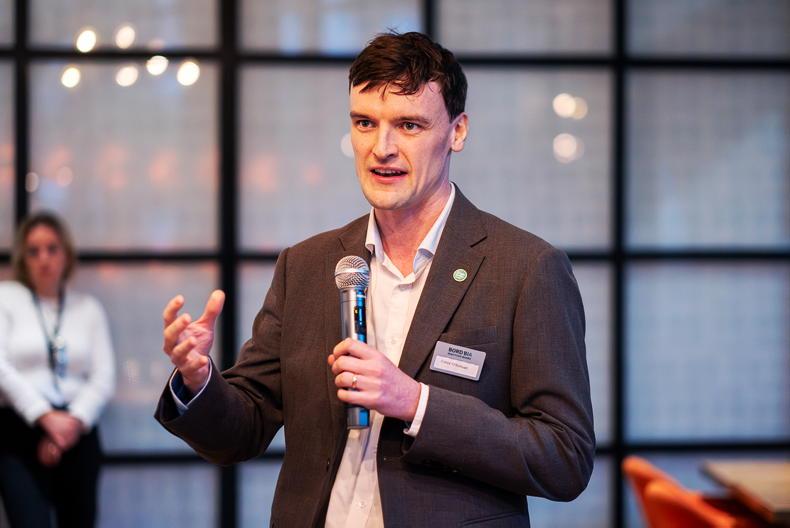
Is the job of representing Irish food and drink in the UK similar to or different from doing it in China?
It is a bit of both. The bit that is the same is making sure Irish food and drink sales in the market are maximised. Where it is different is that when I went to China, there was very little awareness of Ireland in the wider food community beyond dairy and pig meat.
We benefited greatly from the EU targeting China over the past decade, the EU is widely known and we can introduce ourselves as part of the EU.
Of course the UK and Ireland are exceptionally well known to each other and we are well established in that market. Here our brief has to be to hold what we have and look to do more.
Where does the UK rank in terms of priority for Irish food and drink exports?
The UK has been, and will continue to be, Ireland’s main market for food and drink exports. Of course geography has been important in this and even with a ferry crossing we are as accessible to the main population and distribution centres as outlying regions of the UK itself.
The common language and fairly similar culture also contributes to positive business relationships.
What are the main categories, volume and value?
The UK is a major market for all Irish food and drink exports. The big ones are of course beef, worth €1.5bn last year; dairy, worth almost €1.3bn; and prepared consumer foods, worth €2.5bn.
Maybe the best way to answer the question is to say that the UK is the main export market for most Irish food and drink.
For example, mushrooms is one of our smaller, quite localised speciality sectors with an export value of €167.6m and almost all of this, just under €167.5m, was to the UK!
Any particular trends over the past five years?
The really interesting thing is that while the UK was our biggest export market five years ago, it is even bigger today than it was then. In 2020, 33% of our food and drink exports went to the UK; last year this had increased to 35%.
We had been concerned about the impact of Brexit but thankfully the EU–UK trade deal meant the impact was minimal and our exporters and ourselves have worked hard to nurture the business.
How do you see the future of Irish exports to the UK?
Our first ambition has to be holding what we have but never being content with that; there is always an opportunity to do more, particularly in moving Irish produce into higher value segments and further promoting Ireland’s reputation for great food and drink.
However, we cannot relax. It has been widely noted that UK trade deals and declining supply have created opportunities for more competition in the market, particularly in beef, sheepmeat and dairy.
When this competition comes in cheaper, it’s doubly important to ensure that all of Ireland’s strengths are valued.
What do they look for in imports from Ireland?
The great advantage we have in the UK market is how we can slot seamlessly into their supply and distribution chains with a product that matches or exceeds UK domestic production. We know what UK consumers want, and we can give it to them.
The fact that we have the sustainable beef and lamb assurance scheme (SBLAS) and the sustainable dairy scheme (SDAS), and similar schemes for other sectors, are the golden key to accessing the highest value channels. Customers understand and trust our programmes as much as UK standards.
They are what gives the large retailers and restaurants the confidence to promote Ireland and British side by side.
I know these take a bit of effort from farmers but the reality is that without them, we would be selling our exports to the UK in lower value channels than we do at present.



SHARING OPTIONS