



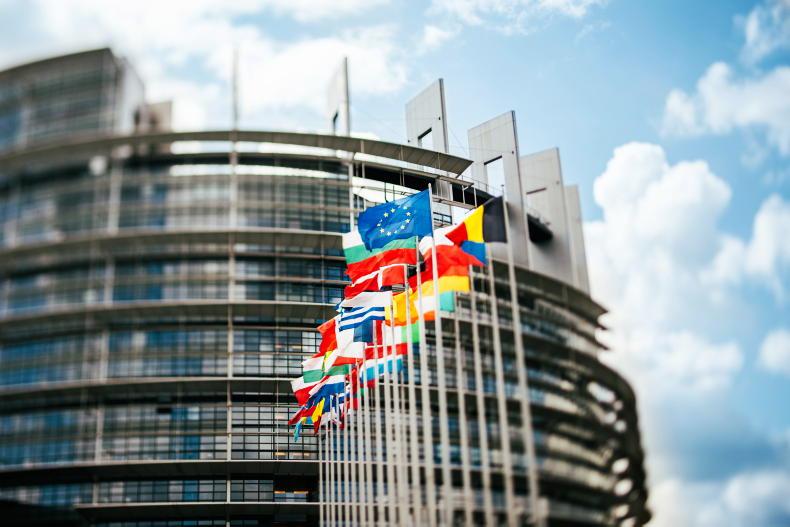
The European elections will take place this week next year, most likely on Friday 7 June 2024. It’s an incredibly important election for Ireland and particularly for Irish farming.
The next European Parliament will have to reform the Common Agricultural Policy (CAP) for starters. I know the ink is barely dry on the 2023 Basic Income Support for Sustainability (BISS) applications - the first of the new system - but the lifespan of this iteration of the CAP is only for five years.
We will need a new one in place in 2027 for 2028, and the 2024-2029 European Parliament will have a pivotal role in that process.
We saw the parliament’s fingerprints all over the recent reforms, with them achieving more of their vision of CAP than the ministerial council for the first time.
Broader issues
There are broader issues around land use and food production that the CAP is ill-equipped to tackle with current funding.

Nature restoration and rewetting are currently dominating headlines, but we can add forestry policy, renewable energy, anaerobic digestion, rewilding and the introduction of endangered species to parts of the countryside. Then there’s pesticides, gene editing and GMOs, trade, rural development and a host of other issues.
There are currently fourteen MEPs across three constituencies. With apologies to the people of Dublin and their four MEPs - Barry Andrews, Ciaran Cuffe, Clare Daly and Frances Fitzgerald - this article will focus on the two rural constituencies of Ireland South and Midlands North West.
The strange shape of the two rural constituencies has thrown up some vagaries in terms of the geographical seat balance. Let’s quickly look at representation by province.
As it is, Munster has four MEPs, Connacht has three, Leinster has two and Ulster has none.
The population of Munster is 1.28m, with 550,000 people in Connacht, and Leinster has 1.41m. Over 312,000 people live in the three counties of Ulster, with 1.46m people in Dublin.
The four Munster MEPs are all along the southern half of the constituency, with Sean Kelly in Kerry, Deirdre Clune and Billy Kelleher both in Cork, and Grace O’Sullivan in Waterford.
Add in the fact that Leinster’s sole Ireland South representative is Mick Wallace, from Wellingtonbridge in the heart of south Wexford, and the anomaly becomes even more striking.
Underrepresented
The whole middle third of rural Ireland is unrepresented. Maria Walsh is in Mayo, Luke ‘Ming’ Flanagan is in Roscommon, Chris McManus in Sligo, with Colm Markey in Louth.
There isn’t a single MEP in Clare, Limerick, Tipperary, Kilkenny, Carlow, Wicklow, Kildare, Laois, Offaly, Meath, Westmeath, Longford, Leitrim or Galway.
Fourteen counties, more than half the 26 - a representative desert. And Donegal, Cavan and Monaghan are equally barren.
How did this happen? In part, by happenstance. Meath’s Mairead McGuinness was elected in 2019, but gave up her seat to become European Commissioner, with Markey taking her place from the substitute list every European election candidate must present when seeking office.
Similarly, Monaghan’s Matt Carthy was elected four years ago, but surrendered his seat to contest the 2020 general election, with McManus replacing him.
If Markey and Wallace are vulnerable - and I think they are for different reasons - then Leinster is itself vulnerable to having no MEP apart from those in the Dublin constituency.
Boundary changes
Ireland will gain an extra seat in 2022. The general expectation is that the seat will go to the midlands, north and west, which will expand to share the electorate more equally between the two rural constituencies.
It’s also expected that Laois and Offaly will be switched from Ireland South to Midlands North West to rebalance the populations of the two constituencies.
Let’s have a quick look at the sitting MEPs.

Sean Kelly Fine Gael - European People’s Party (EPP)
First elected as an MEP: 2009
First preference vote in 2019 - 118,444 (elected on the ninth count)
Kelly may be 71, but he maintains a very hectic itinerary, turning up all over the sprawling south constituency. He needs to, as he is from Killarney, in the southwestern corner of the constituency. He is known all over Ireland from his time as GAA president. He intends to run again and is well-placed to take a seat for the fourth time. He is well tuned to farmer issues and is not afraid to be critical of the IFA at times.

Billy Kelleher Fianna Fáil - Renew Europe
First elected as an MEP: 2009
First preference vote in 2019 - 84,083 (elected on the 18th count)
From a dairy farm - currently run by his brother Donal (once a Macra presidential candidate) - Billy Kelleher was addressing Wexford IFA branch officers on Friday evening 9 June. Currently one of only two Fianna Fáil MEPs, Billy intends to stand again and is in good shape to be re-elected. A lot will depend on who his running mates are and where in the constituency they are situated.
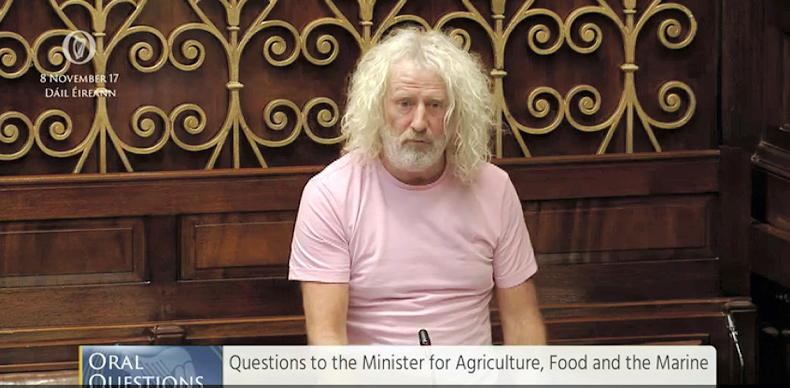
Mick Wallace - Independents for Change - The Left Group in Parliament (GUE/NGL)
First elected as an MEP: 2019
First preference vote in 2019 - 81,741 (elected on the 18th count)
Hailing from a family of farmer merchants, Wallace first made his name as a builder and founder and funder of Wexford Youths League of Ireland football team. Having been elected to the Dáil twice for Wexford, he transferred that electoral success to the European stage in 2019. He has taken a strong line on Russia’s invasion of Ukraine, holding the west/NATO to be as culpable as Russia for how events have unfolded. How this will play with an Irish electorate is uncertain. Wallace’s other issue is that Sinn Féin, currently seatless in Ireland South, will surely take the first left seat next time out. Wallace did not respond to our query as to whether he will stand again or not.

Grace O’Sullivan - Green Party - Greens & European Free Alliance
First elected as an MEP: 2019
First preference vote in 2019 - 75,946 (elected on the 18th count)
The Green Party has always polled better in European elections than Dáil contests and Grace O’Sullivan’s election four years ago was no real surprise, particularly when Sinn Féin had a bad day. From Waterford, but with her constituency office in Cork, she is likely to strongly feature again next year if she stands. In fact, whoever the Green Party runs, they will be in good shape to take a seat.

Deirdre Clune - Fine Gael - EPP
First elected as an MEP: 2014
First preference vote in 2019 - 64,605 (elected on the 20th count)
Clune is Fine Gael royalty, being a daughter of Peter Barry, succeeding him in representing Cork South-Central in Dáil Eireann. Elected to the fifth and final seat last time out, she didn’t take her place in the European Parliament until 2020. This was because her seat was a 'Brexit seat', gained by Ireland when the UK’s 73 MEPs withdrew following the formal enactment of the withdrawal agreement. With Fine Gael currently running at under 20% nationally in opinion polls, it’s hard to see them retaining two of five seats, meaning Clune is essentially competing with Sean Kelly and the third Fine Gael candidate, should one run, for a single seat. Clune did not respond to our query as to whether she intends to run again.
Prediction
If a week is a long time in politics, a year is an eternity. However, I would be prepared to venture that if Laois and Offaly are pruned from this constituency - but it remains a five-seater - we can say with reasonable certainty that Fianna Fáil, Fine Gael and Sinn Féin are all extremely likely to gain a seat.
It’s also likely that the Green Party will retain its seat. And as for the fifth and final seat, while Sinn Féin will have a chance if current polling trends continue, don’t rule out the possibility of Mick Wallace defying electoral logic and holding on.
However, it’s eminently possible that a candidate could emerge from the rural community, whether as an independent or some nascent political party or movement. Remember, the Munster constituency previously elected TJ Maher on three occasions.

Chris McManus - Sinn Féin - GUE/NGL
First elected as an MEP: replaced Matt Carthy in 2020
First preference vote in 2019 - not applicable
Chris McManus was catapulted into the European Parliament when Matt Carthy gave up his MEP position to contest the 2020 general election. Currently the only Sinn Féin MEP, that is likely to change next year, when the party will be poised to take a seat in each constituency. McManus is based in Sligo and has found common cause on many agricultural issues with fellow GUE/NGL member Luke ‘Ming’ Flanagan. McManus confirmed that Sinn Féin has yet to select its candidate, with “many factors for both myself and the party to consider before there is any confirmation of candidacy”. That said, it is expected that he will be putting his hat in the ring.
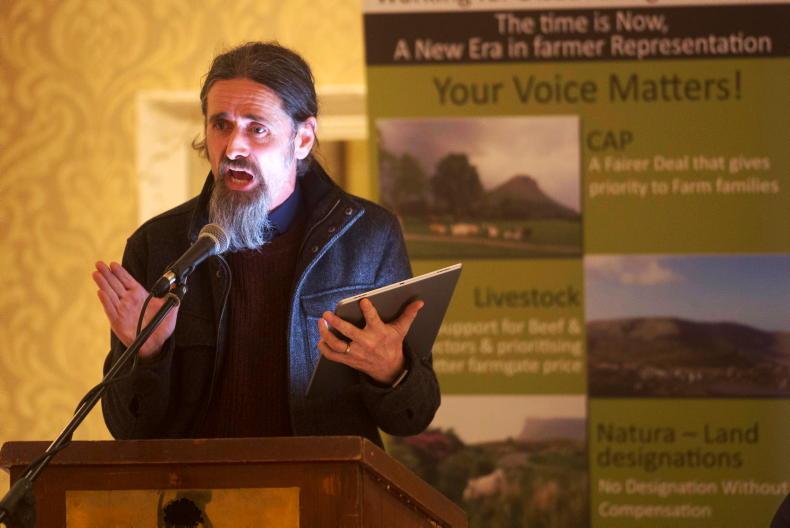
Luke ‘Ming’ Flanagan - Independent - GUE/NGL
First elected as an MEP: 2014
First preference vote in 2019 - 85,034 (elected on the 13th count)
One of the most recognisable figures in Irish politics, with the trademark goatee beard that gave him his nickname (for younger readers, Ming the Merciless is the evil emperor in the Flash Gordon cartoons/TV show/movies). He has been vocal on rural issues since being catapulted into the Dáil in part due to support from protesting peat cutters and bog owners. They were led by one Michael Fitzmaurice, who succeeded Flanagan into the Dáil when the Roscommon-based independent gained election to the European parliament. A canny politician, who was one of the talking-points of the 2022 Ploughing championships with a massive installation, he will be expected to retain his seat. He has confirmed to the Irish Farmers Journal that he will be standing next June.

Maria Walsh - Fine Gael - EPP
First elected as an MEP: 2019
First preference vote in 2019 - 64,500 (elected on the 13th count)
Maria Walsh was a bit of a surprise package in the last election. The former Rose of Tralee managed to help Fine Gael to win two of four seats. This was due in no small part to Mairead McGuinness having a quota and 15,000 votes to spare. McGuinness is a massive loss to Fine Gael’s vote-catching - she and Avril Doyle previously won two of three seats in the East (Leinster) constituency in 2004. Walsh describes herself as a young farmer, having completed the Green Cert since her election. Will that help her to be reelected? From south Mayo, her locality is angered by turf-cutting restrictions and rewetting proposals.

Colm Markey - Fine Gael - EPP
First elected as an MEP: 2020
First preference vote in 2019 - not applicable
When Louth dairy farmer Colm Markey was named as a substitute to Mairead McGuinness in the 2019 elections, it hardly raised a flutter. With the Meath-based McGuinness, a former Ear to the Ground host, one of the highest-ranking of the 700-plus MEPs in Brussels, he would hardly be called on. But when Phil Hogan’s position became untenable after golfgate, McGuinness was nominated to be Ireland’s commissioner and Markey became an MEP. A former Macra president, his only other electoral experience has been for Louth County Council. With Fine Gael currently polling under 20%, it seems that he and Walsh are again battling for a single seat. Markey has confirmed his intention to stand in 2024.
Prediction
With an extra seat and two extra counties likely, the centre of gravity of this constituency will shift southwards to some degree. A lot will depend on who emerges in addition to the existing MEPs as candidates.
I can safely predict that Sinn Féin will retain its seat and will push strongly for a second seat. Fianna Fáil will surely regain a seat here and Fine Gael would have to have vote management as poor as it was excellent last time out to fail to retain one seat.
The final two seats are a toss-up, but I would expect a rural candidate to emerge from somewhere and go close. While the average age is older here than in the other two Irish EU constituencies, a Green Party candidate cannot be discounted either.



SHARING OPTIONS