Most Americans – along with the rest of the planet – exhaled two weeks ago when the governing Republicans were hammered in US mid-term elections.
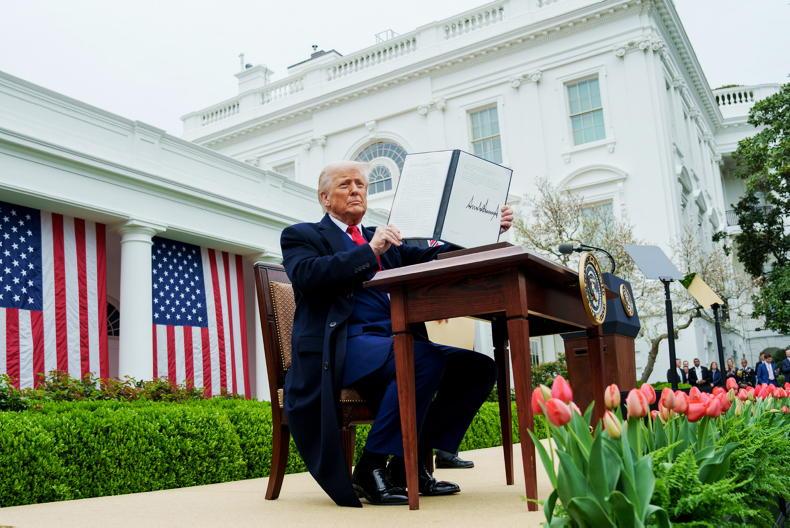
President Donald Trump, who is serving his final term, was not on the ballot.
But voters across the nation sent a clear message that they were fed up with his inability to make living more affordable … let alone his policy blunders, alleged corruption and broken promises.
Trump’s shortcomings particularly angered rural America. Sky-high diesel prices, immigration raids that compounded farm labour instability and a nasty set-to with Canada, America’s biggest trading partner, were among the factors turning farmers and others against the Republican party that they overwhelmingly supported just two years earlier.
Democrats won handily in agricultural trade-dependent states such as Texas, Iowa and Kansas which were traditionally Republican strongholds.
At stake is the multi-billion-dollar US farm bill
Now comes the question of who will take charge of policy change and development in one of the world’s biggest and most influential food and farm economies.
At stake is the multi-billion-dollar US farm bill, a key piece of legislation that influences farm prices everywhere, but has been stalled for eight years by government infighting.
No urgency for a new farm bill, now set at more than $4bn, emerged from the mid-term elections. Although US farm groups railed against Republicans, Democrats have not put forward a strong agricultural vision, nor named an identifiable leader to lead the charge.
Rookies
Dr Al Mussell, trade and supply chains scholar with the CD Howe Institute, says rookie representatives in congress will bring energy and enthusiasm to the agricultural committees charged with developing the farm bill.

But they are entering a deeply troubled and divided culture.
Fundamental issues remain that stalled a new bill’s development even before Trump’s reign, such as support for school nutrition programmes built into the bill and the division of federal and state funding to support it.
Trump, for his part as president, still has veto power over bills, which he’s already said he intends to use liberally.
Mussell says all this means a timely US farm bill is unlikely.
“Progress on a 2026 farm bill is apt to be slow and slip into 2027,” he said. “Another temporary extension may well occur.”
However, even without a new farm bill, Mussell predicts US farm policy will evolve. He says irritants that led to a strong Democrat showing, such as tariffs, fuel prices and affordability, will form the priorities of their agenda.
He believes the administration could be preparing new trade policy initiatives that are within the president’s wheelhouse and could be rolled out soon, should Trump choose to do so.
Protectionism
The rest of the world isn’t waiting to see if the US reharmonises. Mussell notes that American protectionism has sparked the emergence of distinct geo-trade blocs.
In his view, the US will seek influence over Mexico and Central America, while the EU and its allies (including Canada) are coalescing into a bloc. China has its belt and road initiative. The rest are Russia/Belarus and India.
“Other countries are forming blocs within which they will trade to avoid US mercantilism and protectionism,” Mussell said. “Things are changing and the US had a big influence on that change.”
Owen Roberts is an agricultural journalist from Canada and a past-president of the International Federation of Agricultural Journalists.