Participants in the Agri-Climate Rural Environment Scheme (ACRES) are awaiting a copy of their plan approved by the Department of Agriculture.
Reports indicate that advisers are starting to receive more questions regarding the measures selected and management practices selected.
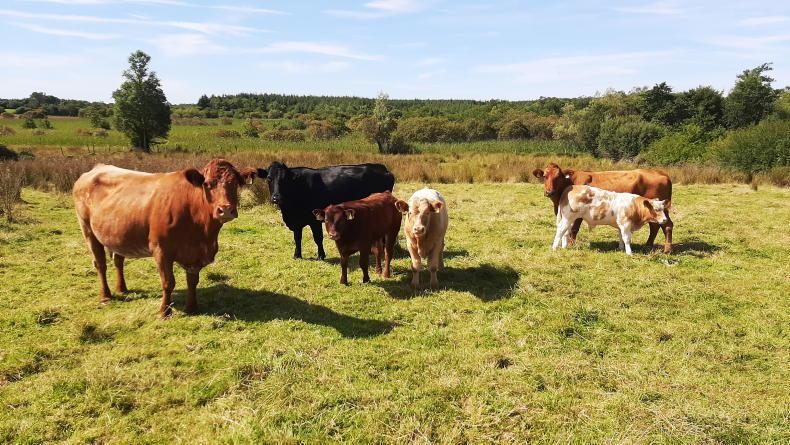
Extensively grazed pasture is one of the main measures selected, so it is not surprising that a significant number of questions refer to management under this measure.
The following points from the scheme terms and conditions give an overview of the requirements:
The parcel must be maintained by grazing to maintain a diverse sward with open vegetation, ie many grass and flower species present and scrub/briars not coming to dominate. Ploughing, cultivation, reseeding, or any drainage works (including modifying existing drainage channels) are not permitted. The parcel cannot be mown or topped between 15 March and 1 July. Maximum nitrogen application is 40kg/ha as inorganic or organic fertiliser per year. However, low to no nitrogen application will lead to the most diverse sward. Pesticides and herbicides are not permitted, except to spot treat or weed wipe to control noxious and invasive species. These plants can also be controlled by topping, but this is only permitted after 1 July in localised areas. Rushes can be controlled by topping, grazing or weed wiping/spot spraying. Boom spraying herbicides is not permitted. Rush management must not take place until after 1 July and should be carried out in rotation with no more than 50% of the field managed by topping or weed wiping/spot spraying in any one year. Where a watercourse is present on or adjacent to the parcel, bovines are not permitted to access the watercourse. Where no natural barrier exists, the watercourse must be fenced at least 1.5m from the top of the bank when bovines are present (drinking points are not permitted).Supplementary meal feeding may take place on these parcels, provided meal troughs are moved to avoid poaching and are not located in close proximity to water bodies. Supplementary feeding of forage to livestock is not allowed except for feeding hay to sheep, provided feeding points are moved to avoid poaching and are not located in close proximity to water bodies. This action must remain in the same location for the duration of the contract.Additional guidance: the terms and conditions advise participants to “check the parcel for breeding birds before operating machinery (topping, spreading fertiliser, etc) or carrying out other activities which may disturb breeding birds or damage their nests. The main breeding season runs from mid-March until mid-July, but it can start earlier and finish later, depending on the species, location and the weather.”
Low-input grassland
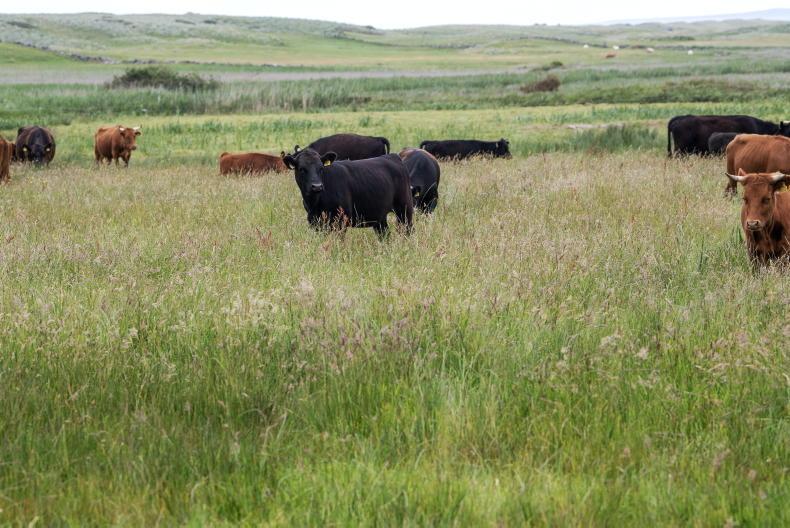
Low-input grassland (LIG) has not been selected in any way near the same degree as extensively grazed pasture.
It is a result-based measure, which means that the rate of payment is dependent on the score awarded to it following an assessment by your adviser.
Fields must be scored by an approved ACRES adviser between 1 June and 31 August in years one, three and five of your contract using the ACRES grassland score card.
Participants can declare that scores recorded in years one and three can be used to form the payment claim in years two and four.
However, there will be the option to score all LIG fields in years two and four as indicated on the BISS application.
Other requirements are listed as follows, in addition to those described for extensively grazed pasture.
A geo-tagged photograph submitted via the AgriSnap App giving a clear representation of the scored field must accompany each score card. Indicator species occurring in the boundaries and margins, but not otherwise represented in the main part of the field, cannot be counted. Participants must arrange with the adviser a suitable assessment date. In order for fields to be scored, they cannot be recently mown, as there needs to be sufficient vegetation cover to score so payments can be made.Participants have opportunity to apply for a late meadow bonus payment (€50/ha) on meadows cut between 1 July and 31 August. The requirements to satisfy this add-on is listed in the points below, taken from scheme terms and conditions. Meadows must be closed up, with no grazing or machinery operations to take place for at least six weeks prior to cutting. The earliest date meadows may be cut for hay/silage is 1 July and the latest date to qualify for the bonus payment is 31 August. Geo-tagged photograph(s), submitted via the AgriSnap App, giving a clear representation of the mown meadow, must be submitted to DAFM on date of mowing or within 5 days after mowing activity (but must be prior to significant grass regrowth).
Participants in the Agri-Climate Rural Environment Scheme (ACRES) are awaiting a copy of their plan approved by the Department of Agriculture.
Reports indicate that advisers are starting to receive more questions regarding the measures selected and management practices selected.
Extensively grazed pasture is one of the main measures selected, so it is not surprising that a significant number of questions refer to management under this measure.
The following points from the scheme terms and conditions give an overview of the requirements:
The parcel must be maintained by grazing to maintain a diverse sward with open vegetation, ie many grass and flower species present and scrub/briars not coming to dominate. Ploughing, cultivation, reseeding, or any drainage works (including modifying existing drainage channels) are not permitted. The parcel cannot be mown or topped between 15 March and 1 July. Maximum nitrogen application is 40kg/ha as inorganic or organic fertiliser per year. However, low to no nitrogen application will lead to the most diverse sward. Pesticides and herbicides are not permitted, except to spot treat or weed wipe to control noxious and invasive species. These plants can also be controlled by topping, but this is only permitted after 1 July in localised areas. Rushes can be controlled by topping, grazing or weed wiping/spot spraying. Boom spraying herbicides is not permitted. Rush management must not take place until after 1 July and should be carried out in rotation with no more than 50% of the field managed by topping or weed wiping/spot spraying in any one year. Where a watercourse is present on or adjacent to the parcel, bovines are not permitted to access the watercourse. Where no natural barrier exists, the watercourse must be fenced at least 1.5m from the top of the bank when bovines are present (drinking points are not permitted).Supplementary meal feeding may take place on these parcels, provided meal troughs are moved to avoid poaching and are not located in close proximity to water bodies. Supplementary feeding of forage to livestock is not allowed except for feeding hay to sheep, provided feeding points are moved to avoid poaching and are not located in close proximity to water bodies. This action must remain in the same location for the duration of the contract.Additional guidance: the terms and conditions advise participants to “check the parcel for breeding birds before operating machinery (topping, spreading fertiliser, etc) or carrying out other activities which may disturb breeding birds or damage their nests. The main breeding season runs from mid-March until mid-July, but it can start earlier and finish later, depending on the species, location and the weather.”
Low-input grassland
Low-input grassland (LIG) has not been selected in any way near the same degree as extensively grazed pasture.
It is a result-based measure, which means that the rate of payment is dependent on the score awarded to it following an assessment by your adviser.
Fields must be scored by an approved ACRES adviser between 1 June and 31 August in years one, three and five of your contract using the ACRES grassland score card.
Participants can declare that scores recorded in years one and three can be used to form the payment claim in years two and four.
However, there will be the option to score all LIG fields in years two and four as indicated on the BISS application.
Other requirements are listed as follows, in addition to those described for extensively grazed pasture.
A geo-tagged photograph submitted via the AgriSnap App giving a clear representation of the scored field must accompany each score card. Indicator species occurring in the boundaries and margins, but not otherwise represented in the main part of the field, cannot be counted. Participants must arrange with the adviser a suitable assessment date. In order for fields to be scored, they cannot be recently mown, as there needs to be sufficient vegetation cover to score so payments can be made.Participants have opportunity to apply for a late meadow bonus payment (€50/ha) on meadows cut between 1 July and 31 August. The requirements to satisfy this add-on is listed in the points below, taken from scheme terms and conditions. Meadows must be closed up, with no grazing or machinery operations to take place for at least six weeks prior to cutting. The earliest date meadows may be cut for hay/silage is 1 July and the latest date to qualify for the bonus payment is 31 August. Geo-tagged photograph(s), submitted via the AgriSnap App, giving a clear representation of the mown meadow, must be submitted to DAFM on date of mowing or within 5 days after mowing activity (but must be prior to significant grass regrowth). 




SHARING OPTIONS