


The rules around planning in NI need to be changed if we want to ensure that NI food is able to grow sustainably in the future, an industry leader has said.
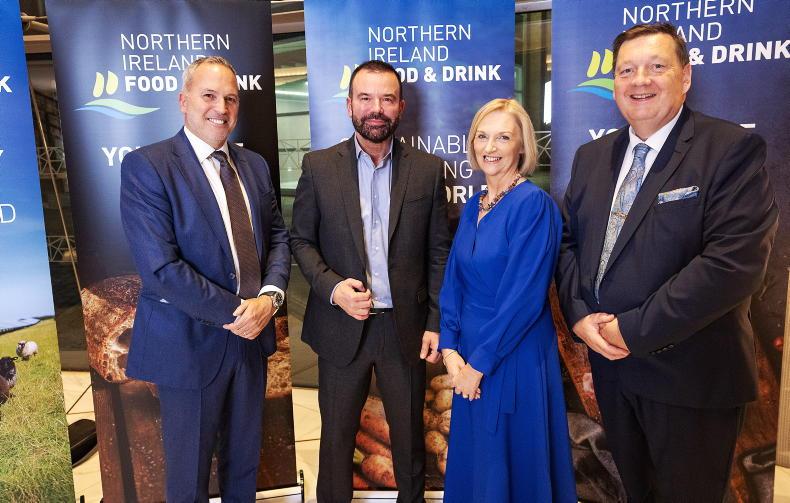
Addressing the annual dinner of the NI Food and Drink Association (NIFDA), the organisation’s chair and Pilgrim’s Europe Director, Professor Ursula Lavery, emphasised the need for government and industry to work together to “unlock progress”.
“Without support of the state and the regulators our industry is at risk of shrinking,” she said, adding that we need people who understand food production shaping the regulations that govern the industry.
Her most pointed remarks at last Thursday’s event were directed at the current planning system.
“Planning reform is one of the biggest levers we have to unlock sustainable growth – now is the time to pull that lever. Too many farmers and food and drink businesses are having their growth plans stymied by well-meaning, but incoherent regulations,” she said.
New strategy
The Pilgrim’s director maintained that NI cannot continue with “fragmented policies” and instead needs a new “NI food strategy” which is backed by clear targets. Whether there is any appetite from Stormont to deliver that is not clear – no senior government ministers were able to attend the NIFDA event last Thursday. However, in her address, Prof Lavery clearly set out the importance of the agri-food industry to the economy of NI.
National asset
Describing NI agri-food as a “local economic driver”, she said the industry supports over 113,000 jobs across NI, thereby helping to fund public services, while producing enough food for 10m people. It means that NI has just 3% of the UK population, but is responsible for around one quarter of its food supply.
“That is not just remarkable, it’s a national strategic asset. We are a pillar of UK food security. We keep shelves stocked, fridges full and communities fed,” said Lavery.
With further growth expected in the UK population by 2030 and various threats to global food systems, she said a resilient local food system is essential.
“We have the people, the technology, the talent, and most importantly we have the will. We need wider government and policymakers to meet us with the same ambition,” she concluded.
M&S boss hits out at post-Brexit trade
The keynote speaker at the NIFDA event was the chief executive of UK supermarket retailer, M&S, Stuart Machin.
With 26 local stores and thousands of products shipped from Britain into NI each week, he said moving those goods in the period since the UK officially left the EU in 2020 has been “incredibly challenging”.
To facilitate continued free access for NI to EU markets, post-Brexit trading relationships set out in the NI Protocol put a border down the Irish Sea.
According to Machin, M&S has found the rules very complex to work through.
“It has introduced a lot of cost, a lot of complexity and impacted our product range and our product shelf-life,” he said.
The Windsor Framework, which replaced the NI protocol in 2023, has eased some requirements, but it still comes with a “huge bureaucratic burden”. On average, he said there are 19 goods vehicles travelling into NI daily, with at least six having their paperwork checked in detail.
“There are also over 300 pages of paperwork in every single lorry and at Christmas it goes to 650 pages of paperwork. This over-bearing box-ticking only acts as a burden to investment,” he said.
The UK government has committed to a sanitary and phytosanitary (SPS) deal with the EU, which should remove a lot of the red tape, although the latest suggestions are that it won’t be in place until 2027.
“We need Westminster and Brussels bureaucrats to move as fast as retail does and speed this up,” said Machin.



SHARING OPTIONS