‘When you come so close to death, every day is a bonus. Every day I wake up, it’s a fabulous day, and I try and put as much into that day as possible.”
These words come from John Joyce, a man with a fierce appreciation for life despite having battled with terminal illness for much of it.
Fourteen years ago, the 66-year-old from Foxford, Co Mayo was diagnosed with skin cancer. What followed was “a few operations, 72 bouts of radiotherapy and it was all fine for about one year,” John recalls. “Then on a routine scan, they found that the cancer had come back and created a tumour on the brain, which ended up being inoperable and incurable. This was nearly 10 years ago.”
The chemotherapy which John needed following his brain tumour diagnosis affected his heart – with his heart pumping power reduced by around 19%. Radiotherapy also impacted his face.
“I am blind in one eye, deaf in one ear and because of the radiotherapy, I have something like Bell’s palsy on my face. The side of my face dropped, one side is more or less paralysed. It doesn’t work properly, which carries on to my neck so my swallow wouldn’t be good,” he says.
John has used a PEG tube to feed himself for the past nine years.
“My food comes from water. But I’m still alive,” he pauses. “This is good. I’m still alive.”
It was around five years ago that palliative care was first introduced, following the advice from John’s consultant. In hospital at the time, John says: “I’ll never forget the day three girls appeared and said ‘we are the palliative care team’ and again, like most people, I thought ‘this is the end.’
“But, my God, I have learned so much since – that it is not necessarily the end,” John continues. “Palliative care is there to help you. It’s not [always] there to help you pass away. It’s there to help you have a quality of life while you’re alive.”
Death literacy
Many associate palliative care with the type of care provided in hospices but the reality is that such care can be provided in hospitals or in a person’s home.
In hospital, the palliative care team visited John every second day to check his medication and how he was feeling mentally as well as physically. Following an eight-month stay in hospital, he was then sent to a nursing home for four weeks.
“And again, palliative care followed me there. They looked after me and after week three, my sister offered to take me into her house.
“If palliative care hadn’t come with me, my sister would have been a nervous wreck. I think the fact that she knew they were there, it gave her peace of mind and so much confidence.”
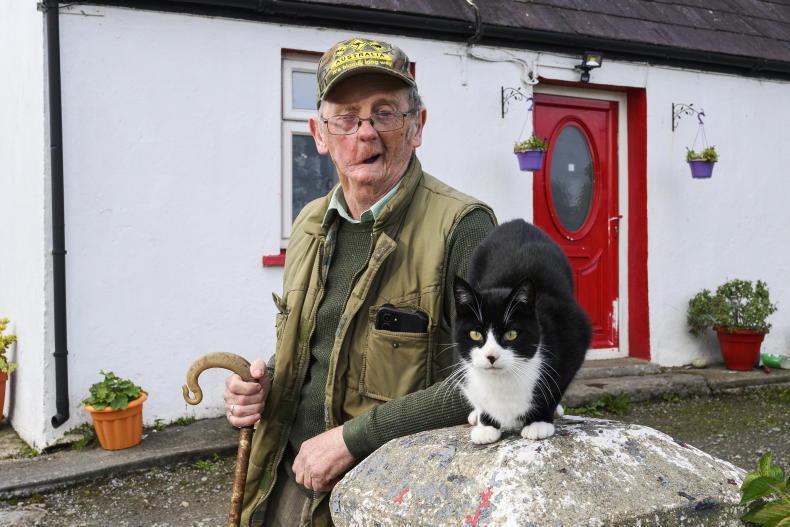
Foxford farmer John Joyce continues to farm his cattle with determination, humour and a remarkable outlook on life. \ Michael McLaughlin
Often, we consider the medical aspects of palliative care, but really the benefits are wide-ranging. John talks about how he was assisted with “little things that make such a difference”, like applying for his free bus pass. It also helped with his overall confidence, he adds.
“With my face disfigurement now, I don’t think I’d have the confidence to go out in public like I do, without palliative care urging me on.
“Anyone I talk to, I always say: make use of palliative care, and don’t be waiting until the end.
“It comes down to this outdated notion that palliative care is there to help you die. Palliative care is there to help you live,” John emphasises.
This perception highlighted by John – that palliative care carries connotations of death and dying – is reflected in the results of a new study that reveals gaps in palliative care awareness in Ireland.
Researchers from Queens’ University Belfast collaborated with All Ireland Institute of Hospice and Palliative Care to measure ‘death literacy’ (knowledge of end-of-life care options) across Ireland through a study in which a total of 405 people took part. In Northern Ireland, 209 people took part along with 196 people from the Republic of Ireland.
Talk about palliative care
One positive finding is that the island of Ireland surpasses other countries with its knowledge about end-of-life care options, with a score of 68% (compared to 47% in the UK, 67% in China and 51% in Belgium and Sweden). However, one main area for improvement is that local communities lack knowledge about the services and supports available to them.
This is something that John emphasises to Irish Country Living – that not everyone is aware of how to access palliative care.
Commenting on closing knowledge gaps about palliative care, Dr Feargal Twomey, consultant in palliative medicine and national clinical lead for palliative care, says, “Though this study reports high levels of ‘death literacy’ in Ireland, there is no guarantee that this necessarily translates to each person with a serious illness receiving the palliative care that they need.
“I encourage the public and all healthcare professionals to ask, talk and speak up about palliative care so that our patients and their families can receive the right palliative care, in the right place, and at the right time, as soon as they need it.”
While many individuals feel they are forced to choose between remaining in their homes versus accessing palliative care, this is not always the case.
John has been able to live independently at home for five years with the help of his palliative care team. That’s despite being told when he had left the nursing home, that he had eight months to live.
Now John is back on the suckler farm with Oreo the cat and Ruffus the dog, and his family muck in on the farm too. “I wouldn’t have the energy to do what I used to. I did an hour on a tractor today now, and that was enough.”
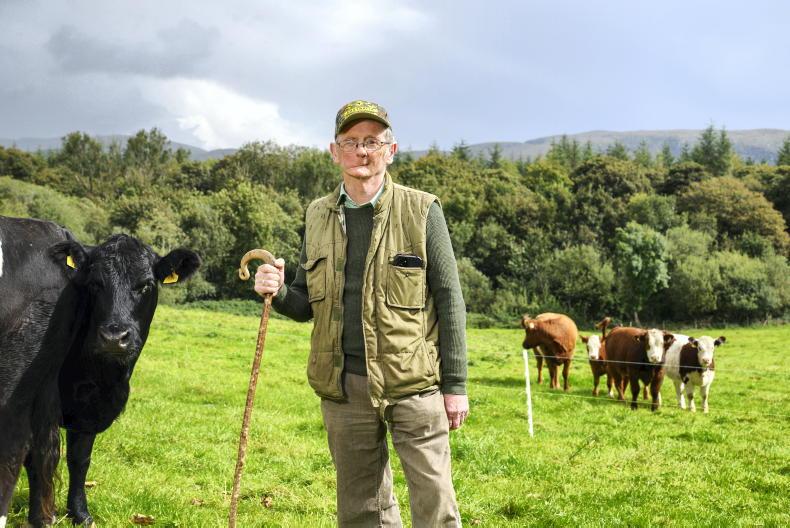
Foxford farmer John Joyce continues to farm his cattle with determination, humour and a remarkable outlook on life. \ Michael McLaughlin
About two years ago, John made the decision to cease palliative care. “I was getting on fine. I was getting my medication, everything was sorted. I could manage my peg feed myself. I felt they could be more use to somebody else. They’ve done their job for me over the years.”
John continues to advocate for palliative care. He is a member of Voices4Care, a forum established by the All Ireland Institute of Hospice and Palliative Care to learn about the experiences of palliative care users. “Before I used it, ‘palliative care’ carries with it: I’m dead. We have to get away from that,” John says stoically. “I’m living proof that they actually help you.
“Without palliative care, I don’t think I’d be John Joyce who I am now.”
The All Ireland Institute of Hospice and Palliative Care is a collaborative of hospices, health and social care organisations, universities and charities on the island of Ireland. There are 26 member organisations united under the aim to ensure excellent palliative care is available for everyone at the right time and place across the island of Ireland. Visit aiihpc.org.People can find more about palliative care at the Palliative Hub. The hub includes resources and information related to palliative care, as well as a collection of personal stories like John Joyce’s at the palliativehub.com. John Joyce is a member of Voices4Care, a volunteer iniative established by All Ireland Institute of Hospice and Palliative Care. Members of Voices4Care help inform and influence the work of the wider palliative care sector in the Republic of Ireland and Northern Ireland. Voices4Care are looking for new volunteers, including people with palliative care needs or carers of people with palliative care needs.Demand for palliative care is expected to grow. By 2028, more of the population in Ireland will be over 65, compared to the 0-14 years age category, according to the HSE. The population in Northern Ireland is estimated to be over 2 million by 2046, and those aged 65+ will practically double to 49%, according to the NI Statistics and Research Agency. Northern Ireland is projected to have the highest rise in demand for palliative care, with a 32% increase from 2023 to 2048.
‘When you come so close to death, every day is a bonus. Every day I wake up, it’s a fabulous day, and I try and put as much into that day as possible.”
These words come from John Joyce, a man with a fierce appreciation for life despite having battled with terminal illness for much of it.
Fourteen years ago, the 66-year-old from Foxford, Co Mayo was diagnosed with skin cancer. What followed was “a few operations, 72 bouts of radiotherapy and it was all fine for about one year,” John recalls. “Then on a routine scan, they found that the cancer had come back and created a tumour on the brain, which ended up being inoperable and incurable. This was nearly 10 years ago.”
The chemotherapy which John needed following his brain tumour diagnosis affected his heart – with his heart pumping power reduced by around 19%. Radiotherapy also impacted his face.
“I am blind in one eye, deaf in one ear and because of the radiotherapy, I have something like Bell’s palsy on my face. The side of my face dropped, one side is more or less paralysed. It doesn’t work properly, which carries on to my neck so my swallow wouldn’t be good,” he says.
John has used a PEG tube to feed himself for the past nine years.
“My food comes from water. But I’m still alive,” he pauses. “This is good. I’m still alive.”
It was around five years ago that palliative care was first introduced, following the advice from John’s consultant. In hospital at the time, John says: “I’ll never forget the day three girls appeared and said ‘we are the palliative care team’ and again, like most people, I thought ‘this is the end.’
“But, my God, I have learned so much since – that it is not necessarily the end,” John continues. “Palliative care is there to help you. It’s not [always] there to help you pass away. It’s there to help you have a quality of life while you’re alive.”
Death literacy
Many associate palliative care with the type of care provided in hospices but the reality is that such care can be provided in hospitals or in a person’s home.
In hospital, the palliative care team visited John every second day to check his medication and how he was feeling mentally as well as physically. Following an eight-month stay in hospital, he was then sent to a nursing home for four weeks.
“And again, palliative care followed me there. They looked after me and after week three, my sister offered to take me into her house.
“If palliative care hadn’t come with me, my sister would have been a nervous wreck. I think the fact that she knew they were there, it gave her peace of mind and so much confidence.”
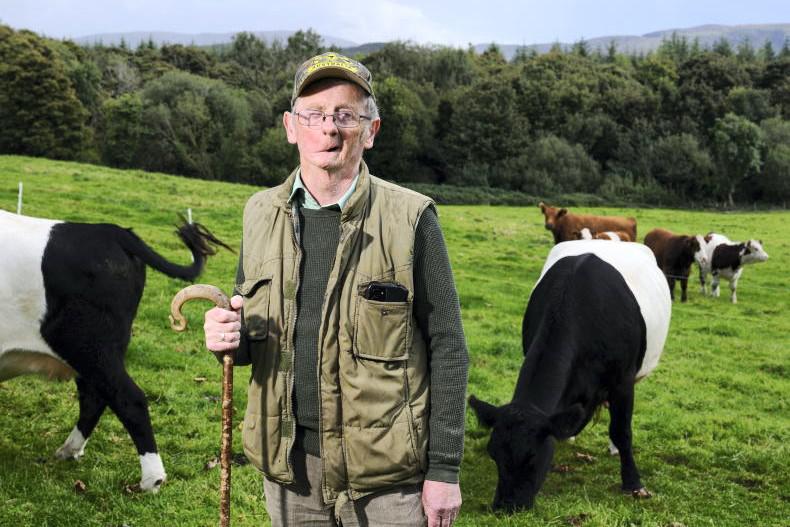
Foxford farmer John Joyce continues to farm his cattle with determination, humour and a remarkable outlook on life. \ Michael McLaughlin
Often, we consider the medical aspects of palliative care, but really the benefits are wide-ranging. John talks about how he was assisted with “little things that make such a difference”, like applying for his free bus pass. It also helped with his overall confidence, he adds.
“With my face disfigurement now, I don’t think I’d have the confidence to go out in public like I do, without palliative care urging me on.
“Anyone I talk to, I always say: make use of palliative care, and don’t be waiting until the end.
“It comes down to this outdated notion that palliative care is there to help you die. Palliative care is there to help you live,” John emphasises.
This perception highlighted by John – that palliative care carries connotations of death and dying – is reflected in the results of a new study that reveals gaps in palliative care awareness in Ireland.
Researchers from Queens’ University Belfast collaborated with All Ireland Institute of Hospice and Palliative Care to measure ‘death literacy’ (knowledge of end-of-life care options) across Ireland through a study in which a total of 405 people took part. In Northern Ireland, 209 people took part along with 196 people from the Republic of Ireland.
Talk about palliative care
One positive finding is that the island of Ireland surpasses other countries with its knowledge about end-of-life care options, with a score of 68% (compared to 47% in the UK, 67% in China and 51% in Belgium and Sweden). However, one main area for improvement is that local communities lack knowledge about the services and supports available to them.
This is something that John emphasises to Irish Country Living – that not everyone is aware of how to access palliative care.
Commenting on closing knowledge gaps about palliative care, Dr Feargal Twomey, consultant in palliative medicine and national clinical lead for palliative care, says, “Though this study reports high levels of ‘death literacy’ in Ireland, there is no guarantee that this necessarily translates to each person with a serious illness receiving the palliative care that they need.
“I encourage the public and all healthcare professionals to ask, talk and speak up about palliative care so that our patients and their families can receive the right palliative care, in the right place, and at the right time, as soon as they need it.”
While many individuals feel they are forced to choose between remaining in their homes versus accessing palliative care, this is not always the case.
John has been able to live independently at home for five years with the help of his palliative care team. That’s despite being told when he had left the nursing home, that he had eight months to live.
Now John is back on the suckler farm with Oreo the cat and Ruffus the dog, and his family muck in on the farm too. “I wouldn’t have the energy to do what I used to. I did an hour on a tractor today now, and that was enough.”
Foxford farmer John Joyce continues to farm his cattle with determination, humour and a remarkable outlook on life. \ Michael McLaughlin
About two years ago, John made the decision to cease palliative care. “I was getting on fine. I was getting my medication, everything was sorted. I could manage my peg feed myself. I felt they could be more use to somebody else. They’ve done their job for me over the years.”
John continues to advocate for palliative care. He is a member of Voices4Care, a forum established by the All Ireland Institute of Hospice and Palliative Care to learn about the experiences of palliative care users. “Before I used it, ‘palliative care’ carries with it: I’m dead. We have to get away from that,” John says stoically. “I’m living proof that they actually help you.
“Without palliative care, I don’t think I’d be John Joyce who I am now.”
The All Ireland Institute of Hospice and Palliative Care is a collaborative of hospices, health and social care organisations, universities and charities on the island of Ireland. There are 26 member organisations united under the aim to ensure excellent palliative care is available for everyone at the right time and place across the island of Ireland. Visit aiihpc.org.People can find more about palliative care at the Palliative Hub. The hub includes resources and information related to palliative care, as well as a collection of personal stories like John Joyce’s at the palliativehub.com. John Joyce is a member of Voices4Care, a volunteer iniative established by All Ireland Institute of Hospice and Palliative Care. Members of Voices4Care help inform and influence the work of the wider palliative care sector in the Republic of Ireland and Northern Ireland. Voices4Care are looking for new volunteers, including people with palliative care needs or carers of people with palliative care needs.Demand for palliative care is expected to grow. By 2028, more of the population in Ireland will be over 65, compared to the 0-14 years age category, according to the HSE. The population in Northern Ireland is estimated to be over 2 million by 2046, and those aged 65+ will practically double to 49%, according to the NI Statistics and Research Agency. Northern Ireland is projected to have the highest rise in demand for palliative care, with a 32% increase from 2023 to 2048. 






SHARING OPTIONS