Irish tillage farmers fare well when benchmarked against their international competitors when it comes to yields and margins, but not on income due to their comparatively small farm sizes, Teagasc research officer Fiona Thorne has said.
Thorne stated that comparatively higher margins both per hectare and per tonne are seen by Irish tillage farmers despite the higher production costs environment, showing that "we are really good at producing cereals in this country".
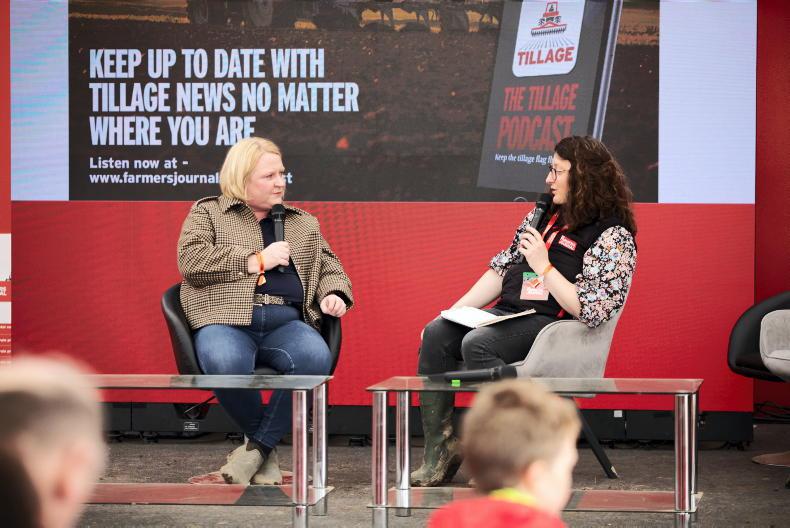
"Our yields are one of the top performing in yield per hectare internationally,” Thorne said at an Irish Farmers Journal tillage discussion at the National Ploughing Championships on Thursday.
“Unfortunately, coupled with that, we have very high costs of production. But when you put those costs of production together with yield and the price we are getting on a unit basis, we are competitive relative to outside of Europe.”
Farm size
However, where this so far strong picture breaks down is with farm size, Thorne explained.
“Basically, what we are missing is scale. Our margin over our costs is pretty good internationally, but looking at the average size of 70ha in Ireland compared to those vast prairies that you have in other grain-producing regions,” she continued, referencing large US, Russian and Ukrainian farm sizes.
“Scale allows them to spread their overhead costs over a bigger area. Even on their direct costs of production - fertiliser, seed and crop protection - they are not chasing those same yields as we are. They have a lower yield potential.”
Looking at farm-level margins
On advice farmers in managing costs and increasing margins, Thorne said that direct costs on tillage farms generally lie outside of farmers’ field of influence.
However, fixed costs, particularly around land leasing, are an area that farmers should focus on managing.
“The number one thing I would say for every tillage farm is to sit down and know your what your costs and returns are,” she said.
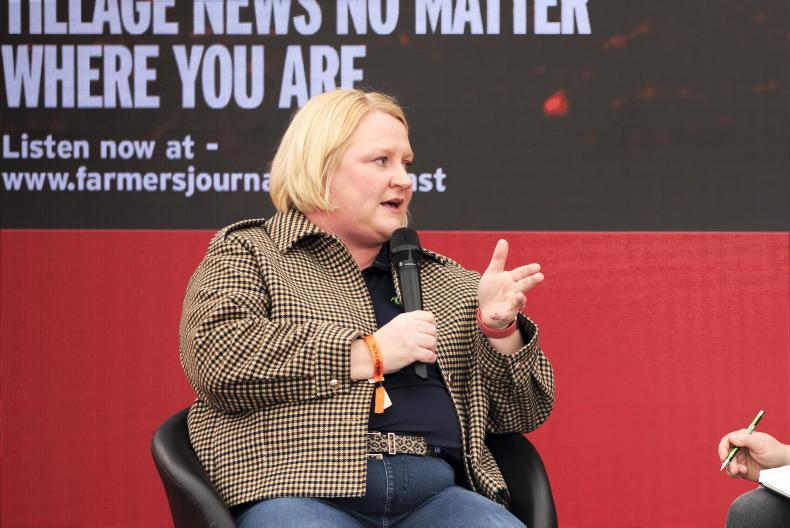
Teagasc research officer Fiona Thorne. \ Jerome Dunne
“Have a baseline and, then, having looked at what has happened over the past six or seven years, I would say to not just look at the direct costs of production, but to look at overall costs.
“If you look at the overhead and fixed costs on tillage farms really over the past 10 years, they have got very, very significant and it is in terms of machinery depreciation, conacre prices.
“It is outside the control of the farmer. When you talk about competition on land prices, it is not something that the tillage farmer has control over when the dairy farmers moves into an area.
"They have more an appetite for land and can get more bang for your buck.”
Make sure to tune into this week’s episode of the Irish Farmers Journal Tillage Podcast for more from Fiona Thorne on crops and agronomy at the National Ploughing Championships.
Read more
Ploughing 2025: Taoiseach promises supports for tillage sector
Ploughing 25: growers lost money on spring barley in five of the past 10 years
Plough On Podcast: 'farmers should marry an accountant to avoid stress'
Ploughing 25: increase in nitrate levels in rivers 'shouldn't hit derogation'
In pictures: 85,000 flock to Screggan for Ploughing day two
Irish tillage farmers fare well when benchmarked against their international competitors when it comes to yields and margins, but not on income due to their comparatively small farm sizes, Teagasc research officer Fiona Thorne has said.
Thorne stated that comparatively higher margins both per hectare and per tonne are seen by Irish tillage farmers despite the higher production costs environment, showing that "we are really good at producing cereals in this country".
"Our yields are one of the top performing in yield per hectare internationally,” Thorne said at an Irish Farmers Journal tillage discussion at the National Ploughing Championships on Thursday.
“Unfortunately, coupled with that, we have very high costs of production. But when you put those costs of production together with yield and the price we are getting on a unit basis, we are competitive relative to outside of Europe.”
Farm size
However, where this so far strong picture breaks down is with farm size, Thorne explained.
“Basically, what we are missing is scale. Our margin over our costs is pretty good internationally, but looking at the average size of 70ha in Ireland compared to those vast prairies that you have in other grain-producing regions,” she continued, referencing large US, Russian and Ukrainian farm sizes.
“Scale allows them to spread their overhead costs over a bigger area. Even on their direct costs of production - fertiliser, seed and crop protection - they are not chasing those same yields as we are. They have a lower yield potential.”
Looking at farm-level margins
On advice farmers in managing costs and increasing margins, Thorne said that direct costs on tillage farms generally lie outside of farmers’ field of influence.
However, fixed costs, particularly around land leasing, are an area that farmers should focus on managing.
“The number one thing I would say for every tillage farm is to sit down and know your what your costs and returns are,” she said.
Teagasc research officer Fiona Thorne. \ Jerome Dunne
“Have a baseline and, then, having looked at what has happened over the past six or seven years, I would say to not just look at the direct costs of production, but to look at overall costs.
“If you look at the overhead and fixed costs on tillage farms really over the past 10 years, they have got very, very significant and it is in terms of machinery depreciation, conacre prices.
“It is outside the control of the farmer. When you talk about competition on land prices, it is not something that the tillage farmer has control over when the dairy farmers moves into an area.
"They have more an appetite for land and can get more bang for your buck.”
Make sure to tune into this week’s episode of the Irish Farmers Journal Tillage Podcast for more from Fiona Thorne on crops and agronomy at the National Ploughing Championships.
Read more
Ploughing 2025: Taoiseach promises supports for tillage sector
Ploughing 25: growers lost money on spring barley in five of the past 10 years
Plough On Podcast: 'farmers should marry an accountant to avoid stress'
Ploughing 25: increase in nitrate levels in rivers 'shouldn't hit derogation'
In pictures: 85,000 flock to Screggan for Ploughing day two





SHARING OPTIONS