



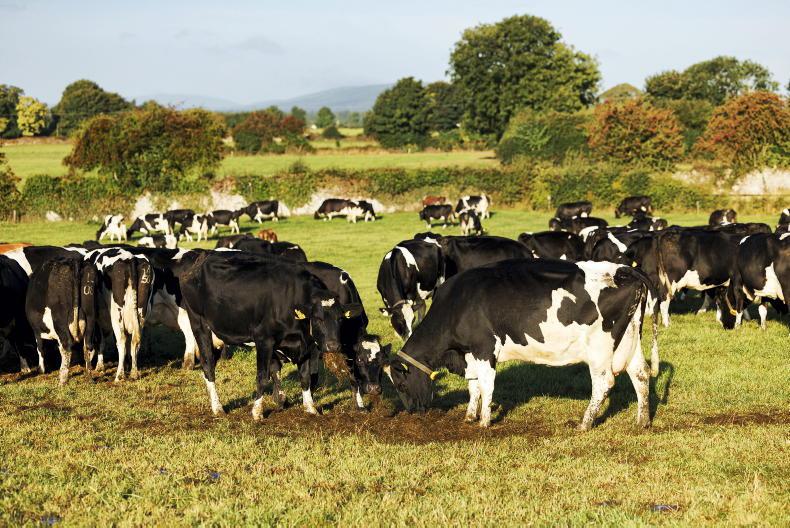
Farmers in parts of Munster and Leinster are already starting to get worried as soil moisture deficits continue to increase and grass growth rates begin to fall.
Freer draining soils were dry two weeks ago and with another two weeks of good weather promised, it’s a matter of time before these farms start to suffer the effects of a drought.
Talking to farmers this week, the majority of grass figures actually look good on paper.
Growth rates on drier farms are still anywhere from 55kg to 75kg and farm covers are up over 550kg DM/ha, with cover per cow sitting in the optimal range of 160kg to 180kg.
If rain came, these farmers would be in a great place, but having been down the road of droughts in previous years, they know that the situation is not so positive.
Regrowth dropping
Paddocks that have been grazed recently are already starting to struggle. In a few days’ time, the regrowth on these paddocks could be dropping down to 20kg or 30kg DM/day.
Paddocks ahead of cows that are green and have a decent cover are motoring away and it’s the growth figures from these paddocks that are distorting reality.
Farm cover
Looking ahead, a farm cover of under 600kg DM/ha is low. As cows graze, the heaviest covers will drop very quickly and re-growth will be too slow.
Cover per cow becomes almost irrelevant at this stage as a stocking rate of three cows/ha with a cover per cow of 180kg would suggest the farm is OK.
However, this equates to an average farm cover of 540kg DM/ha (3 cows/ha x 180kg DM/cow) and as already outlined, that is too low.
A cover of 540kg DM/ha will mean pre-grazing yields are low and cows will move through area too quickly.
With growth rates expected to be OK for another week, there’s a few days to try to get the farm into a better position.
Solutions
The first thing to do is drop demand of the herd. This can be done in a number of ways.
Speaking on the Inside Dairy podcast this week, John Maher from the Teagasc Grass 10 team suggested looking at removing cull cows as one of the first options.
Underperformers, high cell-count or empty cows are taking grass from animals that need it.
Take an example of a herd of 100 cows, eating 18kg DM/cow each day. The demand of the herd is 1,800kg DM/day.
By removing 10 cull cows from this, the demand drops by 180kg DM/day. This is equivalent to 2kg of feed for the remaining 90 cows each day.
In a time of drought, this 2kg is probably being fed as meal at a cost of €0.40 kg/DM.
That’s a cost per cow of €0.80 and across the 90 cows, it’s a cost of €72/day in extra feed.
When milk price is low, these cows are going to cost more than they make and therefore while beef price is still fairly good, farms should look to move them.
Any silage or reseeded ground that can come back into the rotation will also reduce demand and take some pressure off.
Rotation length
The second port of call is extending rotation length. If the farm cover is low, extending rotation length to 25 days, will allow the farm to make use of the growth that’s still there by building cover for later in the round.
A 25-day round at, say 40kg/day growth, will mean a pre-grazing yield of 1,000kg DM/ha.
In terms of additional feed, high-quality silage bales are plentiful on farms and these are the lowest cost option
To execute a 25-day round, cows need to graze 1/25th of the farm area each day. Silage, meal or some other supplement feed will be needed to fill the gap this creates in demand.
This is a more acceptable solution than flying through the grass that’s left in 18 days and having to feed very heavily in three weeks’ time.
There’s also not much benefit in extending rotation length much further than 25 days as grass will start to die off in the field and paddocks will end up losing cover.
In terms of additional feed, high-quality silage bales are plentiful on farms and these are the lowest cost option.
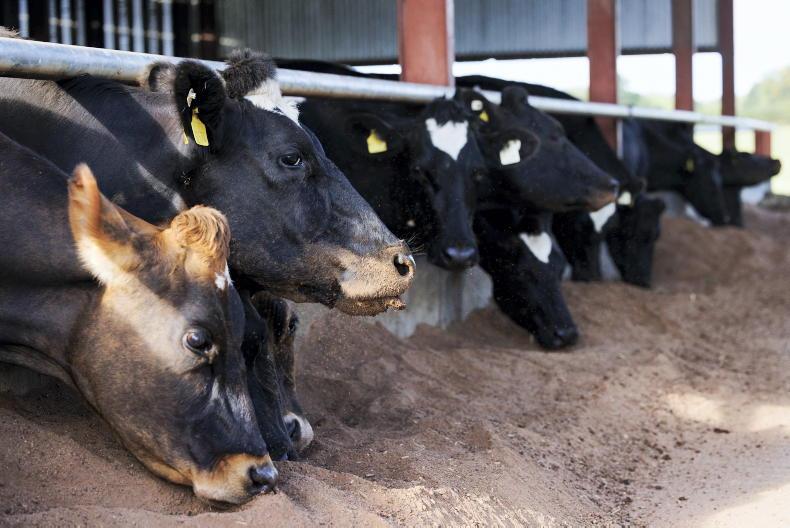
Meal is the easiest option as it’s just a matter of an extra pull in the parlour at milking, but the cost is almost double that of silage.
Palm Kernel is another lower-cost option.
It’s costing around €220/tonne or €0.22/kg, which is similar to silage but take care when feeding – stomach ulcers and digestive upsets can be a problem in cows after first starting to feed it.
Fertiliser
With the lack of rainfall and growth rates dropping, the benefit of spreading nitrogen is getting smaller.
Once growth drops below 30kg/day, spreading nitrogen is no longer beneficial, particularly where allowances are already tight.
Nitrogen should be saved for the paddocks that are still growing. Reseeded ground will continue to perform during a dry period and, therefore, the response to nitrogen will be high.
Paddocks in front of cows with higher covers are still growing and they too will get some benefit from nitrogen.
By spreading a few days ahead of cows, the dew on grass by night will help to wash in fertiliser.
Watery slurry is another good source of nutrient that should give swards a boost and the uptake time will be quicker during dry weather.
Regulate water movement
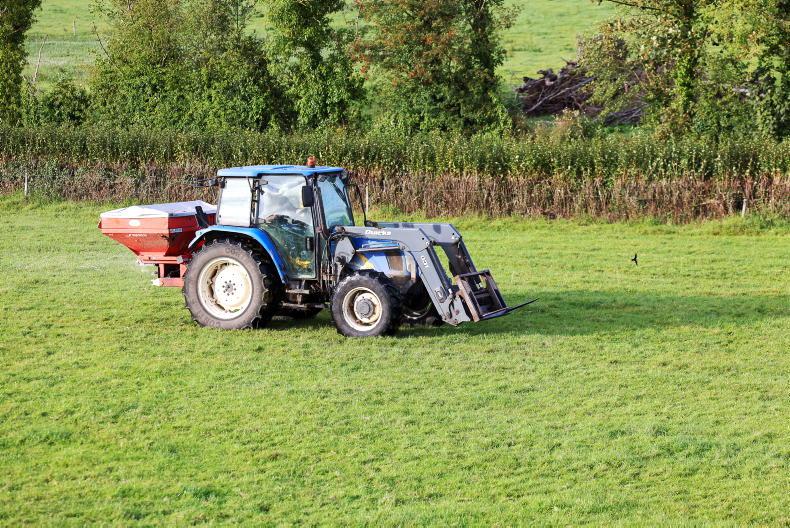
Finally, farms that are up to date on their potassium (K) and sulphur (S) requirements will be better off in a period of drought as these nutrients help the grass to regulate water movement, boost nitrogen efficiency and tolerate more plant stress.
In New Zealand, K fertiliser is sometimes referred to as the poor man’s irrigation due to its benefits in regulating water movement. On farms with low indexes for K, spreading now will offer rewards over the coming weeks.


SHARING OPTIONS