


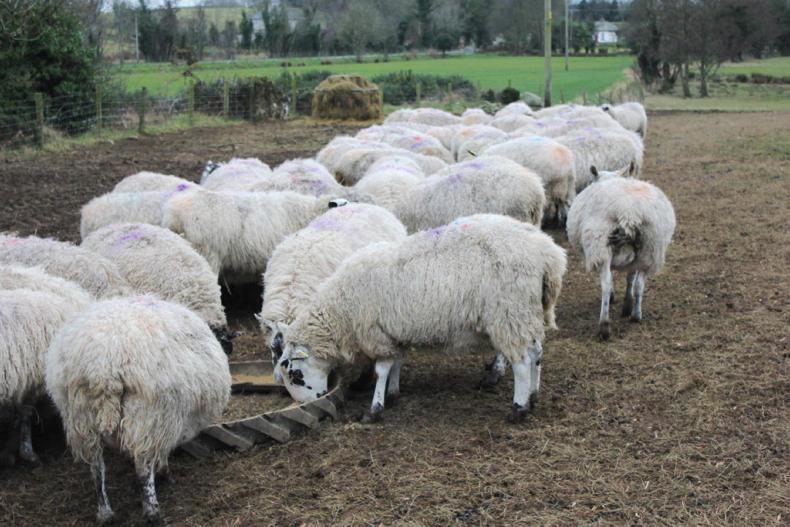
Just like every other year, lambing has somehow jumped from being in the far and distant future, to being right on top of us.
I have no idea where the weeks and months have disappeared to, but scanning, dosing, vaccinating and handling have all come and gone and I find myself with half a dozen ewes lambed (12 February).
I should have been more ready, since I did notice my wife washing towels (the ones I left here and there at last year’s lambing), and preparing bottles, tubes, needles and syringes. When it comes to maternal issues, Susan’s organisational skills bubble to the surface, and all those wee things that I’d leave until the last second (or beyond) are quietly dealt with.
That said, it’s always difficult to explain to a woman the reason why discarded tin, plastic containers, used baler twine, and all sorts of rubbish, are blocking the passageways to most lambing pens.
Muttering stuff about it being ‘‘a man thing’’ or ‘‘I’ve been wild busy’’ just isn’t a legitimate excuse, and her gentle roll of the eyes is enough to tell me to get it sorted.
Differences
There are two main differences for this year’s lambing season.
For the first time, the rams were harnessed, and crayons changed every fortnight or so. This was done primarily as a reaction to last year’s peak workload, when bad weather at the busiest spell resulted in a proclamation that things would have to change.
Therefore, 75 ewes were held back from the first 240 going to the rams, and no tups were allowed near them until the bulk of the earlier ones had been served.
It did create more work in September and October, but that should be re-paid with interest over the coming weeks.
Benefits
I’ve seen benefits already, with meal feeding and batching of ewes being more accurate, according to the lambing date. And with limited housing available, I’m hoping to cut down on time spent checking four or five individual lots.
If things go according to plan, there should be no more than three flocks to check at any one time.
Two batches will be housed, and I may chance a third flock of 50 mules in a field at home. This will be partly weather dependant, but is also linked to the second difference for this year – the purchase of a quad bike.
This has opened up a raft of possibilities, with hitherto inaccessible fields suddenly becoming likely open-air lambing sheds.
Previously, if a ewe lambed in the distant corner of a wet field, then she had to be moved to a far-away gate on foot. Now, the quad and trailer can easily transport any sheep to any destination.
More importantly, no more tired legs, and hopefully less trench foot from excessive hours spent inside Wellington boots.
Scanned
Potentially, there are plenty of lambs waiting to be born. Ewes scanned at 194%, although going by previous years, the actual figure is likely to be two or three percent higher, when ‘‘hidden’’ ones are accounted for. I find a fair number of ewes that scan for pairs end up having three.
It goes without saying that whatever number of unborn lambs are inside the ewe will have little bearing on the number that will be sold later in the year.
I have been at this game long enough to know that counting your chickens is a mug’s game, and the sensible approach is to hope for the best, expect the worst, and take what comes your way.




SHARING OPTIONS