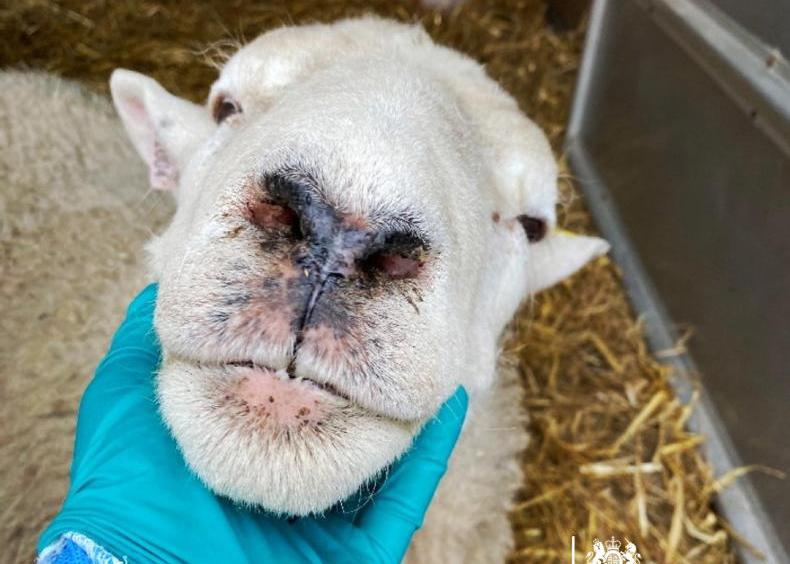
Bluetongue virus: the identification of bluetongue virus in Ireland is an unwelcome development. In terms of the movement of sheep there is only a couple of changes.
Exports of sheep to Northern Ireland under the breeding and production certificate are not allowed. There are some predictions that this may change in tandem with a change in rules for the movement of sheep for breeding/production from Northern Ireland to Ireland but it is important to stress that there has been no change as yet with such movements still curtailed.
Movements to European Union countries are typically allowed but there are certain conditions that have to be satisfied for some destinations. These requirements are covered in detail on page four. This week’s animal health focus on pages 46 and 47 also details options for vaccination. It is worth pointing out that the conditions for the virus to replicate and spread are not present at the moment so there is no need to panic. The general advice with regards vaccination is to administer so that animals have full immunity before the main vector season for midge activity. The vaccine can only be supplied by your vet who will be best placed to discuss vaccination options.
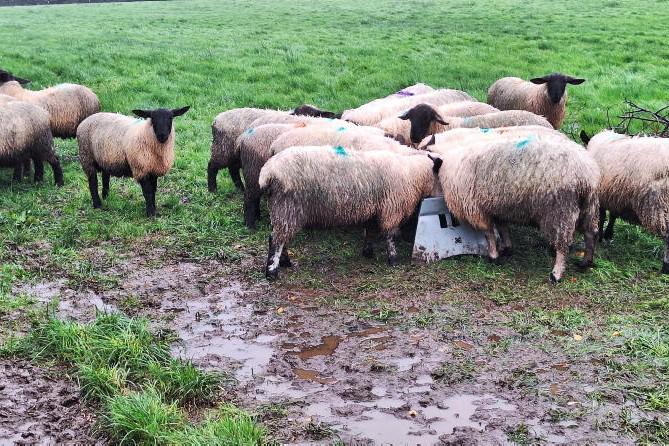
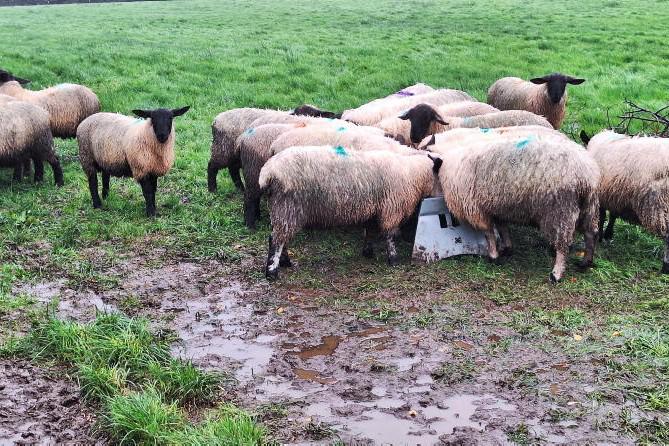
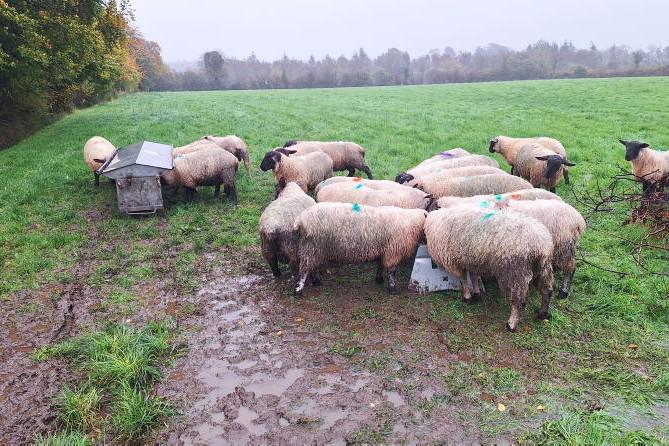
Wet weather management: the torrential rainfall and deterioration in ground conditions is creating major challenges in managing outwintered sheep. The risk of a build-up of soil on the fleeces of finishing lambs is high leading to a heightened risk of sheep falling foul of the clean livestock policy.
While not easy to implement, placing feeders in the driest areas of the field or moving regularly may help but it may be inevitable that some sheep close to slaughter may need to be housed where conditions are especially challenging or delay until sheep can be drafted dry.
The same can be said of in-lamb ewes with the aim of reducing soil build-up in the belly and udder region. Confining sheep to an area and preventing movement through wet gateways/gaps may be of benefit.
The inclement weather is also increasing maintenance demands and this should be taken in to account in the level of supplementation offered. In the absence of supplementary feeding or sufficient grass the condition of ewes will suffer greatly in a very short period of time.
Lameness control: lameness can quickly spread at this time of the year with more environmental conditions such as sheep congregating around feed barriers/troughs and straw bedding providing an environment for infection to establish and spread.
It is vital to act quickly when you notice any case of lameness and to establish the cause to implement the correct treatment. Segregating affected animals for targeted treatment will help and this should be the practice in advance of housing to limit the spread of lameness.
Census reminder: if reading this on Thursday 29 January and planning to submit your sheep census by post then you need to act fast. The only acceptable proof of postage to prove you have submitted your census is by registered post and the return must be posted so that it arrives at the destination by 31 January.
The online submission option has a later deadline of 14 February for returns submitted online via myagfood.ie or the Department’s Animal Identification and Movement (AIM) services app.
Bluetongue virus: the identification of bluetongue virus in Ireland is an unwelcome development. In terms of the movement of sheep there is only a couple of changes.
Exports of sheep to Northern Ireland under the breeding and production certificate are not allowed. There are some predictions that this may change in tandem with a change in rules for the movement of sheep for breeding/production from Northern Ireland to Ireland but it is important to stress that there has been no change as yet with such movements still curtailed.
Movements to European Union countries are typically allowed but there are certain conditions that have to be satisfied for some destinations. These requirements are covered in detail on page four. This week’s animal health focus on pages 46 and 47 also details options for vaccination. It is worth pointing out that the conditions for the virus to replicate and spread are not present at the moment so there is no need to panic. The general advice with regards vaccination is to administer so that animals have full immunity before the main vector season for midge activity. The vaccine can only be supplied by your vet who will be best placed to discuss vaccination options.
Wet weather management: the torrential rainfall and deterioration in ground conditions is creating major challenges in managing outwintered sheep. The risk of a build-up of soil on the fleeces of finishing lambs is high leading to a heightened risk of sheep falling foul of the clean livestock policy.
While not easy to implement, placing feeders in the driest areas of the field or moving regularly may help but it may be inevitable that some sheep close to slaughter may need to be housed where conditions are especially challenging or delay until sheep can be drafted dry.
The same can be said of in-lamb ewes with the aim of reducing soil build-up in the belly and udder region. Confining sheep to an area and preventing movement through wet gateways/gaps may be of benefit.
The inclement weather is also increasing maintenance demands and this should be taken in to account in the level of supplementation offered. In the absence of supplementary feeding or sufficient grass the condition of ewes will suffer greatly in a very short period of time.
Lameness control: lameness can quickly spread at this time of the year with more environmental conditions such as sheep congregating around feed barriers/troughs and straw bedding providing an environment for infection to establish and spread.
It is vital to act quickly when you notice any case of lameness and to establish the cause to implement the correct treatment. Segregating affected animals for targeted treatment will help and this should be the practice in advance of housing to limit the spread of lameness.
Census reminder: if reading this on Thursday 29 January and planning to submit your sheep census by post then you need to act fast. The only acceptable proof of postage to prove you have submitted your census is by registered post and the return must be posted so that it arrives at the destination by 31 January.
The online submission option has a later deadline of 14 February for returns submitted online via myagfood.ie or the Department’s Animal Identification and Movement (AIM) services app.






SHARING OPTIONS