



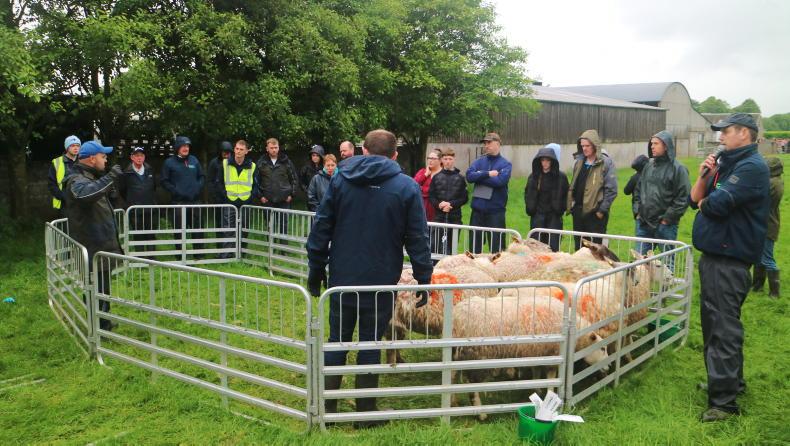
Controlling lameness was a key topic at last week’s Teagasc National Sheep Conference. The new conference format of technical papers presented in an indoor conference session in the Shearwater Hotel, Ballinasloe, and followed by on-farm workshops on the farm of John and Anna Galvin, attracted over 200 farmers.
Jake Delaney, Teagasc Walsh scholar, presented findings from his research project titled Epidemiology and Impact of Ovine Infectious Lameness in Irish Flocks. Part of Jake’s work included the largest survey of lameness and its causes in Irish sheep flocks.
Data was collated from 400 farmer surveys capturing management, treatment choices and lameness recognition, and the findings from eight farms spread across the country, where detailed monitoring of management practices and lameness prevalence took place.
Within this there were records collected from approximately 3,500 ewes, across two years of studies, and in excess of 3,000 lambs.
Survey findings
The survey found 6% national prevalence of lameness reported. Worryingly, of the farms which reported lameness in their flocks, a higher-than-anticipated figure of 49% of flocks reported the presence of Contagious Ovine Digital Dermatitis (CODD).
Not surprisingly scald was found to be present on 95% of farms, while the prevalence of footrot was only slightly lower at 90%. Jake summarised the typical symptoms of scald as red, inflamed skin between the hoof claws and a white discharge. It is caused by micro-abrasions of the soft tissue providing an opportunity for bacteria to gain a foothold. It is highly contagious and can spread rapidly within a flock.
Scald can be a precursor to footrot establishing. The infection is more serious than scald and begins to track under the hoof, eating away at the soft flesh. In contrast to scald, which has no smell, footrot has a characteristic foul smell, which Jake described as ‘cheesy’, and there will also be white or yellow discharge. Footrot can be present at the same time as scald.
CODD
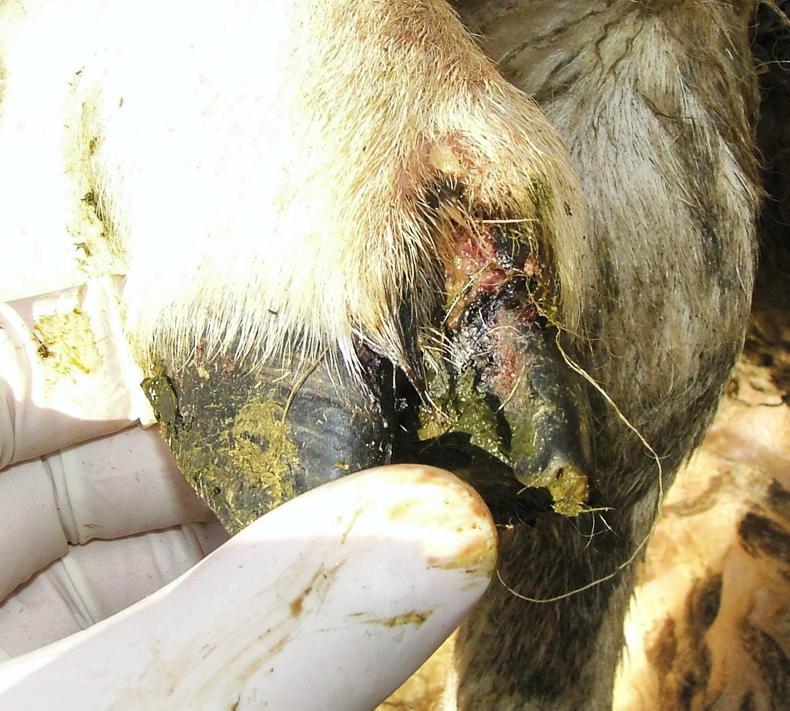
CODD can often be mistaken for footrot, but it is a much more challenging disease to contend with. The tell-tale sign is an infection at the top of the coronary band, which eats away at the attachment of the hoof capsule to the foot tissue. This can lead to the hoof capsule loosening or, in very serious cases, falling off.
The severity at farm level is often compounded by farmers identifying CODD as footrot and adopting treatment options which are ineffective. While the bacteria causing scald and footrot are present on most farms, the bacteria responsible for CODD only gain entry from being imported onto the farm.
The most direct route is via infected sheep brought onto the holding, but contaminated equipment can also be a cause.
Therefore, if you do not have a CODD issue, it is critical that lameness features prominently in your biosecurity plan and all efforts are taken to keep the disease out.
Limiting opportunities for CODD to spread
Jake told farmers that reducing the prevalence of scald and footrot has a major role in controlling CODD. He said that research clearly shows a link to scald and footrot being a precursor to CODD establishing where the infection is already present on farms.
“If we can reduce the prevalence of scald and footrot, then with the right treatment we should be able to bring cases of CODD down to a manageable level.” He acknowledged that this is often easier said than done and highlighted that the greatest challenge in minimising scald and footrot is inadequate handling and foot-bathing facilities.
Foot-bathing
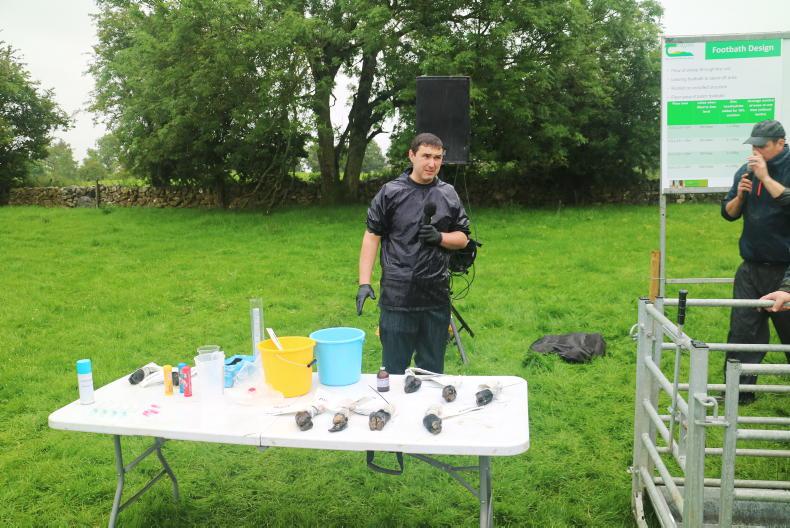
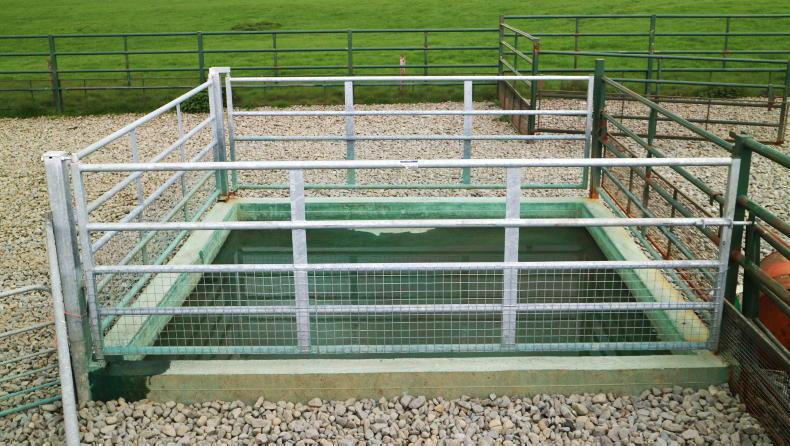
Foot-bathing is the optimum control for scald but the success of treatment regularly fails due to insufficient contact time between the footbath solution and the hooves of animals. In the on-farm workshop Frank Campion, Teagasc, stressed the importance of sheep standing in a footbath for at least 15 minutes where the aim is preventative control and upwards of 30 minutes for treatment where there is an active scald infection in the flock.
He said that in reality this is only likely to occur where there is a batch footbath present on the farm, with only 6% of survey respondents stating that sheep are held when required for more than 15 minutes in the footbath. Where a batch footbath is available, sheep can be allowed to stand in the footbath solution, while other tasks are carried out.
Of equal importance is sheep being afforded an opportunity to stand on a hard, clean surface for 30 minutes post foot bathing. This can be concrete or a hardcore yard that is clean.
Frank advised farmers to use zinc or copper sulphate diluted at the appropriate rate. He advised against the use of formalin due to its carcinogenic properties, while Jake commented that continuous use of formalin can harden the hoof wall.




SHARING OPTIONS