



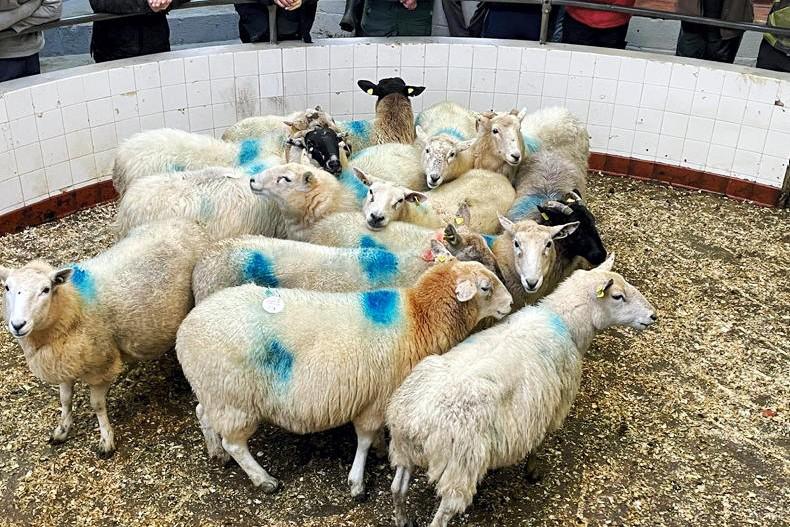
For mid-March lambing flocks, preparations for introducing the tups are well under way, with many farmers across the country prioritising this weekend for a final soundness check on the ewe flock.
Strategic culling is now vital to improving flock productivity and prolificacy.
When selecting culls ahead of tupping, farmers should carefully assess those borderline cases - the ewes typically kept for another year under normal circumstances.
Physical traits
The main reasons for culling ewes include poor feet, mouth issues, age, low body condition and udder issues.
Lame ewes should have already been separated and treated - if treatment has failed, they should be culled, as this will impact their condition over the winter period.
Culling ewes based on age is a balance between introducing better genetics and maintaining flock performance.
Older ewes typically have poorer teeth, fewer lambs, weaker immunity, poor post-lambing weight gain and reduced thriftiness.
Mortality increases from age seven onwards, with older ewes more prone to metabolic conditions such as hypocalcaemia and pregnancy toxaemia.
Research shows mastitis incidence rises with ewe age.
Udders should be checked for pendulous shape, lumps, lesions, or signs of mastitis, all of which warrant culling. Milk
production generally peaks at three to four years of age, declining afterwards.
Ewe performance
Some reasons for culling ewes aren’t always visible, so accurate records throughout the year are essential to support decision-making.
Reviewing 2025 lamb performance helps identify causes of lamb mortality. With good records, ewes with poor mothering ability, low milk yield and other issues can be identified.
Calculating ewe efficiency based on the weight of lamb(s) weaned relative to ewe weight at tupping is a useful way of assessing milk yield and mothering ability, which is directly linked to profitability.
In hill flocks, ideally aim for 60% efficiency, while 70% is ideal in crossbred lowland flocks.
Ewes that significantly underperform are strong culling candidates, but it’s important to rule out management factors such as ram issues causing late lambs, poor parasite control or inadequate grassland management resulting in poor lamb growth rates.
Simple culling system
Farmers can implement a basic visual recording system using a two-strike method, which involves taking an ear notch each time a ewe presents a negative performance indicator. Ewes with two notches are culled immediately.
Ewes prone to lambing issues, such as prolapse, repeated assisted births or those with stillbirths alongside living lambs, often rear a lamb and are mistakenly returned to the ram.
This system ensures problem ewes are easily identifiable and considered for culling.







SHARING OPTIONS