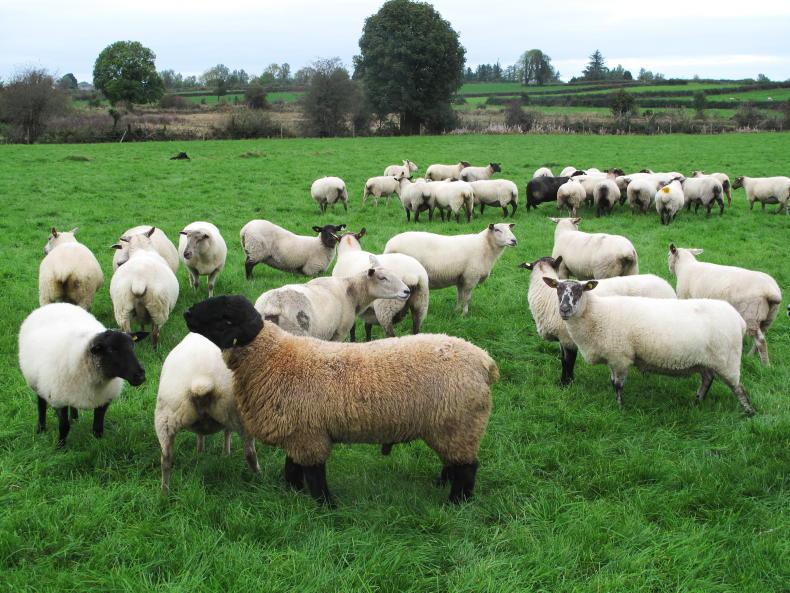
Ram breeding: many mid-season lambing flocks will commence breeding this week. In most cases, conditions are ideal with an upturn in weather reversing the recent decline in grass utilisation.
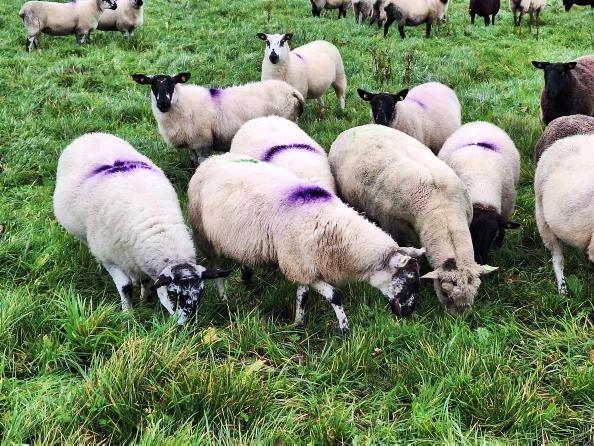
Many flocks will be joining ram lambs with ewes and it is important to take time to ensure such rams are working well and actually serving ewes. It is not unknown for rams to mount ewes but not actually serve them. This can give the appearance that rams are working as ewes will be raddled. Taking time to observe a ram when joined with ewes will help spot issues while changing the raddle colour between cycles will also quickly identify problems. In this regard, it is advisable to switch rams between groups – where feasible –between cycles to reduce the effects of possible subfertility or infertility issues.
Meal feeding training: flocks planning on housing lambs for intensive finishing indoors will achieve a much smoother transition and experience fewer problems, on average, where lambs are trained in to eating concentrates outdoors. This is particularly the case for Scottish Blackface lambs, which can sometimes take longer to adapt to an indoor-finishing diet. It is also useful to train replacement ewe lambs on hill flocks into eating meal/hay or silage where lambs are destined to being put back on hill/mountain grazing. In this way, lambs will be accustomed to eating if adverse weather hits and can be easier supplemented.
Flock linkage: Sheep Ireland is encouraging LambPlus breeders to login to their Sheep Ireland portal to check the linkage status of their flock. It says that the ideal status is where flocks are linked as it allows your flock to be compared to all other performance-recording flocks within your respective sheep breed.
Information on how to check on your flock’s status and complete the process can be found at https://www.sheep.ie/linkage-status-for-2026-season/.
Closing targets: mid-season lambing flocks with a lambing date of early-to-mid-March should now be gearing up for closing paddocks for grazing first next spring. The targets for such flocks is to have 20% of ground closed up by the end of October to ensure that a sufficient cover of grass is available post-lambing.
The target is to deliver a rest period of at least 120 days. Swards closed first should ideally be those with the greatest shelter and in close proximity to the yard, while care consideration should be given to swards which will respond best to early grass growth/applied nutrients.
FYM deadline: the deadline for applying farm yard manure (FYM) on lands is 31 October, with the prohibited application period commencing both in Ireland and Northern Ireland on 1 November 2025. Weather is ideal for applying FYM at present and spreading areas should be focused on swards that are deficient in nutrients or require replenishment following the harvesting of crops.
It is important to note that farmyard manure cannot be field-stored during the prohibited application period – ie, it cannot be stored on lands again until mid-to-end January depending on the location of the farm. Therefore, it is important to ensure that where there are no facilities available to store FYM during the prohibited application period, these are cleaned in the coming weeks.