Forecasting performance in sheepmeat markets has been much more challenging in the last 18 months. Prices are not as easily steered by supply patterns, as witnessed in recent months, with a myriad of factors now feeding into market predictions.
The short-term outlook for the first half of 2026 is broadly stable, according to Seamus McMenamin, sector manager sheepmeat and livestock at Bord Bia. Seamus was speaking at a meeting of the Dawn Meats Future Flocks young sheep farmer group and local producers in Athlone, Co Westmeath, on Tuesday night. The initiative is aimed at supporting the next generation of sheep farmers through sharing of knowledge.
In discussing supply prospects for 2025/2026, he said that there may be a slight increase in lamb supply in quarter one of 2026. He attributes this prediction to reports of farmers possessing higher numbers of store lambs and beef finishers holding on to lambs until the turn of the year.
This impact is expected to be short lived. Seamus said it is clear to be seen that contraction in the national ewe flock, recorded at 2% to 3% in last year’s census, appears to be well underestimated given the major falloff in the sheep kill in 2025, currently in excess of 430,000 head.
This shows no signs of reversing, with Seamus predicting that contraction in the ewe flock in real terms could be upwards of 5% year-on-year, and another relatively low sheep kill on the horizon in 2026.
Reduced NI imports
Throughput has been influenced somewhat by over 60,000 fewer sheep imported from Northern Ireland in 2025. These sheep have been diverted to the British market, with this proving more attractive for large periods in 2025 for two main reasons.
According to Seamus, tight supplies in Britain supported a higher price differential between Northern Ireland and British lamb for long spells, especially in the first half of 2025, while the fact that lamb from Northern Ireland maintains its Red Tractor status (equivalent to quality assurance) underpins increased demand.
Contraction in the EU sheep flock was also predicted at 2% to 3% in 2025 and similar to Ireland reduced throughput is tracking ahead of expectations. UK sheep production is also facing further decline.
Higher EU imports
Some growth is expected in sheepmeat imports into the EU, with the UK targeting higher export volumes to the EU market. This is being fuelled by higher imports from Australia and steady import volumes from New Zealand.
The latest UK sheepmeat trade data published by the Agriculture Horticulture Development Board (AHDB) shows UK sheepmeat imports increasing by 7% in the first nine months of 2025 to reach 65,100t. The value of such import volumes has increased by a much greater level, rising by 31% to £365m.
This has been underpinned by a significant increase in global sheepmeat prices, with the value of sheepmeat in Australia and New Zealand running at considerably higher level than in 2024. While prices will vary seasonally the return of drought to regions in Australia and pressure on land availability in New Zealand means production is likely to remain on a declining trend, which is positive from the point of view of EU demand and global sheep prices.
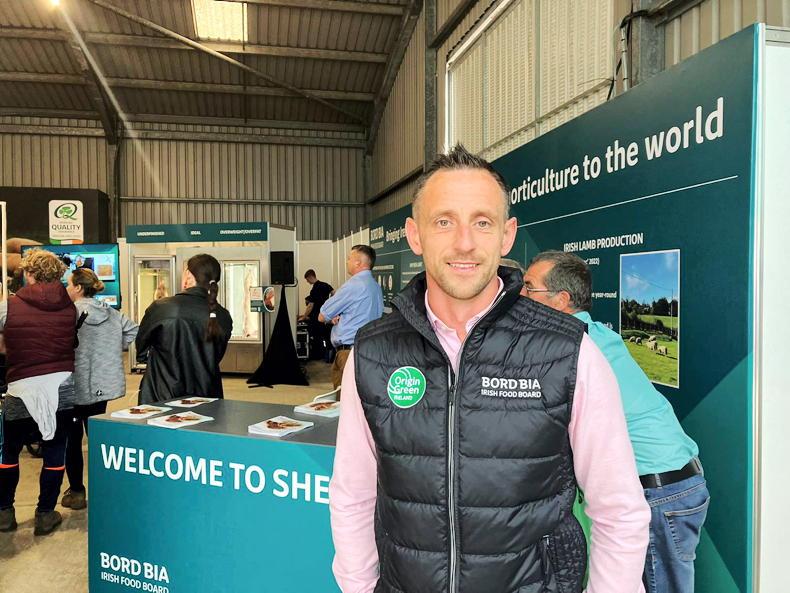
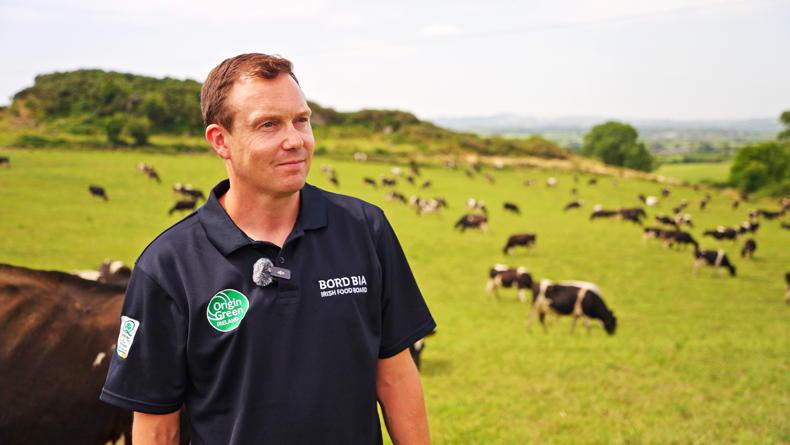
Seamus McMenamin, sheepmeat and livestock sector manager for Bord Bia.
Price differential
Seamus comments that earlier this year Irish farmgate sheepmeat prices were running at almost double the level of southern hemisphere returns. This differential has now reduced to over €1/kg, which could temper any further increase in import volumes.
The volume of sheepmeat exported from the UK increased by 15% to reach 68,300t. AHDB reports that “tight EU production and high EU prices increased demand for UK new-season lamb, despite UK supplies being somewhat limited year-on-year”.
Total value of exports over this period has also lifted, up 16% compared to the same period a year ago to £493 million. The differential of almost £130m between export and import values, despite imports running just 3,000t lower, shows that the UK is benefitting from importing lower-priced sheepmeat and prioritising higher-value exports to the premium EU market.
Market dynamics
Price sensitivity was highlighted as an ongoing concern, with consumers seeking out lower-priced proteins and cuts to combat a higher cost of living. Consumption is, however, thankfully expected to stabilise in the UK and EU after recent downward pressure. The Halal market is growing in importance and has been a key driver in supporting demand over the last 12 months.
There has also been a switch in the export profile of Irish lamb, with higher volumes being exported in carcase form and fewer opportunities to add value. This is being driven by demand but also rising costs in adding value.
Irish export markets
In terms of export market performance, Seamus says that “not surprisingly given the real strong price that we had earlier in the year in particular the export price has increased by 13%, despite a decline in the volume of sheepmeat exported”.
He added that Irish exports continue to be European focused, citing “we export 85% of all the lamb we produce and 80% of that ends up in Europe.
That’s up from about 70% last year. We are becoming more European focused or more European centric and it’s that same trend for beef – international markets are in decline and the European and UK markets are becoming more important”.
Domestic performance
In the region of 15% of the sheepmeat Ireland produces is consumed on the domestic market – mostly in retail with a small volume in foodservice. Seamus says “despite lamb being at a high price point it hasn’t actually been a bad year for sales. There has been an increase in output price and volume sales and interestingly there has been more households buying lamb”.
There are also some bright signals for increased consumption among younger consumer; “this is for the total population, if I was to strip this out and just leave it to young people there has been a noticeable increase in the number of young people buying lamb which is encouraging. This feeds in to our new advertising campaign which will be rolled out targeting younger consumers.
“It won’t be covering your roasts or racks but a cheaper more versatile cut that younger consumers might be after for [cooking] during the week”.
Forecasting performance in sheepmeat markets has been much more challenging in the last 18 months. Prices are not as easily steered by supply patterns, as witnessed in recent months, with a myriad of factors now feeding into market predictions.
The short-term outlook for the first half of 2026 is broadly stable, according to Seamus McMenamin, sector manager sheepmeat and livestock at Bord Bia. Seamus was speaking at a meeting of the Dawn Meats Future Flocks young sheep farmer group and local producers in Athlone, Co Westmeath, on Tuesday night. The initiative is aimed at supporting the next generation of sheep farmers through sharing of knowledge.
In discussing supply prospects for 2025/2026, he said that there may be a slight increase in lamb supply in quarter one of 2026. He attributes this prediction to reports of farmers possessing higher numbers of store lambs and beef finishers holding on to lambs until the turn of the year.
This impact is expected to be short lived. Seamus said it is clear to be seen that contraction in the national ewe flock, recorded at 2% to 3% in last year’s census, appears to be well underestimated given the major falloff in the sheep kill in 2025, currently in excess of 430,000 head.
This shows no signs of reversing, with Seamus predicting that contraction in the ewe flock in real terms could be upwards of 5% year-on-year, and another relatively low sheep kill on the horizon in 2026.
Reduced NI imports
Throughput has been influenced somewhat by over 60,000 fewer sheep imported from Northern Ireland in 2025. These sheep have been diverted to the British market, with this proving more attractive for large periods in 2025 for two main reasons.
According to Seamus, tight supplies in Britain supported a higher price differential between Northern Ireland and British lamb for long spells, especially in the first half of 2025, while the fact that lamb from Northern Ireland maintains its Red Tractor status (equivalent to quality assurance) underpins increased demand.
Contraction in the EU sheep flock was also predicted at 2% to 3% in 2025 and similar to Ireland reduced throughput is tracking ahead of expectations. UK sheep production is also facing further decline.
Higher EU imports
Some growth is expected in sheepmeat imports into the EU, with the UK targeting higher export volumes to the EU market. This is being fuelled by higher imports from Australia and steady import volumes from New Zealand.
The latest UK sheepmeat trade data published by the Agriculture Horticulture Development Board (AHDB) shows UK sheepmeat imports increasing by 7% in the first nine months of 2025 to reach 65,100t. The value of such import volumes has increased by a much greater level, rising by 31% to £365m.
This has been underpinned by a significant increase in global sheepmeat prices, with the value of sheepmeat in Australia and New Zealand running at considerably higher level than in 2024. While prices will vary seasonally the return of drought to regions in Australia and pressure on land availability in New Zealand means production is likely to remain on a declining trend, which is positive from the point of view of EU demand and global sheep prices.

Seamus McMenamin, sheepmeat and livestock sector manager for Bord Bia.
Price differential
Seamus comments that earlier this year Irish farmgate sheepmeat prices were running at almost double the level of southern hemisphere returns. This differential has now reduced to over €1/kg, which could temper any further increase in import volumes.
The volume of sheepmeat exported from the UK increased by 15% to reach 68,300t. AHDB reports that “tight EU production and high EU prices increased demand for UK new-season lamb, despite UK supplies being somewhat limited year-on-year”.
Total value of exports over this period has also lifted, up 16% compared to the same period a year ago to £493 million. The differential of almost £130m between export and import values, despite imports running just 3,000t lower, shows that the UK is benefitting from importing lower-priced sheepmeat and prioritising higher-value exports to the premium EU market.
Market dynamics
Price sensitivity was highlighted as an ongoing concern, with consumers seeking out lower-priced proteins and cuts to combat a higher cost of living. Consumption is, however, thankfully expected to stabilise in the UK and EU after recent downward pressure. The Halal market is growing in importance and has been a key driver in supporting demand over the last 12 months.
There has also been a switch in the export profile of Irish lamb, with higher volumes being exported in carcase form and fewer opportunities to add value. This is being driven by demand but also rising costs in adding value.
Irish export markets
In terms of export market performance, Seamus says that “not surprisingly given the real strong price that we had earlier in the year in particular the export price has increased by 13%, despite a decline in the volume of sheepmeat exported”.
He added that Irish exports continue to be European focused, citing “we export 85% of all the lamb we produce and 80% of that ends up in Europe.
That’s up from about 70% last year. We are becoming more European focused or more European centric and it’s that same trend for beef – international markets are in decline and the European and UK markets are becoming more important”.
Domestic performance
In the region of 15% of the sheepmeat Ireland produces is consumed on the domestic market – mostly in retail with a small volume in foodservice. Seamus says “despite lamb being at a high price point it hasn’t actually been a bad year for sales. There has been an increase in output price and volume sales and interestingly there has been more households buying lamb”.
There are also some bright signals for increased consumption among younger consumer; “this is for the total population, if I was to strip this out and just leave it to young people there has been a noticeable increase in the number of young people buying lamb which is encouraging. This feeds in to our new advertising campaign which will be rolled out targeting younger consumers.
“It won’t be covering your roasts or racks but a cheaper more versatile cut that younger consumers might be after for [cooking] during the week”.
SHARING OPTIONS