



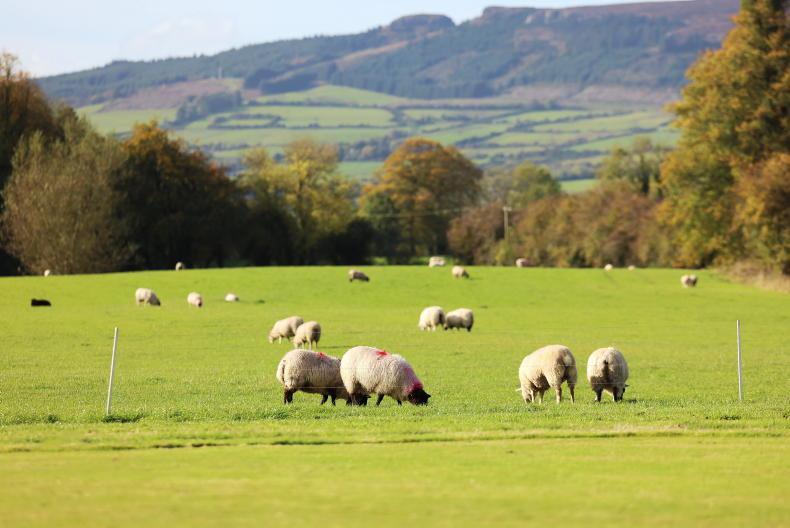
A number of sheep have died after ingesting acorns, leading the Department of Agriculture to issue a reminder to farmers that acorns are toxic to sheep.
Over the past few weeks, regional veterinary laboratories have seen a few cases of acorn or oak toxicity leading to death.
All of the cases were in sheep. However, farmers are being reminded that acorns are also toxic to cattle and horses.
The increase in acorn poisonings is as a result of a bumper crop of acorns on oak tress this year.
“This year is what is called a ‘mast year’, meaning that certain types of trees have produced a bumper crop of fruit or nuts,” the Department said.
“While the definitive reason for a mast year occurring is not known, it is thought that this allows for survival of future generations of trees. In the case of the oak trees, this has resulted in bumper crops of acorns.
“In addition to this, recent stormy and windy conditions have caused mass falling of these acorns, along with leaves being shed and some branches falling also, giving our livestock easy access to them,” it said.
Toxic
Acorns and other parts of the oak tree contain phenols and tannins, which, if consumed, can be toxic to ruminants and horses, leading to a variety of clinical signs, the Department has advised.
These toxins can affect the alimentary, renal and hepatic systems. Clinical signs are normally seen between three and seven days after the ingestion of acorns or oak leaves or branches, which may include:
The Department has warned that acutely affected animals can die within 24 to 72 hours, while those that survive past this stage lose weight and become chronically ill, failing to thrive.
Advice
It is advised that pasture under oak trees is restricted to grazing livestock at the back end of the year, especially following windy or stormy conditions which would have resulted in an increased volume of fallen acorns, leaves and branches.
Farmers who are concerned that their livestock may be affected by acorn or oak toxicity are advised to contact their local private veterinary practitioner for advice.



SHARING OPTIONS