


The big speech by UK Prime Minister Theresa May on Brexit in Florence last Friday provides a small piece of good news for farmers. For the first time, the UK government has indicated that it will ask the EU for an extension to the time allocated to negotiate Brexit.
This means business as usual in terms of accessing the UK market until March 2021, provided of course that the EU27 are agreeable to this request, and the weanlings sold this autumn will have the same market opportunities when they go to the factory in the late spring of 2019 as cattle going to the factory today.
In a speech that was thin on detail but positive in tone, the British Prime Minister made it clear she has a major battle on two fronts. The external battle is to get the EU seriously engaged in discussions and she is hoping that an indication that the UK will pay its way in this extended period will give enough of a signal to the EU that the UK will talk about money.
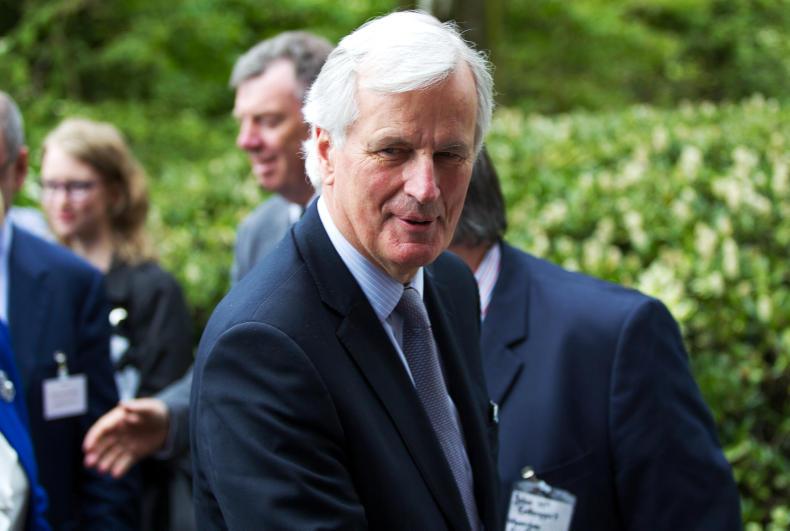
However, the EU is notorious about detail and process. It was interesting to note that in his response, Michel Barnier, the EU lead negotiator, welcomed the constructive spirit but went on to emphasise the demand for specific detail and concrete proposals in this week’s negotiations.
If the EU27 are persuaded to extend the withdrawal period until March 2021, it will create a window of opportunity to negotiate what shape of future relationship will replace EU membership for the UK.
The debate on this is still going on in the UK government and the delay in negotiations to date is caused by the UK not having a united position on what type of relationship it wants. Business and trade unions in the UK are united in wanting a close relationship with the EU post-Brexit, which in effect means staying with the customs union and even the single market.
However, for many in government, including Boris Johnson, Michael Gove (whose department includes agriculture) and several others, the ambition is to cut off all existing structural relations with Brussels and start afresh to negotiate trade terms.
This is against a backdrop of the EU being adamant that the UK cannot enjoy better conditions outside the EU than it did inside.
Irish farmers and indeed UK farmers have an interest in the closest possible trading relationship between the EU and UK post-Brexit. That means at least the UK remaining part of the customs union.
Otherwise, Irish farmers lose whatever alternative route the UK chooses. WTO tariffs would make Irish beef and cheese prohibitively expensive in the UK. Similarly, if the UK was to throw open its doors with low or zero tariffs on imports, Irish product would get squeezed out by South American imports.
Farmers in the UK would lose on sheepmeat exports, while even though the UK is a net importer of beef, parts of the carcase processed in the UK are better sold in continental markets.
The Florence speech indicates a willingness by the UK to take more time in shaping its longer-term relationship with the EU when it leaves. Irish farmers will be hoping it is one that retains as much of the status quo as possible, and the extra time will enable this debate to take place.
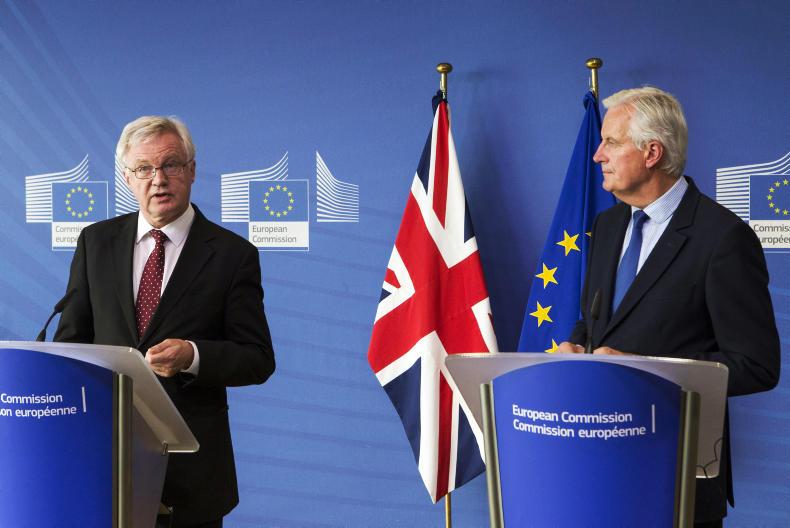
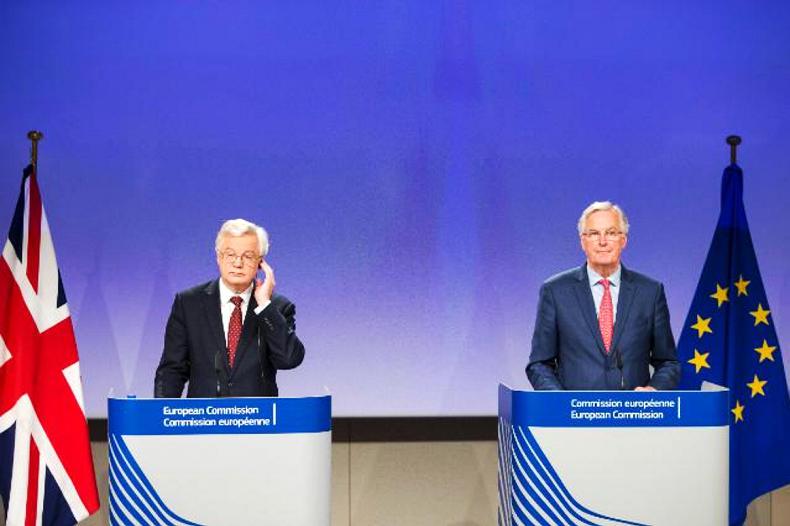
Meanwhile, the fourth round of detailed negotiations kicked off in Brussels this week and at their press conference on Monday it seemed that David Davis, the UK Minister responsible for Brexit negotiations, and the EU lead negotiator, Michel Barnier, were on different pages.
David Davis could see “no excuse for standing in the way of progress” while Michel Barnier was calling for “a moment of clarity” from the UK.
With little apparent meeting of minds ahead of the talks between the delegations which are due to run until today (Thursday), the EU Council president travelled to London for a working lunch with Prime Minister Theresa May.
This keeps a second channel of communication open but as of now there seems little common ground on the way ahead, despite the positive tone from the Prime Minister in Florence.




SHARING OPTIONS