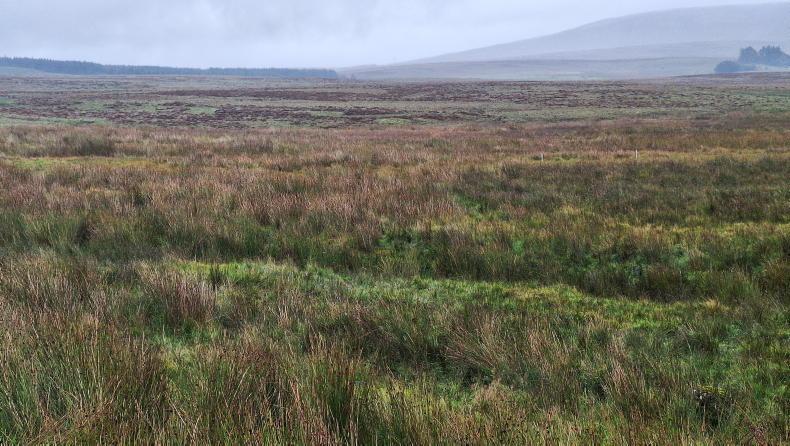
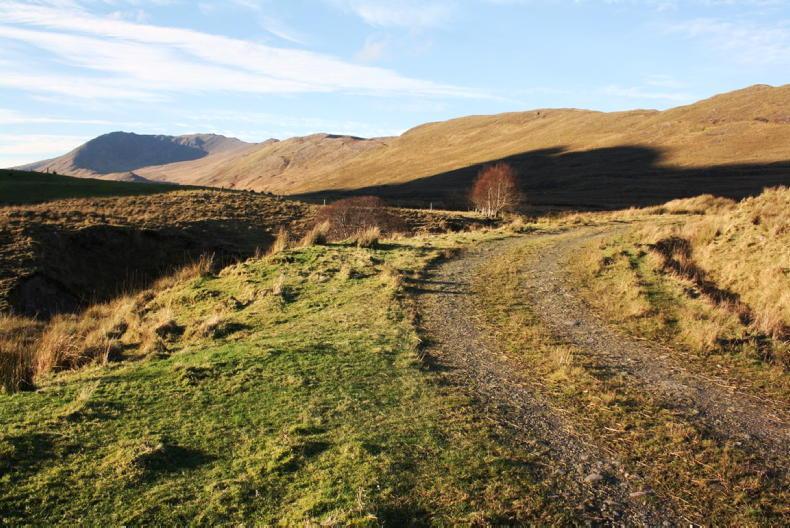
The CAFRE Hill Farm at Glenwherry in Co Antrim is home to about 60% of Northern Ireland’s grouse population, 23% of curlews, 15% of Irish hares and 7% of lapwing. It is also a common hunting ground for birds such as the peregrine, hen harrier, merlin, sparrowhawk, kestrel and much more.
So what is it that makes the Glenwherry hill farm a hotspot for such activity? The secret to this success was outlined by Merlin Becker, Glenwherry Moor head keeper and Irish Grouse Conservation Trust, as being best practice in habitat management and predator control.
Merlin delivered a frank and honest presentation, and outlined at the outset that in his opinion habitat and predator management go hand in hand with wildlife conservation projects, having a much higher risk of failure where one of these aspects is limiting.
Prescribed burning
Merlin started off by addressing what he described as quite a contentious issue – prescribed burning: “A lot of people say to you that burning is negative, that burning is very bad for the environment and in my personal and professional opinion if it is done at the right time and in the right area, it is a very positive driver for a lot of environmental benefits.”
Merlin explained that there is a stark contrast between prescribed burning and uncontrolled burning. He highlighted examples of ‘cool burn’ videos on YouTube, where a £50 note or an iphone was placed under moss before an area was burned and being unharmed due to the safe nature of the burning – with the fire burning the vegetation present and not penetrating down below the vegetation.
The aim with burning on Glenwherry is to develop a mosaic of habitats, with burning taking place in areas measuring from one to four acres. This gives rise to fresh regrowth of heather and wild grasses – which is seen as a win for both biodiversity and grazing livestock.
Where burning is not an option, then another management practice is flailing – with Merlin finding a hammerhead flail works best for regenerating habitats. Reseeding of heather is also practiced in some areas where the habitat has been degraded, or where there is a focus on reversing habitat decline.
Regenerating habitats and removing vegetation is becoming a greater consideration in light of the increase in wild fires. The hill farm is viewed as resilient to wildfires with Mervin outlining that a living landscape and patchwork quilt effect to habitats reduces the risk of fires getting out of control. He said some areas of the Mourne and Sperrin mountain, where heather is as high as your waist, are increasingly at risk to wildfire events.
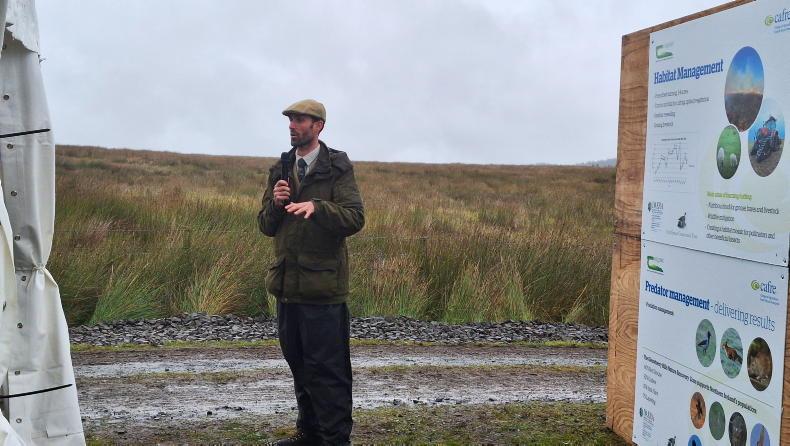
Merlin Becker, Glenwherry Moor head keeper, Irish Grouse Conservation Trust.
Grouse population
Work on increasing the grouse population began in 2006, with a gamekeeper installed in 2007 to look after the 2,500 acre CAFRE unit and a similar-sized area from 17 neighbouring farmers who are integral to the project. The grouse population has increased from seven to 300 birds. Merlin commented that he always likes to say “what’s good for the grouse is good for everything else”, with lots of other species thriving as mentioned above and livestock achieving positive performance.
The farm has the highest density of hares on the island of Ireland.
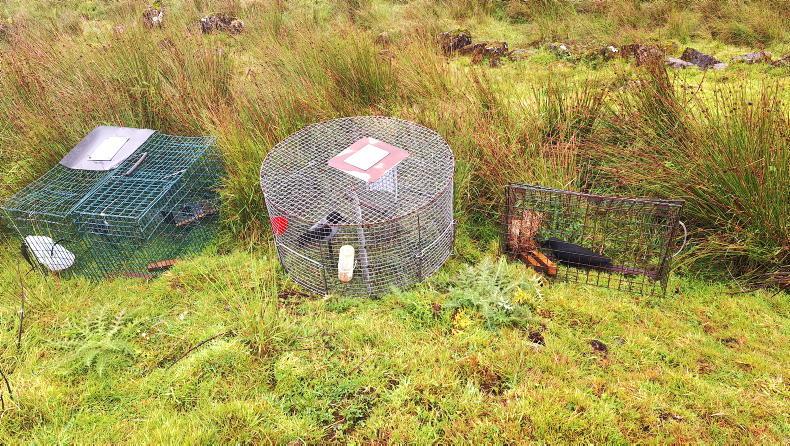
Some of the traps used on the farm for capturing greycrows and other predatory birds.
Control
The main predators controlled on the CAFRE farm include foxes, hooded crows, rats and stoats with foxes the greatest concern.
In Merlin’s first year in 2021/2022, there were 220 foxes taken out of the environment. With a fox capable of eating 1.5lbs of food a day, controlling the population has been critical in protecting hares, ground nesting birds and other animals. It is an ongoing job with a void in foxes in the environment creating a vacuum and reservoir of food in which foxes are keen to avail of.
He said that he would love to see other gamekeepers, wildlife officers etc introduced in other areas throughout Northern Ireland and Ireland adding that without sufficient predator control projects looking to increase the population of endangered bird species will continue to struggle badly. These positions need to be dedicated fulltime roles.
Grey crows, which are a danger to ground-nesting birds, are mainly controlled by larsen traps, decoy shooting etc with the population well under control in the area.
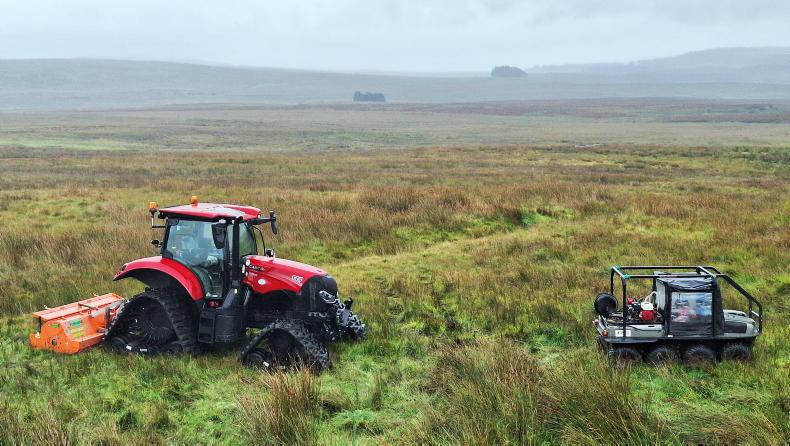
Where burning is not an option then flailing is used.
Benefits for livestock
Eileen McCloskey, senior livestock technologist at CAFRE, told those in attendance as a livestock person she wants to manage the vegetation for the livestock, but that also brings mutual benefits for biodiversity.
“If I want to manage the vegetation I improve the quality [nutritional] of the vegetation for my animals and that improves the productivity on the farm,” she said.
“It is worth highlighting that the management of vegetation for livestock doesn’t differ anything from the quality of the vegetation that Merlin wants for his aims. So livestock have a vital role in maintaining habitats in optimum condition.”
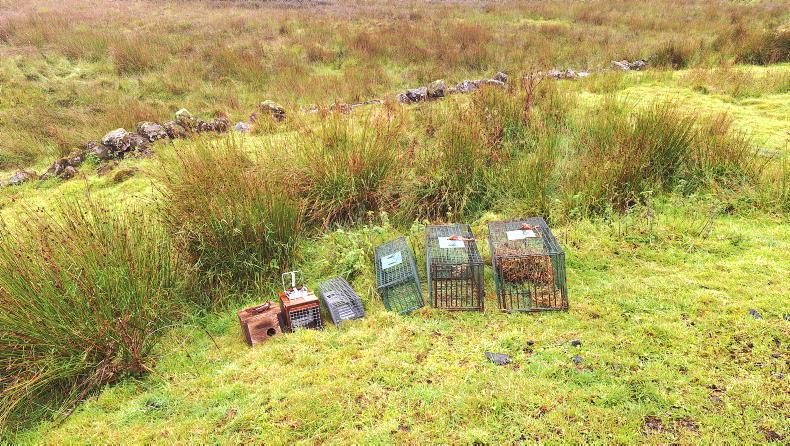
More traps used to capture predators which are a threat to ground nesting birds.
The CAFRE Hill Farm at Glenwherry in Co Antrim is home to about 60% of Northern Ireland’s grouse population, 23% of curlews, 15% of Irish hares and 7% of lapwing. It is also a common hunting ground for birds such as the peregrine, hen harrier, merlin, sparrowhawk, kestrel and much more.
So what is it that makes the Glenwherry hill farm a hotspot for such activity? The secret to this success was outlined by Merlin Becker, Glenwherry Moor head keeper and Irish Grouse Conservation Trust, as being best practice in habitat management and predator control.
Merlin delivered a frank and honest presentation, and outlined at the outset that in his opinion habitat and predator management go hand in hand with wildlife conservation projects, having a much higher risk of failure where one of these aspects is limiting.
Prescribed burning
Merlin started off by addressing what he described as quite a contentious issue – prescribed burning: “A lot of people say to you that burning is negative, that burning is very bad for the environment and in my personal and professional opinion if it is done at the right time and in the right area, it is a very positive driver for a lot of environmental benefits.”
Merlin explained that there is a stark contrast between prescribed burning and uncontrolled burning. He highlighted examples of ‘cool burn’ videos on YouTube, where a £50 note or an iphone was placed under moss before an area was burned and being unharmed due to the safe nature of the burning – with the fire burning the vegetation present and not penetrating down below the vegetation.
The aim with burning on Glenwherry is to develop a mosaic of habitats, with burning taking place in areas measuring from one to four acres. This gives rise to fresh regrowth of heather and wild grasses – which is seen as a win for both biodiversity and grazing livestock.
Where burning is not an option, then another management practice is flailing – with Merlin finding a hammerhead flail works best for regenerating habitats. Reseeding of heather is also practiced in some areas where the habitat has been degraded, or where there is a focus on reversing habitat decline.
Regenerating habitats and removing vegetation is becoming a greater consideration in light of the increase in wild fires. The hill farm is viewed as resilient to wildfires with Mervin outlining that a living landscape and patchwork quilt effect to habitats reduces the risk of fires getting out of control. He said some areas of the Mourne and Sperrin mountain, where heather is as high as your waist, are increasingly at risk to wildfire events.
Merlin Becker, Glenwherry Moor head keeper, Irish Grouse Conservation Trust.
Grouse population
Work on increasing the grouse population began in 2006, with a gamekeeper installed in 2007 to look after the 2,500 acre CAFRE unit and a similar-sized area from 17 neighbouring farmers who are integral to the project. The grouse population has increased from seven to 300 birds. Merlin commented that he always likes to say “what’s good for the grouse is good for everything else”, with lots of other species thriving as mentioned above and livestock achieving positive performance.
The farm has the highest density of hares on the island of Ireland.
Some of the traps used on the farm for capturing greycrows and other predatory birds.
Control
The main predators controlled on the CAFRE farm include foxes, hooded crows, rats and stoats with foxes the greatest concern.
In Merlin’s first year in 2021/2022, there were 220 foxes taken out of the environment. With a fox capable of eating 1.5lbs of food a day, controlling the population has been critical in protecting hares, ground nesting birds and other animals. It is an ongoing job with a void in foxes in the environment creating a vacuum and reservoir of food in which foxes are keen to avail of.
He said that he would love to see other gamekeepers, wildlife officers etc introduced in other areas throughout Northern Ireland and Ireland adding that without sufficient predator control projects looking to increase the population of endangered bird species will continue to struggle badly. These positions need to be dedicated fulltime roles.
Grey crows, which are a danger to ground-nesting birds, are mainly controlled by larsen traps, decoy shooting etc with the population well under control in the area.
Where burning is not an option then flailing is used.
Benefits for livestock
Eileen McCloskey, senior livestock technologist at CAFRE, told those in attendance as a livestock person she wants to manage the vegetation for the livestock, but that also brings mutual benefits for biodiversity.
“If I want to manage the vegetation I improve the quality [nutritional] of the vegetation for my animals and that improves the productivity on the farm,” she said.
“It is worth highlighting that the management of vegetation for livestock doesn’t differ anything from the quality of the vegetation that Merlin wants for his aims. So livestock have a vital role in maintaining habitats in optimum condition.”
More traps used to capture predators which are a threat to ground nesting birds.






SHARING OPTIONS