



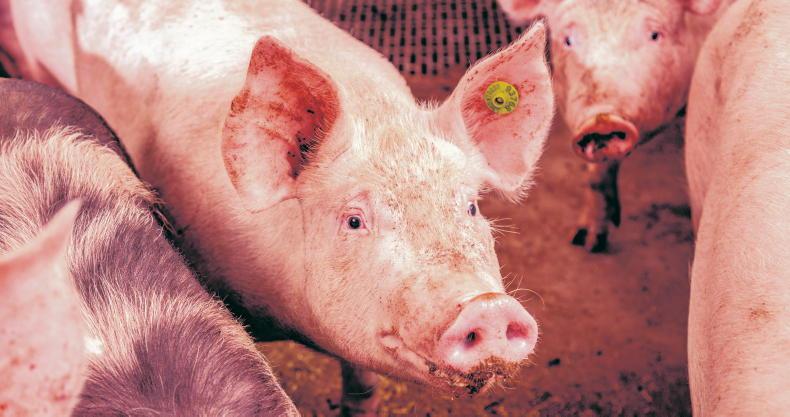
 “It seems that in the past few years, the increased prevalence and impact on health and productivity in Irish herds has gone under the radar.”
The impact of worms
While gastrointestinal worms in other livestock species are usually associated with grazing, the issue is widely prevalent in most indoor pig units.
Roundworm (Ascaris suum) is the most common and economically significant parasite in Irish pig herds. Teagasc has placed the impact of lost productivity due to worms at €100,000 or more on an average unit.
Roundworm damage impacts two major organs: the liver and the lungs.
Farmers will be familiar with references to milk spot and liver condemnations on factory reports.
These lesions become temporarily visible shortly after infection, so while they are an indicator of the presence of worms in finishers, they are limited in their use as a whole-farm diagnostic tool.
Roundworms migrate from the liver to the lungs as they mature, causing inflammation and coughing that is often mistaken for pneumonia.
“This year alone, we have seen a rise in cases of respiratory disease caused by migrating ascarids in early second-stage pigs in Irish farms,” explained Aidan Byrne.
“The impact on these pigs is not just to performance, but also a risk of increased susceptibility to bacterial disease.”
Worm larvae are coughed up from the lungs, ingested into the digestive system and passed out in faeces. The internal lifecycle is around six weeks and egg shedding is intermittent.
However, regular faecal egg testing can be a useful diagnostic tool and your vet will be able to advise a suitable programme of monitoring for infection.
Effective worm control
Effective worm control in the breeding herd helps stabilise the impact on growing pigs. Effective cleaning, disinfection and drying between batches then helps reduce the spread of worms throughout the farm.
Gilts should be wormed prior to introduction to the breeding herd. De-worming sows one to two weeks prior to farrowing helps mitigate the periparturient rise that sees an increase in egg shedding exposing piglets to infection shortly after birth.
“It’s believed that the recent increase in issues caused by worm infections is a result of reduced treatment with anthelmintics,” added Aidan.
“As the industry has moved away from medicated feed, I’ve heard a few farmers mention that they don’t seem to be worming as regularly.”
A range of avermectins and benzimidazoles in injectable and oral forms are licensed for use in pigs. Your vet will prescribe the product most suitable for your farm.
The MSD Animal Health pig dewormer (fenbendazole) is produced using an innovative wet-milling process that produces exceptionally fine particles that eliminate the problems of clogged pipes and filters.
It is easy to mix and stays in suspension without re-stirring, ensuring uniform intake and correct dosing. The product also has a short treatment period of two to three days, depending on the type of worm infestation.
It is suitable for both sows and younger pigs and has a meat withdrawal of only four days. Fenbendazole kills adult, intestinal and migrating larval stages of Ascaris suum and is highly effective against adult trichuris and oesophagostomum.
“As a stockman, you sometimes get a feeling that something isn’t right with a batch of pigs or you hear them coughing and you start wondering what disease or infection they have. Perhaps we should be asking ourselves, what if it’s worms?” concluded Aidan Byrne.

This large roundworm is the most economically important and widespread parasite on Irish pig farms. As part of the life cycle, larvae migrate through the intestinal wall, liver and lungs.
It is well understood that migration of larvae through the liver can lead to fibrosis and focal hepatitis, visible as milk spots seen at slaughter for one to four weeks after initial infection.
Similar damage from larval migration can also occur in lung tissue, causing clinical signs such as heavy panting and a dry cough.
Lung damage increases the risk of pneumonia and can exacerbate preexisting respiratory pathogens such as swine influenza and Mycoplasma hyopneumoniae (M hyo).
In addition, Danish research has shown that pigs infected with Ascaris suum have a reduced response to M hyo vaccination, with affected pigs showing lower antibody levels and increased lung damage despite being vaccinated correctly.
It’s important to speak to your vet to develop an effective worm control strategy to minimise these potentially hidden and costly issues on your unit.
Farmers should always discuss the need for vaccination and worm control with their vet who can also advise on infection control and on-farm biosecurity.



SHARING OPTIONS