



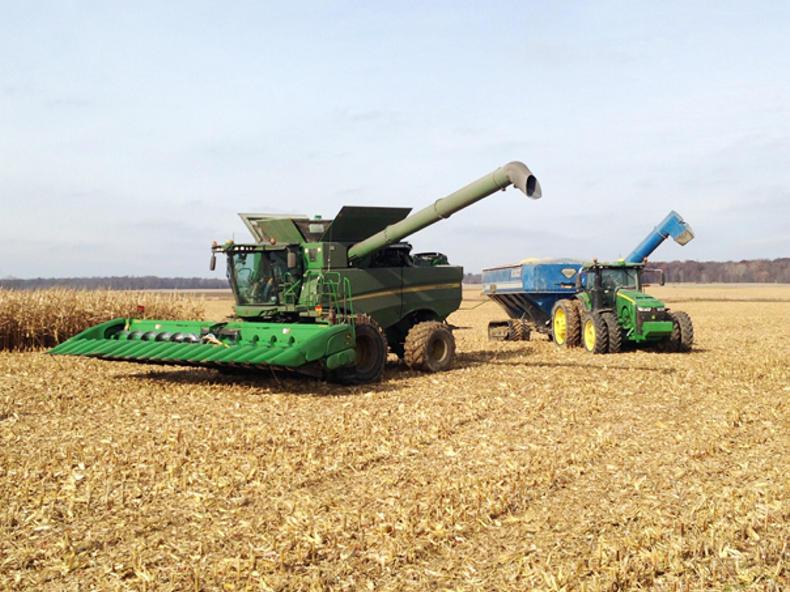
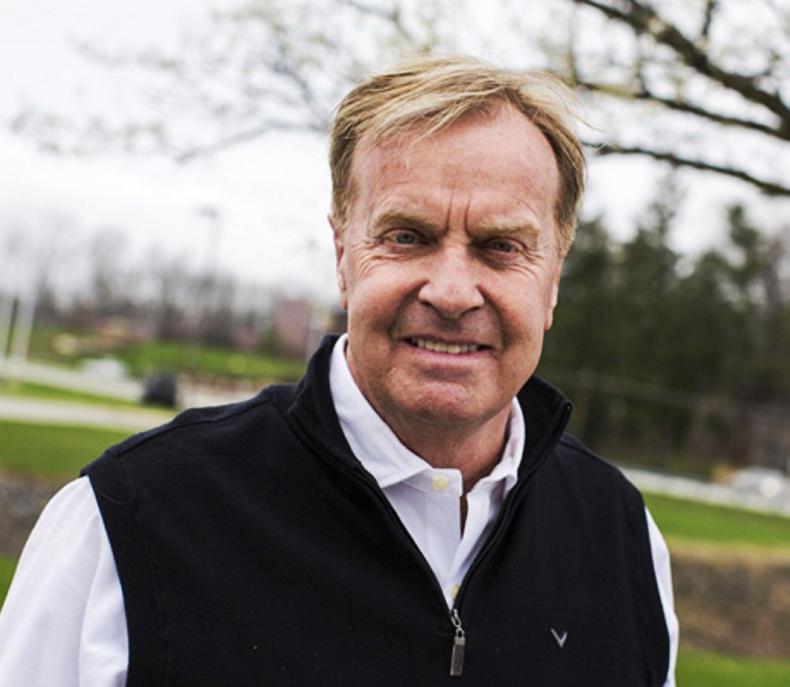

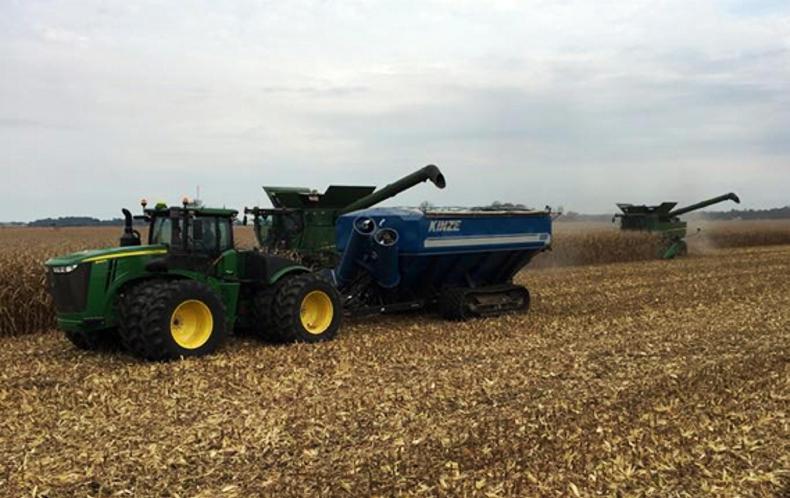
Watching three John Deere S680 combines with 18 row heads make short work of a 200ac corn field on a sunny harvest day in November will stand out as one of the highlights from my trip to the US. This was not just for the enjoyment of watching these machines work perfectly in sync but rather for the opportunity to spend a day with the farm owner Kip Tom.
My first chat with Kip was whilst sitting in his jeep overlooking his corn harvest operations. I couldn’t help but wonder how he manages to farm 20,000ac (15,000ac of which are rented), given the consecutive years of low grain prices and squeezed margins. Over the course of the day that I spent with Kip, CEO of Tom Farms, I quickly got the sense of how he achieved this.
Tom Farms is a leading US agribusiness which started with just 160ac after the Tom family emigrated from Germany and settled in the prairies of Indiana in 1837. Once a mixed livestock and crop enterprise, the farm has evolved to become:
Today Tom Farms remains wholly family owned, employs 25-26 people and farm just shy of 20,000ac.
History of growth
When Kip returned to the farm at the age of 18 the family had increased the size of the farm to 525ac.
“The operation was entirely different back then. We were growing corn, soya beans, alfalfa, wheat, oats and raising cattle and hogs. We were very traditional, had a diversity of enterprises and we had no hired help”.
He began to grow the farm immediately through embracing new technology and persuing new opportunities. He explained that the three benchmark moments which really helped fuel the businesses expansion were:
“I’ve learnt how to better manage our farm, how to run the farm as a CEO not as one of the people who just sits behind the steering wheel of a tractor.”
It was clear that Kip did not see the farm as a lifestyle business but rather as a corporate operation.
“Farming is essentially manufacturing a commodity with a finite amount of resources,” he said.
This understanding of the manufacturing process and the need to manage resources and control costs has guided the company through decades of consecutive growth.
Seed corn production
In an effort to maximise value, Tom Farms has become one of the largest corn seed producers in the US, producing in excess of 10,700 tonnes annually. As one would imagine, seed corn production is rather different to conventional corn production.
Monsanto provide the seed and the production prescription. Depending on the variety, the female units may be planted first and, upon reaching a designated number of heat units, the male varieties are then planted adjacent to them.
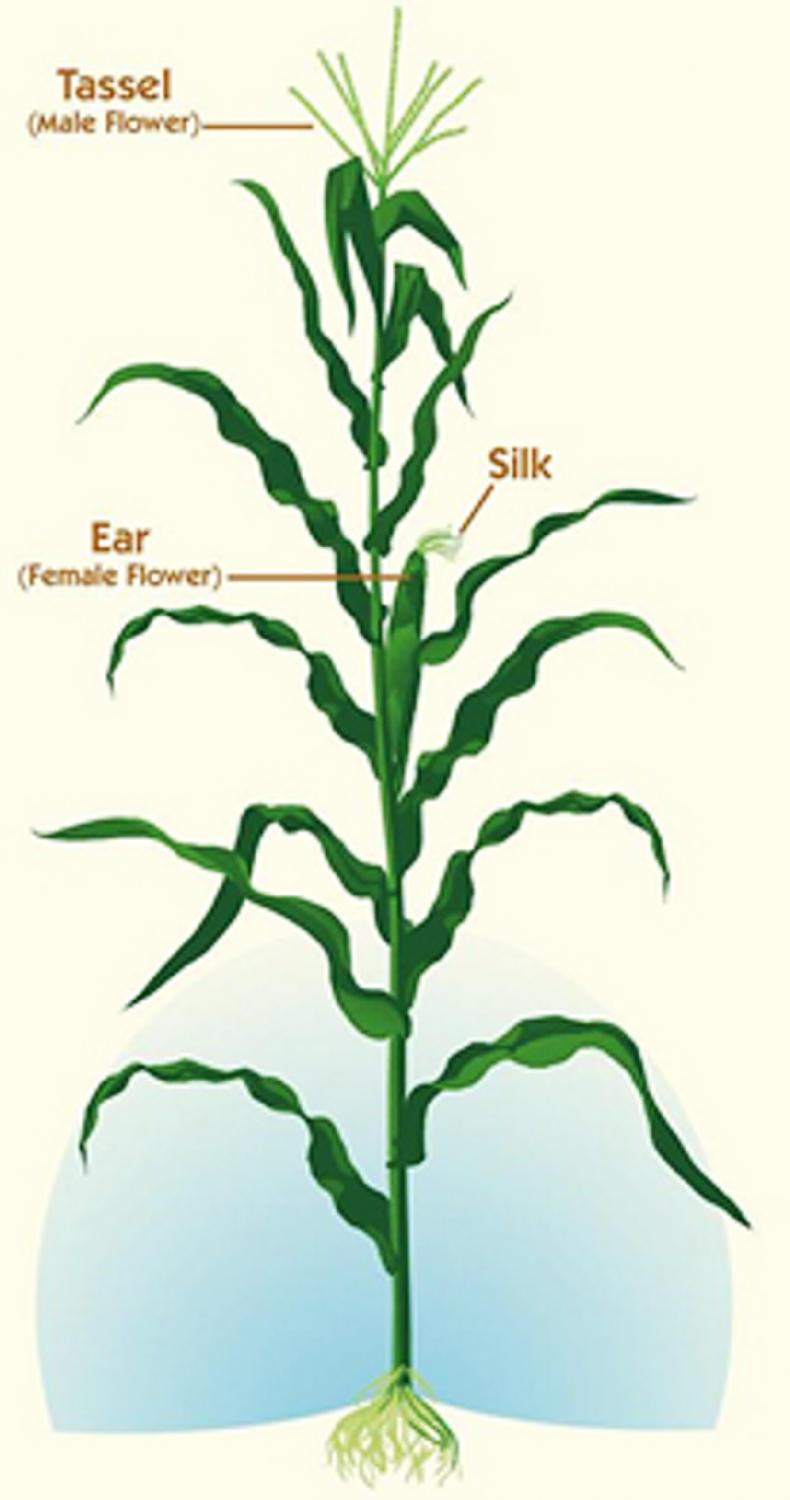
As the season progresses, the plants are detasselled. A corn plant has both a male and a female flower. The male flower (tassel) sits at the top of the plant and produces the pollen. The female flower comprises of the ear and silk (see Figure 1).

Seed corn is planted with two distinct types – one will have the tassels removed and be left with the cobs to bear the new hybrid seed. These will be the female rows.
The other will retain its tassels and pollinate these rows. These are the male rows. Fields are generally planted with three or four rows of female to every one row of male.
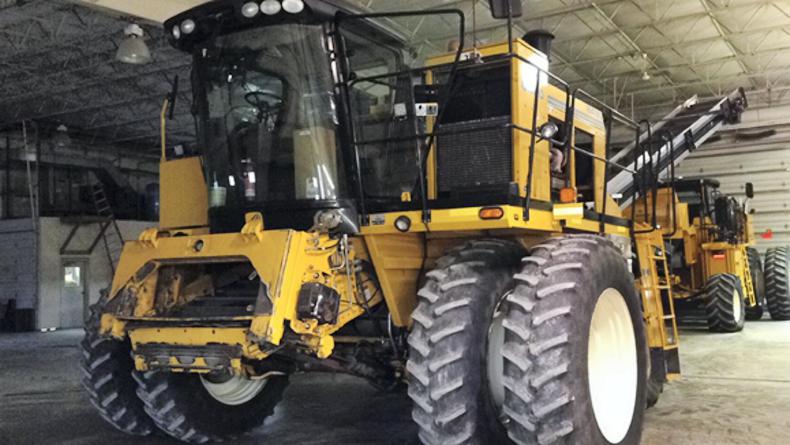
Machines do 80-90% of the detasselling and the remainder is hand-pulled in order to ensure they remove 99.99% of tassels on the female rows. The ear is harvested whole at 25-35% moisture using specialised machines and taken to the seed plant to be dried and processed.
Land rental
Tom Farms rent about three-quarters of the land they farm and while there are vast differences between Ireland and Indiana, the extremely tight margins from growing crops on rented land is similar. Land is rented from over 120 landlords. When asked how he manages this, he replied that treating them like family is key.
“We keep a log of all of our interactions with them. Most of our landlords are older. If they have healthcare issues, we can help. We always treat them like they’re family because they are. We believe in long-term relationships. There are some farms which we have been farming for over 70 years now.”
The majority of rental agreements are on three-year contracts, with average rent prices ranging from $250/ac for dry land to $350/ac for irrigated land. Kip’s attitude is to treat any rented farm like he’s going to have it for a lifetime and attempts to build the fertility on every field he farms.
“If I lose a farm, I don’t want the next guy to say that we mined the land of P and K and didn’t take care of it,” Kip commented.
Machinery and farm tech
Each and every piece of machinery on Tom Farms is meticulously planned and has its place. For example, this year the tractor fleet consisted of six articulated 9R series and seven 8R series John Deeres. Each year the fleet is upgraded and careful thought goes into the size of tractors the farm requires.
Fuel usage, engine hours and GPS data are collected from the machine’s Green Star system. Using computer software programs, he then attempts to understand precisely what his horsepower demand is.
“We take that requirement for horsepower and we run models of fuel consumption and how many hours it takes to get this job done with different power combinations. Then we conclude which size of tractors we need and the numbers we need in the fleet”, Kip stated.
The Trump administration
Kip is no stranger to the political world. As an active member on President Trump’s agricultural advisory board, Kip has a direct line to the top of the political food chain. After being spotted entering Trump Towers on a number of occasions, Kip was tipped as a candidate for the USDA Secretary of Agriculture role in early 2017. This transpired not to be the case but I suspect that we may well see and hear more of Kip in the political scene.
When asked if the Trump administration was going to be beneficial for US agriculture, Kip was adamant that it would be. He then citied various commitments by President Trump such as his support of the renewable fuel standard, his promise to reduce the regulatory burden of agriculture, the tax reform bill and his postponing of the incoming EPA ban on a key insecticide, chlorpyrifos, which was banned in the EU some years ago.
Future of the business
The conversation on succession planning can be as difficult a subject on many farms in the US as here in Ireland. Kip explained that his conversation with his family started 10 years ago and he was keen to emphasise the importance of succession planning.
“If you don’t do succession planning you’re setting yourself up to fail,” Kip stated.
“It’s money well spent. We have it done for 10 years and it’s not always an easy discussion. It’s very difficult. But at the end of the day, you know you’ve done the right thing”.
It was obvious from our conversation that Kip has further expansion in his sights and that he places a huge emphasis on ensuring the sustainability of the business. However, he acknowledges that the future of farming has many challenges.
He foresees a situation where expansion opportunities will come faster than he will be able to secure capital to fund it. Kip also acknowledges that, as in Ireland, finding the best people to work on the farm will be a major challenge to expansion in the future.


SHARING OPTIONS