



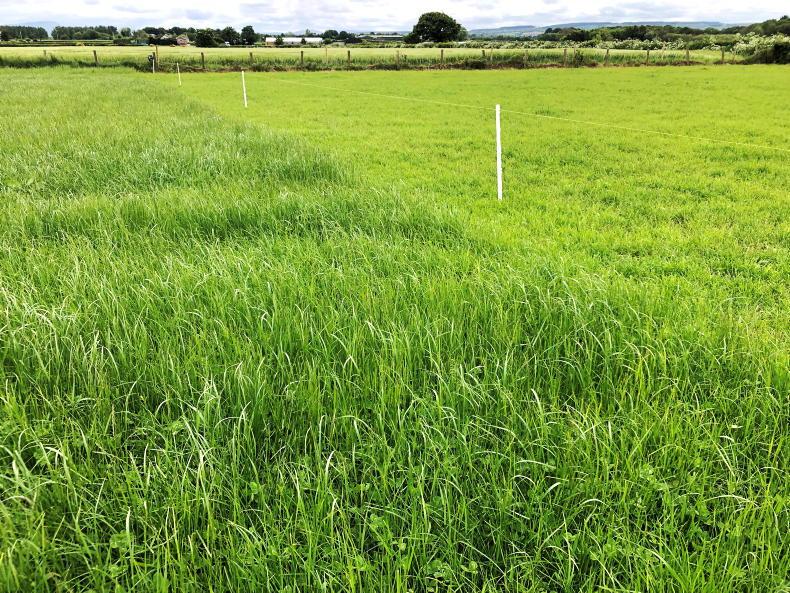
The ‘grand stretch in the evening’ and a subsiding of the rainfall levels seen is March is leading to better trafficability for both machine and beast, as ground continually begins to dry out.
Rainfall for the past week has actually been at or above normal for the time of year, although it likely feels less after one of the wettest Marchs on record.
The wet March delayed any fertiliser or slurry application, as it was virtually impossible to get a dry period in which to spread.
To-do list
Farmers that I have spoken to over the week have either spread fertiliser in the past few days or it is top of the ‘to-do’ list.
For farmers who haven’t applied any chemical or organic fertilisers on ground in the past three weeks or so, they should get applying immediately.
Even for farms with high average farm covers over 1,000kg DM/ha, the highest growth rates, and consequently the highest N utilisation rates, will be over the next three weeks.
Hammering
I don’t know any farmer who doesn’t need some degree of high-quality silage in the yard, with the past March proving it.
Protein levels took a hammering when cows had to go back inside, but spreading fertiliser now and mowing out any surpluses should leave some high-quality bales in the yard should something similar happen next spring.
With the drier weather, the application of straight urea as opposed to protected urea would have to be questioned. Any savings gained from purchasing non-protected could quickly being dissolved in atmospheric N loss.




SHARING OPTIONS