



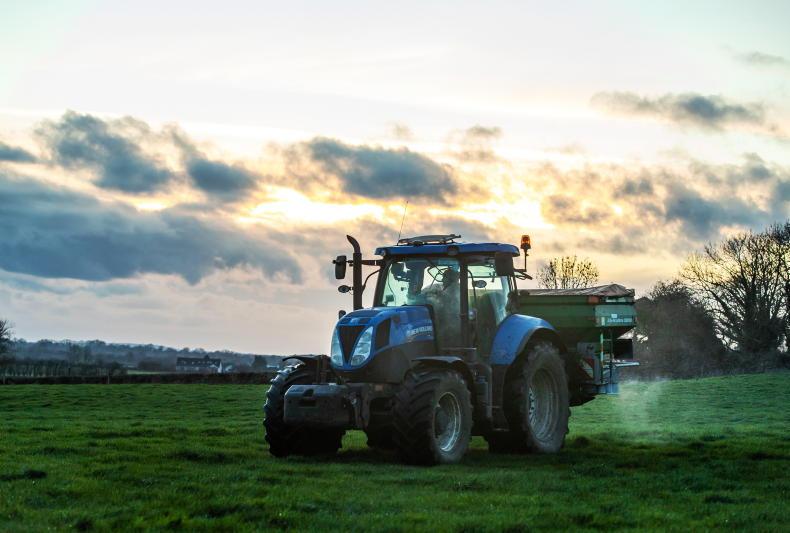
From talking to farmers this week, it’s difficult to give advice to suit all.
On one hand, I have farmers telling me that they have up to 30% of their grazing ground taken out for silage, while others are telling me that they still have a portion of cattle in, as growth has failed to take off.
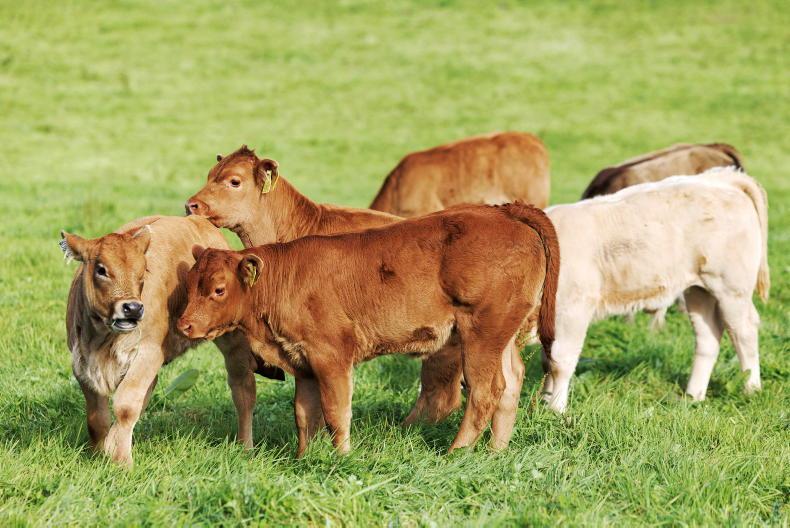
With the majority of farmers in the latter case being drystock farmers, the likely cause of this is that sufficient ground wasn’t grazed in February.
Grass needs that wake-up call in spring of a tight grazing to get it back into growing mode again.
Catch-up
What a lot of farmers often say to me is that by the time they are grazing the last paddock in the first round, the first paddocks have nearly caught up to them.
In either case - being in a surplus or deficit of grass - fertiliser applications need to be kept on top of to maximise the main growing period of the year.
Farmers should aim to apply 0.8 to 1 unit of N/day of the grazing round - for example, 20-day round receives 16 to 20 units of N.
For clover swards, apply roughly half this amount. Clover is an even lazier plant than grass and will not work unless it has to. Applying chemical N to swards will just result in the clover not actually capturing any atmospheric nitrogen.
Growing stage
The main growing stage of grass also coincides with the main growing stage of any grassland weeds.
Action through weed wiping, spot spraying or boom spraying should be taken before weeds become too strong.
Care should be taken surrounding cutting or grazing of swards after spraying, with the length of time that the swards must not be grazed or cut listed on the packaging.



SHARING OPTIONS