



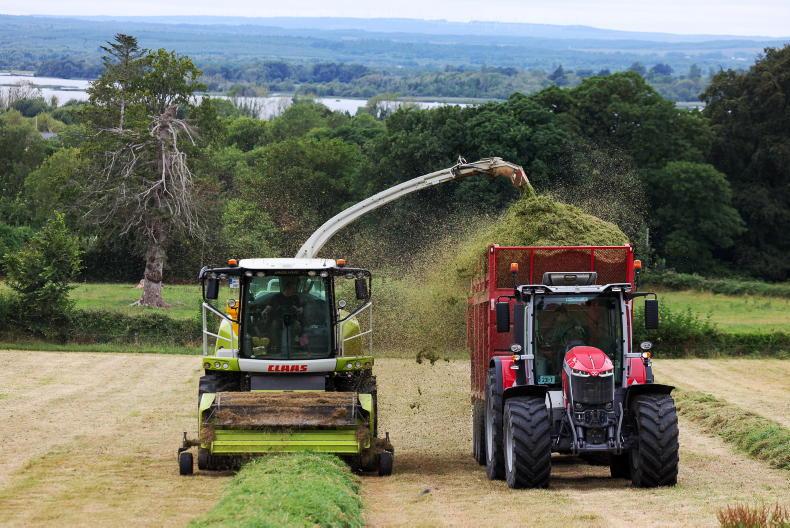
A small reprieve in the rainfall has allowed for some smash-and-grab silage making, although some wouldn’t dare enter a field with a mower yet with underfoot conditions.
It has allowed for some farmers to grab the last of second-cut silage crops or to take out the odd surplus paddock.
While some crops are past cutting, this ground is needed to come back into play for the autumn rotation.
Building cover is all about growth being higher than demand and bringing more ground into the grazing block through silage cutting will help many farms.
Additional measures
Where this isn’t sufficient, there may need to be additional measures taken, such as selling off stock sooner than planned, weaning stock early, introducing meal, etc.
How much cover to build is very farm-specific, with stocking rate, sward type, location and soil condition all factoring into how much grass can be grown and for how long it can be utilised.
Dry farms with a stocking rate above 3LU/ha need to start building cover now, with a target of 1,000kg DM/ha of an average farm cover by the first week of September.
Drystock farms with autumn-calving cows or mid-season ewe flocks that require flushing pre-mating will also have a high grass demand in September and October, so these farms should be building grass as well.
Fertiliser will have a far better utilisation rate when spread now in good growth conditions than just before the closed period in mid-September.
Any grazed swards or those with silage just taken off them should receive any remaining dung or slurry in the yard or a top-up of chemical N where appropriate.



SHARING OPTIONS