Construction is one of the largest industries in Ireland, directly employing over 171,000 people and contributing over 10% of the country’s gross domestic product (GDP). Yet despite its size and importance, women have traditionally represented only a small percentage of the workforce.
According to the CSO Labour Force Survey, women made up just 10.2% of the construction workforce in Ireland last year. While the sector had the the lowest female representation, it recorded the largest percentage increase in female employees in the past decade, rising from only 6,600 in Q4 2014 to 18,000 in Q4 2024.
Women are under-represented in both skilled and unskilled positions in construction, with only 5% of skilled tradespeople and just over 1% of apprentices being female.
Engineering also has low female participation rates. In 2022, just 4% of graduates from engineering-related fields were female – compare this to 9% in Germany.
Engineers Ireland conducted research earlier this year that highlighted significant gaps in Ireland’s current STEM education. Among the key issues identified were the inequitable access to STEM subjects in schools and the gender disparity in engineering, with female participation remaining low.
According to Damien Owens, director general of Engineers Ireland: “In the construction sector, there is a historical image problem that’s changing over time. We can’t afford to leave half the population out of doing engineering or working in a particular area – we need diversity and to get those different perspectives.
“It is important to engage with young people from around the age of 10 to expose them to science and engineering so that every student going through the system can see the careers available in the sector.
“We have a shortage of engineers; we need about 25,000 in the next few years just to keep the economy going. There are huge career opportunities because we are facing many challenges with building houses, sewage treatment plants, roads, electricity networks and offshore renewables. There’s a pipeline of projects that will see many careers into the future,” explains Damien.

Damien Owen, director general of Engineers Ireland.
Barriers for women
One organisation hoping to increase the representation of women across the sector is Women in Construction, which was founded in 2024 by Joanne White.
Working as a contracted Quantity Surveyor (QS), Joanne had her first child in 2020, but gave up her full-time job as she realised that “the construction industry in rural Ireland doesn’t go hand in hand with having children”. She is now working as a lecturer at TU Dublin which offers more flexibility for family life. However, she still misses the on-site work.
“That’s how Women in Construction Ireland came about. I didn’t want any other woman to have to make
that decision between their career and their family; it’s not fair,” she says.
Although a lot of big companies are able to provide more flexible work, Joanne emphasises it’s still not the case in all companies, and more needs to be done.
“If we don’t do something, this is not going to change. We are very slightly increasing the rate of women in the industry. It’s an even smaller increase [year on year] when you get to the technical professional roles and the construction roles.
“It’s still not an industry that women as a whole think of as a good career option for them,” she says.
Joanne sees an increase in college registrations for first years, but that doesn’t carry through to graduation where levels remain low. She also identifies a retention challenge to keeping those who do graduate in the industry long-term.
“Students are still getting the hard hat, high vis, mucky boots sense of the industry. Of course, there is that side to it, but there is so much more.
“That’s what I think is so important to get across to our young women, it is so much more than block laying.”
One of the main barriers facing women entering the sector, according to Joanne, is a lack of role models in leadership positions.
“We rarely see a female in an engineering, plumbing or electrician leadership role.
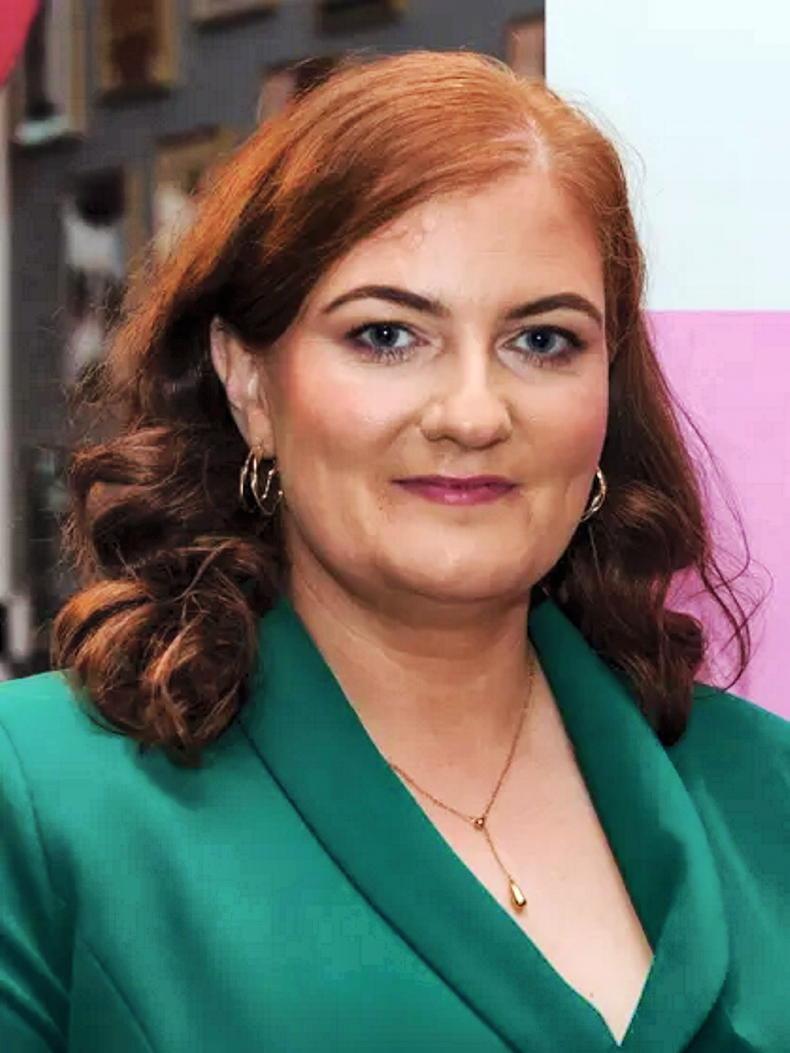
Joanne White, founder of Women in Construction Ireland.
“For young women and young girls coming into the sector, they don’t have that inspiration of a women being the boss and being at the top of the career ladder.
“That really does have a knock-on effect.”
Other challenges facing women in the construction sector are isolation and lack of networking. Limitations in terms of work-life balance is also a factor – it isn’t flexible in terms of working hours or hybrid structures.
Women in Construction Ireland provides networking opportunities to help women meet others across the industry working in their local area.
See wici.ie
Case study:Allysha Lynch, Co Meath
Allysha Lynch is a qualified electrician from Nobber Co Meath, now living on a dairy farm on the Inishowen peninsula in Donegal.
She attended one of the Women in Construction events and speaks to Irish Country Living about her pathway to working in a male-dominated sector.
“I fell into being an electrician. I was doing veterinary nursing in Wales, and anytime I came home from college, I started working with my uncle, who had moved from farming to being an electrician.
“During the summer, he asked me if I was interested in doing my electrical apprenticeship. He said I had the hands for it, and after thinking about it, I decided on a career change and left veterinary nursing before I finished my final year.
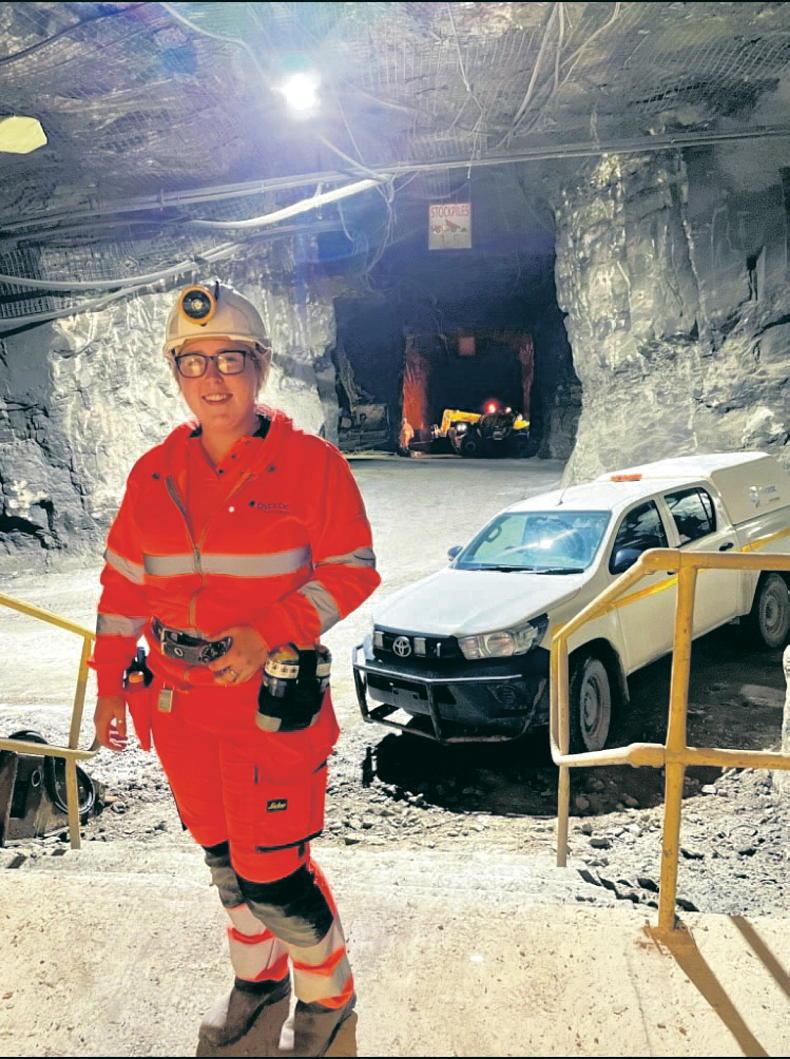
Allysha Lynch is a qualified electrician.
“It was never initially on my mind because I was never exposed to it or told about opportunities in trade. There was a stigma that if you went and did a trade, you were not smart enough for college. I thought I had to go to college and make mammy proud.
“I worked with my uncle for a while before registering my apprenticeship with a solar company in Cavan. I moved to C-MAC Electrical, who cover domestic, commercial and industrial, as I wanted experience in all the areas.
“I qualified last June after five years of training. I moved up to Donegal and got a job in a switchgear plant. I live on a dairy farm with my partner and help him out during the busy season.
“The industry is very male-dominated but I have grown so much as a person since I started my apprenticeship. I wouldn’t be afraid to work on a team with all men. I think there needs to be a lot more readily available information about trades and apprenticeships in this area to encourage more people to look into the sector.
“When you qualify, there are so many pathways from electrical engineering to turbines and solar energy. For anyone thinking of coming into the sector, go in, give it your all and don’t be afraid.
“I was terrified when I started, but after my first week, I got to know the team and they were great craic.”
Construction is one of the largest industries in Ireland, directly employing over 171,000 people and contributing over 10% of the country’s gross domestic product (GDP). Yet despite its size and importance, women have traditionally represented only a small percentage of the workforce.
According to the CSO Labour Force Survey, women made up just 10.2% of the construction workforce in Ireland last year. While the sector had the the lowest female representation, it recorded the largest percentage increase in female employees in the past decade, rising from only 6,600 in Q4 2014 to 18,000 in Q4 2024.
Women are under-represented in both skilled and unskilled positions in construction, with only 5% of skilled tradespeople and just over 1% of apprentices being female.
Engineering also has low female participation rates. In 2022, just 4% of graduates from engineering-related fields were female – compare this to 9% in Germany.
Engineers Ireland conducted research earlier this year that highlighted significant gaps in Ireland’s current STEM education. Among the key issues identified were the inequitable access to STEM subjects in schools and the gender disparity in engineering, with female participation remaining low.
According to Damien Owens, director general of Engineers Ireland: “In the construction sector, there is a historical image problem that’s changing over time. We can’t afford to leave half the population out of doing engineering or working in a particular area – we need diversity and to get those different perspectives.
“It is important to engage with young people from around the age of 10 to expose them to science and engineering so that every student going through the system can see the careers available in the sector.
“We have a shortage of engineers; we need about 25,000 in the next few years just to keep the economy going. There are huge career opportunities because we are facing many challenges with building houses, sewage treatment plants, roads, electricity networks and offshore renewables. There’s a pipeline of projects that will see many careers into the future,” explains Damien.
Damien Owen, director general of Engineers Ireland.
Barriers for women
One organisation hoping to increase the representation of women across the sector is Women in Construction, which was founded in 2024 by Joanne White.
Working as a contracted Quantity Surveyor (QS), Joanne had her first child in 2020, but gave up her full-time job as she realised that “the construction industry in rural Ireland doesn’t go hand in hand with having children”. She is now working as a lecturer at TU Dublin which offers more flexibility for family life. However, she still misses the on-site work.
“That’s how Women in Construction Ireland came about. I didn’t want any other woman to have to make
that decision between their career and their family; it’s not fair,” she says.
Although a lot of big companies are able to provide more flexible work, Joanne emphasises it’s still not the case in all companies, and more needs to be done.
“If we don’t do something, this is not going to change. We are very slightly increasing the rate of women in the industry. It’s an even smaller increase [year on year] when you get to the technical professional roles and the construction roles.
“It’s still not an industry that women as a whole think of as a good career option for them,” she says.
Joanne sees an increase in college registrations for first years, but that doesn’t carry through to graduation where levels remain low. She also identifies a retention challenge to keeping those who do graduate in the industry long-term.
“Students are still getting the hard hat, high vis, mucky boots sense of the industry. Of course, there is that side to it, but there is so much more.
“That’s what I think is so important to get across to our young women, it is so much more than block laying.”
One of the main barriers facing women entering the sector, according to Joanne, is a lack of role models in leadership positions.
“We rarely see a female in an engineering, plumbing or electrician leadership role.
Joanne White, founder of Women in Construction Ireland.
“For young women and young girls coming into the sector, they don’t have that inspiration of a women being the boss and being at the top of the career ladder.
“That really does have a knock-on effect.”
Other challenges facing women in the construction sector are isolation and lack of networking. Limitations in terms of work-life balance is also a factor – it isn’t flexible in terms of working hours or hybrid structures.
Women in Construction Ireland provides networking opportunities to help women meet others across the industry working in their local area.
See wici.ie
Case study:Allysha Lynch, Co Meath
Allysha Lynch is a qualified electrician from Nobber Co Meath, now living on a dairy farm on the Inishowen peninsula in Donegal.
She attended one of the Women in Construction events and speaks to Irish Country Living about her pathway to working in a male-dominated sector.
“I fell into being an electrician. I was doing veterinary nursing in Wales, and anytime I came home from college, I started working with my uncle, who had moved from farming to being an electrician.
“During the summer, he asked me if I was interested in doing my electrical apprenticeship. He said I had the hands for it, and after thinking about it, I decided on a career change and left veterinary nursing before I finished my final year.
Allysha Lynch is a qualified electrician.
“It was never initially on my mind because I was never exposed to it or told about opportunities in trade. There was a stigma that if you went and did a trade, you were not smart enough for college. I thought I had to go to college and make mammy proud.
“I worked with my uncle for a while before registering my apprenticeship with a solar company in Cavan. I moved to C-MAC Electrical, who cover domestic, commercial and industrial, as I wanted experience in all the areas.
“I qualified last June after five years of training. I moved up to Donegal and got a job in a switchgear plant. I live on a dairy farm with my partner and help him out during the busy season.
“The industry is very male-dominated but I have grown so much as a person since I started my apprenticeship. I wouldn’t be afraid to work on a team with all men. I think there needs to be a lot more readily available information about trades and apprenticeships in this area to encourage more people to look into the sector.
“When you qualify, there are so many pathways from electrical engineering to turbines and solar energy. For anyone thinking of coming into the sector, go in, give it your all and don’t be afraid.
“I was terrified when I started, but after my first week, I got to know the team and they were great craic.”





SHARING OPTIONS