


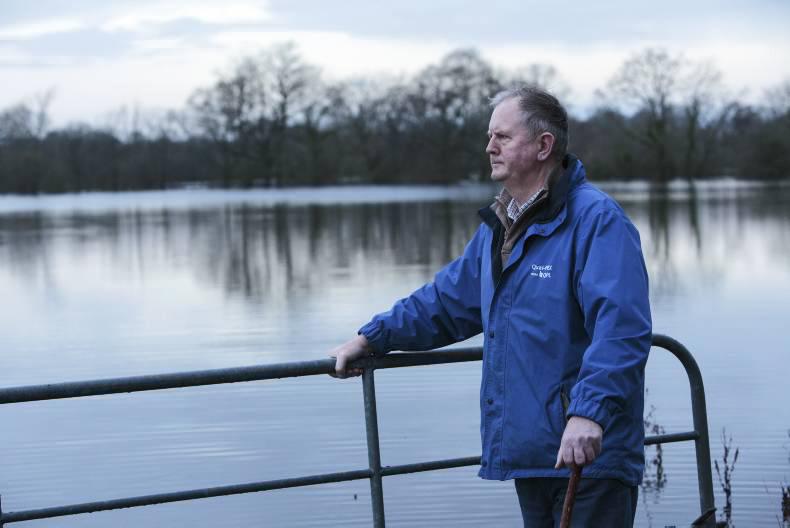
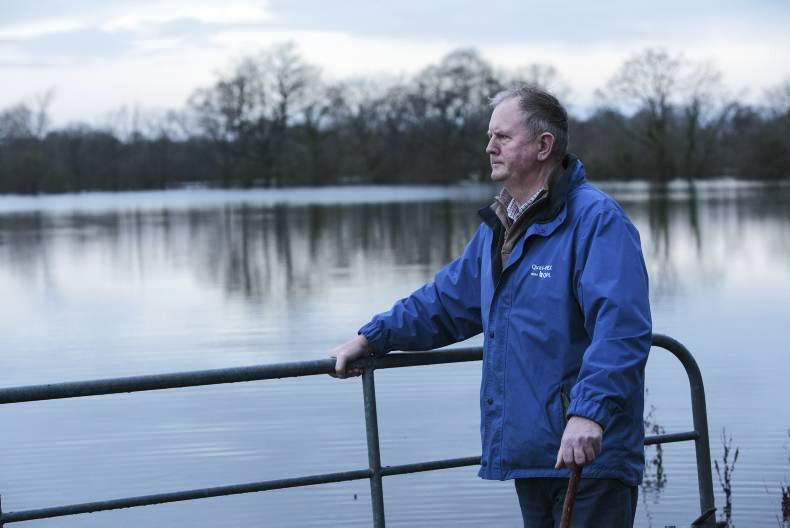
“My outfarm gets flooded regularly but it is happening more often in recent years,” said Tom Clifford.
“When I was young it was only once every 10 to 12 years. Now it’s far more frequent.”
Fortunately he doesn’t have any stock on his out farm at this time of year, but there were cattle on it up until 1 November.
“It’s funny land really, because it can dry up really quick,” said Tom.
“The flood could be there in January, clear up, and then it might flood again in June. It’s a bigger worry in summertime when the stock are out.”
At least 25% of Tom’s land is flooded, with access to his outfarm cut off by flooding, making it too dangerous to travel. He argues that if the Shannon was managed better, flooding would be less of a problem.
“The ESB controls the level of the river and nowadays they give flood warnings,” said Tom. “They don’t want machines dredging the river because it would upset the spawning bays. But it’s clear that work must be done because there are Sally trees and things growing on it that weren’t there before. Parts of the river look more like a forest.
“Older people around here remember maintenance work being done on the river years ago. But even if the Office of Public Works (OPW) wanted to do it now, they would be met with resistance from wildlife lobbyists and the like.”
Tom’s elderly neighbour is a suckler farmer who has to walk half a mile across the fields to feed his cattle twice a day.
“My neighbour has a farm that is completely inaccessible by road. He lives two miles away so he drives as far as he can and then walks the half-mile across to his yard, which is on a small hill. Once he gets there, there’s no flooding, but the conditions aren’t ideal for going across the fields.”
Tom said “tremendous work has been done this time” by the army, county council and local communities to help those in need. But, like most other farmers in the area, he believes it is time for someone to take responsibility for the maintenance of the Shannon.





SHARING OPTIONS