



Brian Crowley
Ballycotton, Co Cork
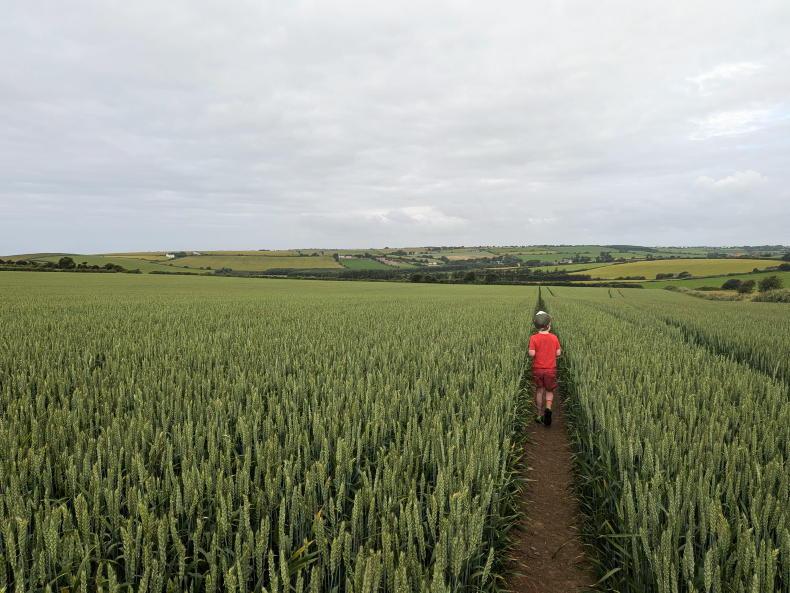
There was great weather in Cork last week except for a few heavy showers on Friday morning. This week has not been too bad either but it’s in the next couple of weeks that Brian will be hoping for dry weather as the harvest comes into view.
The winter barley could be ripe in a week or maybe a few days more than that. The crop has stayed standing but the crows have been a nuisance.
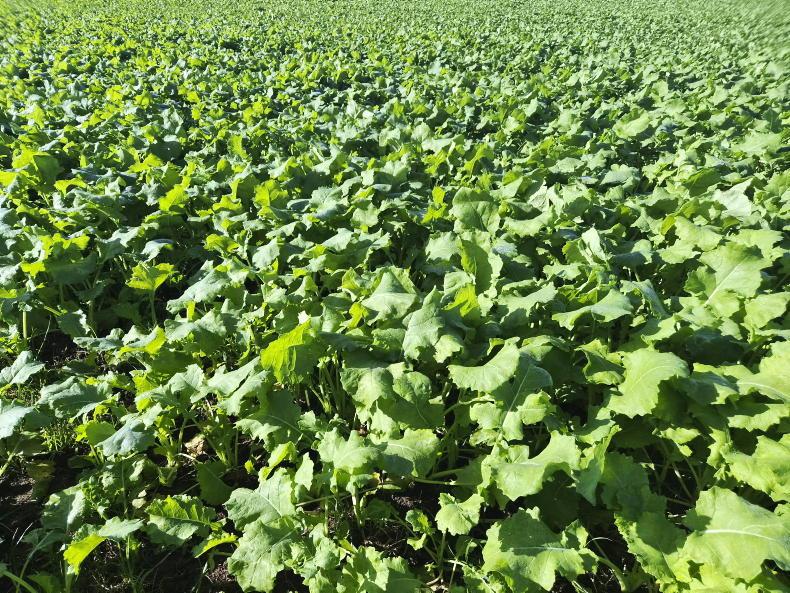
The winter oilseed rape is a good, thick crop and is very uniform across the field. Brian says it is very hard to know how the crop will do but it looks like there’s plenty of pods anyway.
There is some spraying still being completed too. The spring wheat as well as the late-sown spring barley and oats are getting their last spray. The spring oats are very lush but Brian says it could be quite late by the time they’re ripe.
The beet has pushed on a lot in the past two weeks and is nearly meeting between the rows now. Brian is amazed by the difference a good week of growth can make. The herbicide programme is now complete with a graminicide to control some volunteer cereals applied recently.
A second fungicide on the spring beans is currently up for debate on the farm. The crop is still flowering and the lower pods are starting to appear.
Brian says he is veering towards applying the fungicide as chocolate spot can come into a crop quickly and affect pod fill.
Finally, Brian would like to pay tribute to Frank Hayes, who worked as an agronomist for Dairygold, and who passed away recently.
Frank walked the Crowley farm since Brian was a child and had an abundance of knowledge on every crop.
An hour or two often disappeared very quickly whenever Frank called and Brian says that he will be sorely missed by many, many farmers in the area. Ar dheis Dé go raibh a anam dílis.
Christopher Gill
Caledon Estate, Co Tyrone
Christopher had a lot of rain a couple of weeks ago which led to great growth last week as temperatures reached 30°C. He says that the rain and sunshine have come at the right times so far this year which is the opposite to last year.
The winter barley is turning in well. Christopher says it is a very nice crop and he has decided to bring it to harvest. While it won’t make a fortune, Christopher says it won’t lose money with his lower costs due to the use of manures. It will be mid to late July before the crop is ripe.
The winter rye will be kept for wholecrop and should be ready in the next couple of weeks. The winter triticale won’t be too far behind the rye either.
The winter oilseed rape is starting to turn in a little bit too and Pod-Stik will be applied soon.
The gates were closed on the winter wheat earlier in the month with the T3 fungicide application. The crop looks good and is filling nicely.
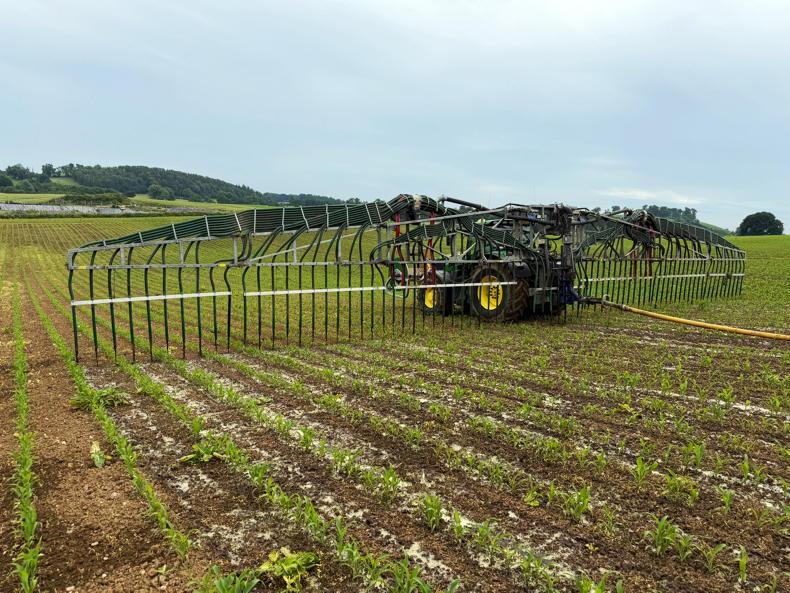
Christopher piped 2,500 gallons/ac of separated digestate onto the maize last week. He was able to stick to the tramlines to avoid damaging the crop. It is something he has done a number of times now and it works very well.
The maize under plastic is already more than knee high while the maize sown in the open is a bit behind it. He thinks it was held back a bit in the cool temperatures at the start of June but he can already see the difference that the hot weather last week made as it is growing very quickly now.
Christopher says he also got a good hit on the weeds with the herbicide. He is hoping to apply a bacterial nitrogen product in the next week to the maize.
Martin Ennis
Naul, Co Dublin
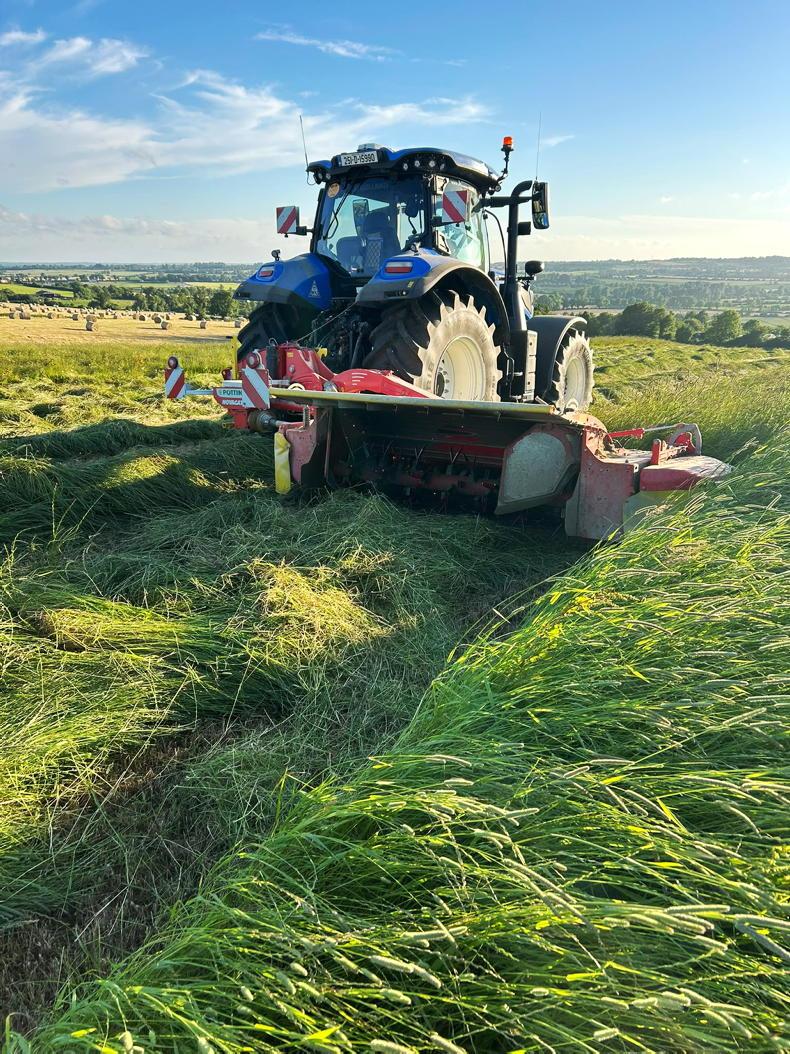
The weather has been lovely in Dublin over the past two weeks and it was perfect for Martin who was busy with hay. He had over 100ac cut and baled in great order by the weekend and was thinking of rolling the dice again by cutting more earlier this week.
The winter barley turned in a lot but Martin says the harvest is still a fortnight away. He is a bit cautious about the prospects of the crop as he says it is a bit light.
The winter oilseed rape has a bit of brown coming into it too.
Martin says he has one very thick field despite it only receiving 70 units/ac of nitrogen and some dung before sowing. Some small areas of that field have gone down a bit but Martin says it should be OK to cut.
The spring barley looks very well. It only received one fungicide spray so Martin says he will have to wait and see if this has an effect but it is clean of disease for now.
The spring beans received a fungicide when the crop began to flower. Martin is not sure if he will apply a second fungicide. He will wait and see whether there is much chocolate spot in the crop in the coming weeks.
The bulk of the spring beans look well but there are some poor enough fields too. He thinks this is because sowing was rushed in the spring and the soil was still a bit too wet.
The maize loved the hot weather last week. Martin applied a foliar feed of trace elements, liquid phosphorus and a bit of nitrogen. He will apply this again in a couple of weeks.
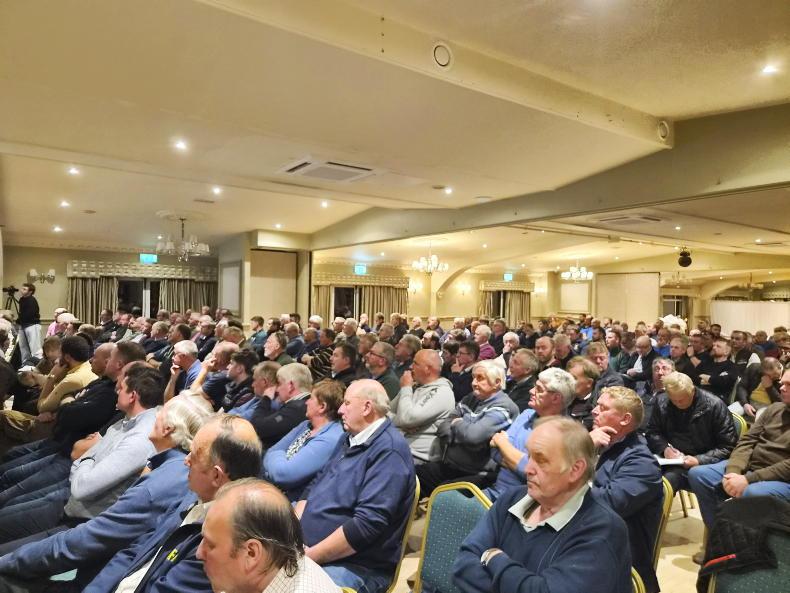
After attending a few crop walks recently, Martin says he is worried by the reduction in the number of herbicides available, especially for grass weed control.
He notes that crop rotation will become even more important in the coming years.



SHARING OPTIONS